

British inventions have done more to influence the shape of the modern world than those of any other country. Many — soccer, the steam engine and Worcestershire sauce, to take a random selection — have spread pleasure, goodwill and prosperity. Others — the Maxim gun, the Shrapnel shell and jellied eels — have not.
Others still — modern atomic theory, the bagpipes — are capable of doing good, but in the wrong hands can have dreadful consequences. It is into this category that a British invention currently colonizing the world falls.
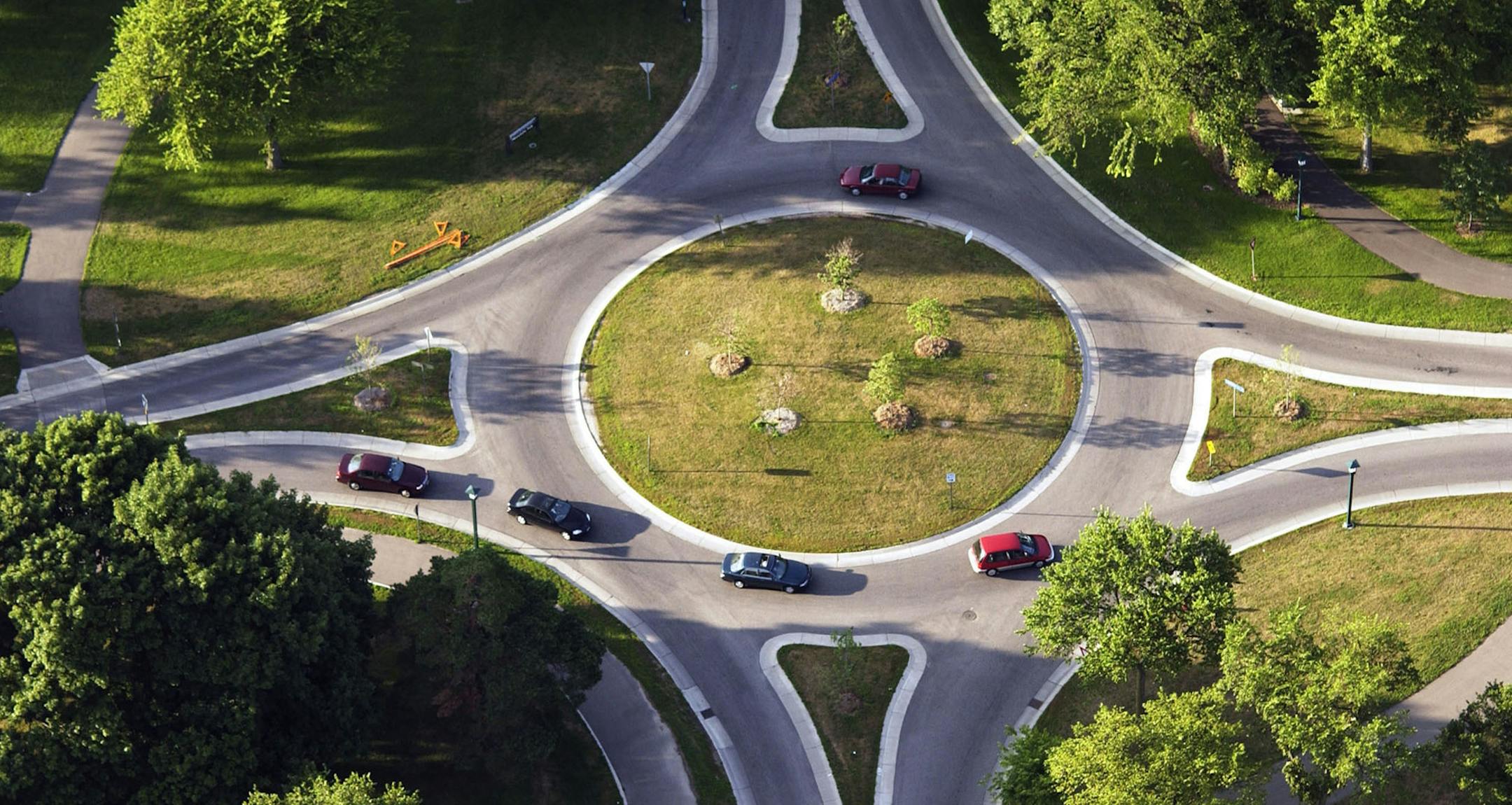
First introduced in Letchworth Garden City in 1909, the roundabout — a one-way gyratory built for road management — proved so popular in Britain that in the 1960s the Transport Research Laboratory developed a miniature version. It reached its apogee in Swindon's "Magic Roundabout": one large roundabout surrounded by five mini satellites. The UK Roundabout Appreciation Society celebrates this gyratory ballet on a set of exclusive placemats. The society's coveted "Best Roundabout of the Year" title is currently held by one in York with a windmill on it, which beat a rival with a duck pond in a closely fought contest.
As so often happens, others are following where Britain led. In 1997, there were between 30,000 and 40,000 roundabouts around the world; now there are 60,000. Half of them are in France. The French were early converts to the rond-point and have taken to it with a passion, perhaps because it offers conspicuous opportunities for the country's notoriously competitive municipal gardeners to vie with neighboring rivals.
America is catching up fast; numbers have grown from a few hundred to 3,000 in the past decade. They are now common across Europe and have spread from the rich world to the developing one.
For reserved Britons, the roundabout represents not just a clever solution to a common inconvenience, allowing vehicles to swirl rather than stop at empty crossroads, but also the triumph of cooperation over confrontation. Vehicles and the people in them do not need to go head-to-head — if everyone bends a little, everybody can get along. Studies show that they are justified on pragmatic, as well as philosophical, grounds. According to America's Department of Transportation, replacing crossroads with roundabouts leads to a 35 percent fall in crashes, a 76 percent fall in injuries and a 90 percent fall in deaths.
Yet roundabouts tend to work only when motorists observe the British virtues of fair play and stick to the rules. Alas, this is not always the case.
If drivers do not yield, roundabouts degenerate swiftly into gridlock. And in places where driving standards are poor, people often plow straight onto them. In Nairobi, for example, the four roundabouts that mark the city's heart are so badly jammed that policemen have been drafted in to act as human traffic lights. When it rains, the officers seek shelter and the mess gets even worse.


