

Post-Soviet Ukraine has not been a placid place.
Its chaotic politics and sclerotic economy since independence in 1991 have resulted in enduring upheaval.
Among the country's convulsions was 2004's "Orange Revolution" protesting President Viktor Yanukovych, whose election was rigged. A re-vote led to a victory for Viktor Yushchenko, who soon suffered a diabolical dioxin poisoning, allegedly by pro-Russian operatives.
Yushchenko survived. But not politically. Yanukovych eventually became president in 2010, only to be ousted in the violent 2014 "Euromaidan Revolution" after he resisted Ukraine's tilt toward the West. Just a month after the pro-Kremlin Yanukovych fled to Russia, and a month before the election of his replacement, President Petro Poroshenko, Russia annexed Crimea. And soon thereafter it aided pro-Russian separatists in Eastern Ukraine who sparked a conflict that has killed some 13,000 and displaced 2 million, along with shooting down a Malaysian airliner, killing 298.
Today, Ukraine — and East-West relations — remain volatile. So late last month, how did Ukrainians respond to these serious times?
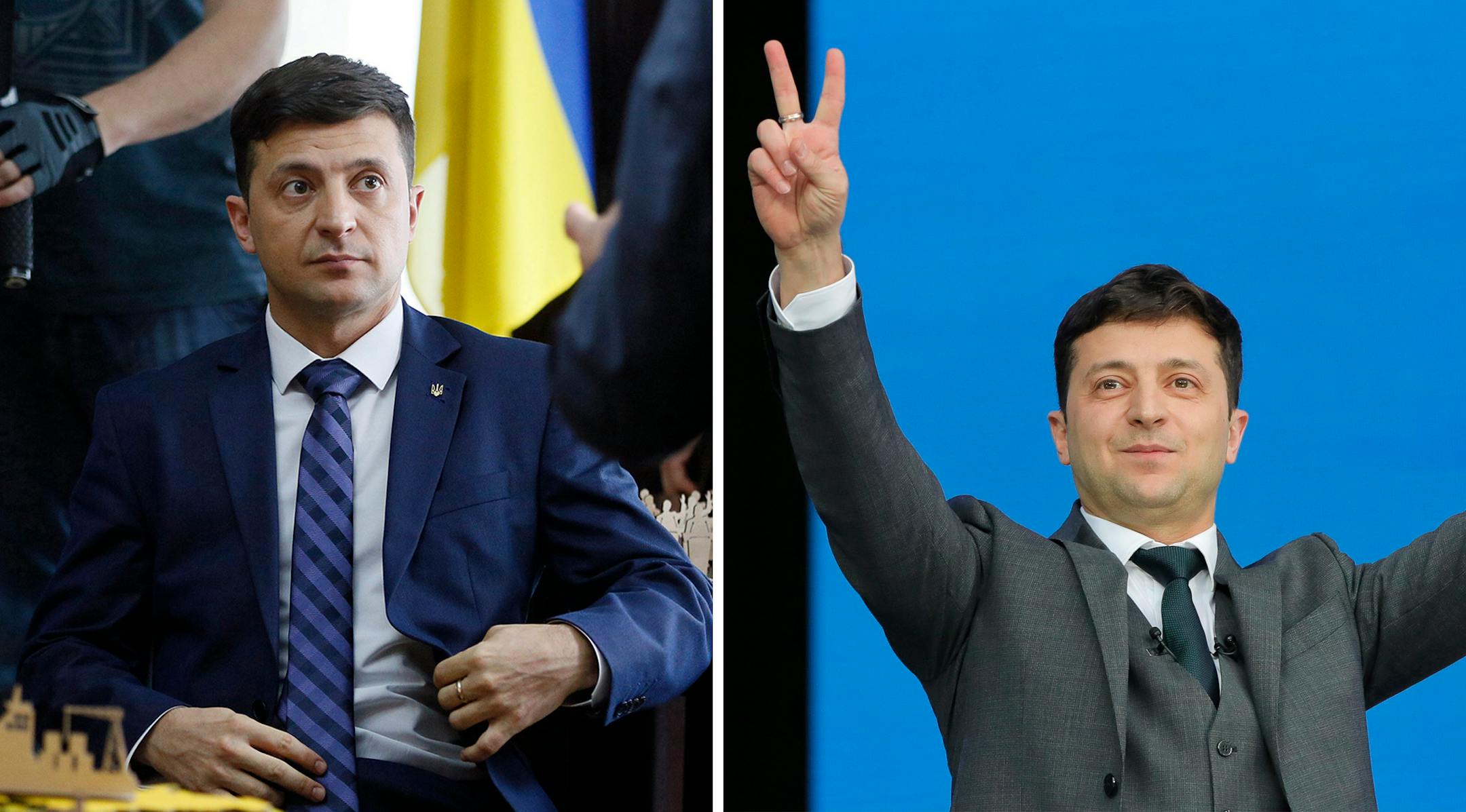
They elected a comedian, Volodymyr Zelenskiy, as the country's next president.
But this wasn't just any stand-up comic standing for election: In a particularly postmodern media moment, Ukraine's president-elect starred as a teacher-turned-accidental president in a hit TV show called "Servant of the People," which is the name of his political party.
And he just didn't win, but beat Poroshenko in the runoff with 73% of the vote, the largest margin since democracy dawned on the former communist entity. What's more, Zelenskiy defied divisions often endemic to the region: He's a native Russian speaker, and Jewish, just like the prime minister, meaning Ukraine soon will be the only nation outside Israel to have Jewish heads of state and government.


