
The Middle East's kingdom of tranquillity, Jordan, is under strain

Kingdom is gaining some attributes of neighboring authoritarian regimes.

October 24, 2016 at 8:43PM
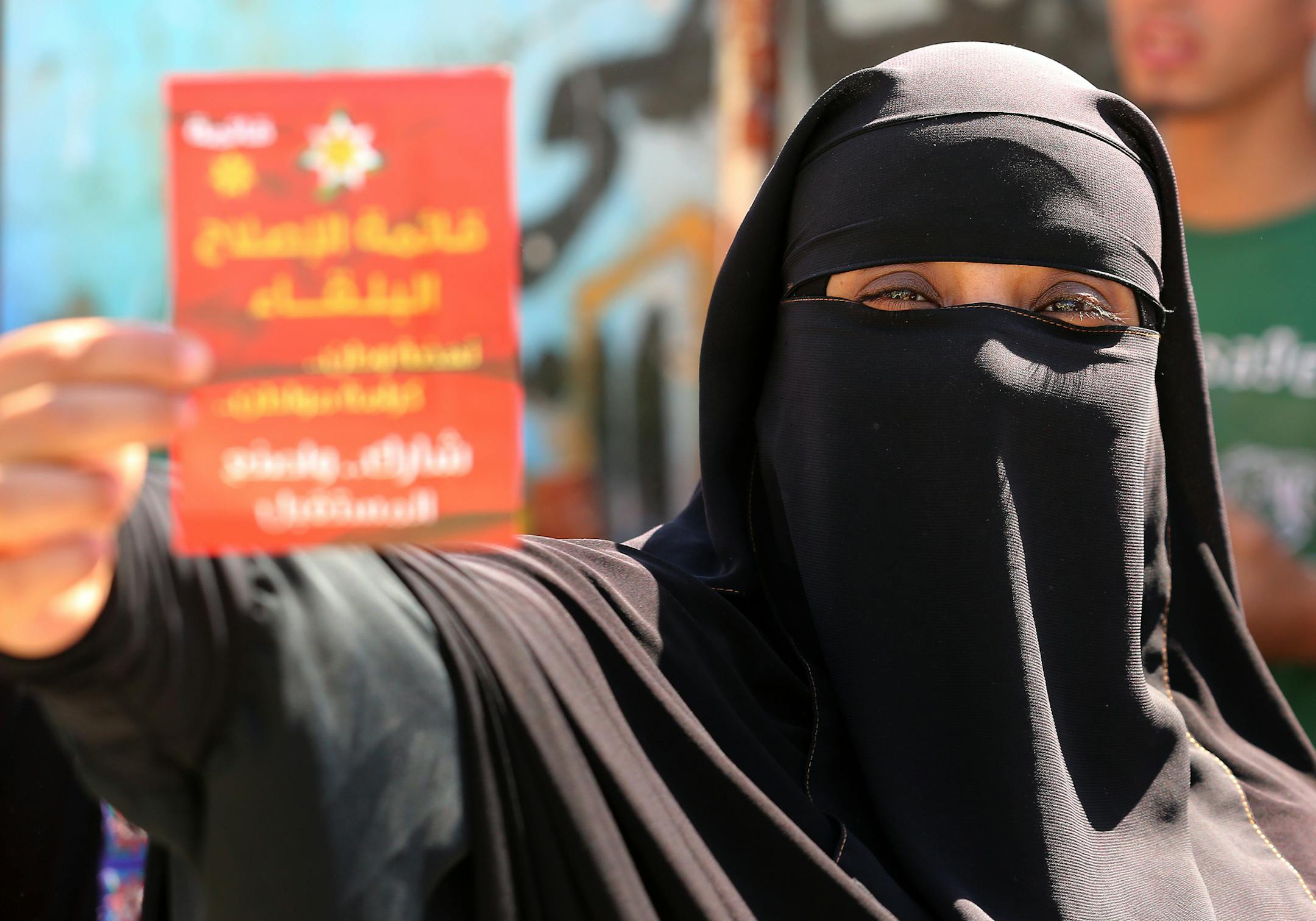
A Jordanian woman casts her ballot in parliamentary elections at a polling station in Amman Jordan, Tuesday, Sept. 20, 2016. Jordanians are voting for a new parliament under revised rules meant to strengthen political parties -- an election seen as a small step toward democratic reform. More than 4 million residents of the pro-Western monarchy are eligible to vote for a 130-member parliament, with 27 seats reserved for women, Christians and ethnic minorities. (AP Photo/Raad Adayleh)
A Jordanian woman cast her ballot in parliamentary elections in Amman, but the overall turnout was a dismal 37 percent. (The Minnesota Star Tribune)

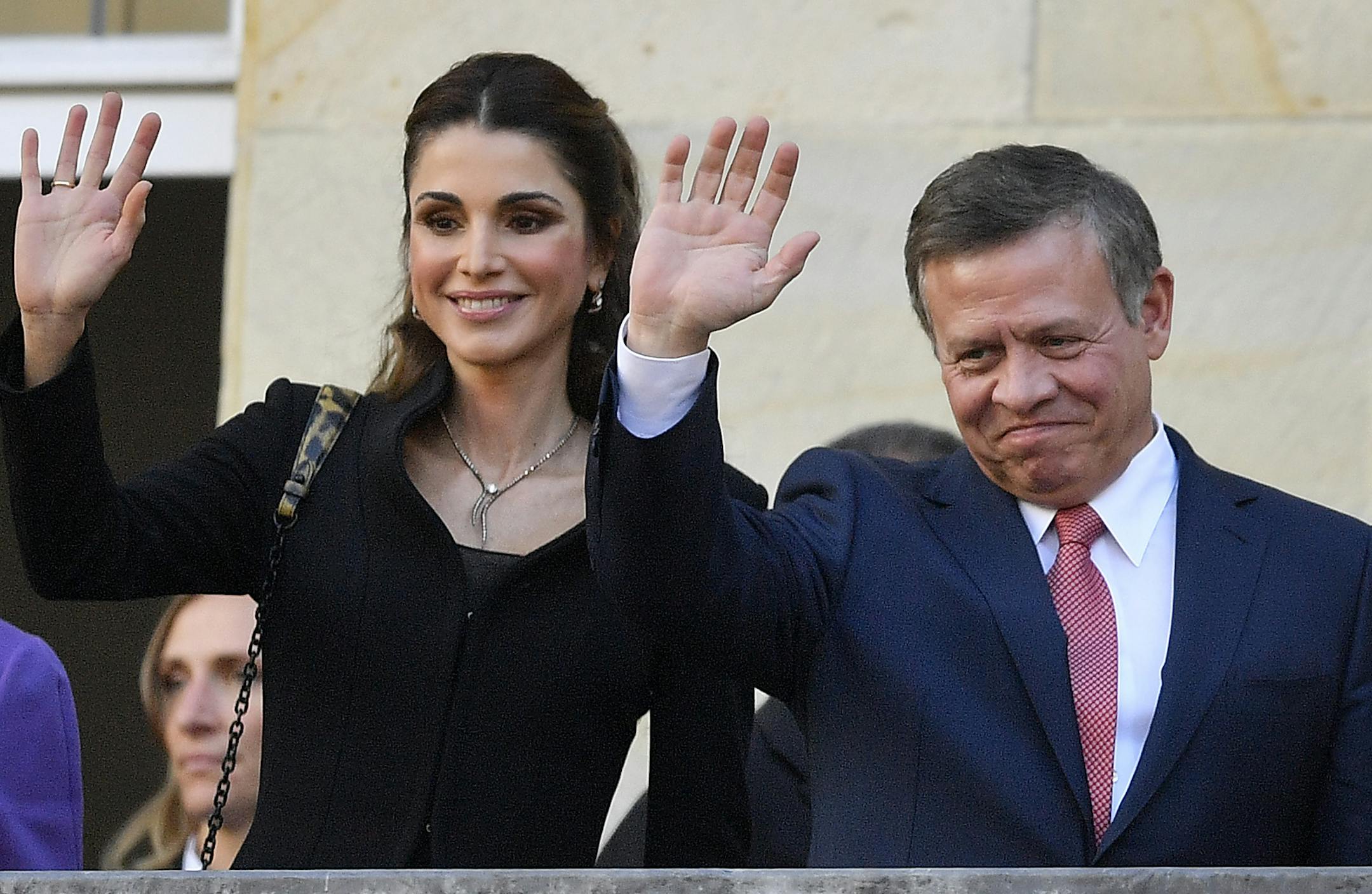
"A true triumph of progress over regression," claimed King Abdullah, boasting about Jordan's elections from the U.N. podium in New York on Sept. 20, the day his kingdom went to the polls. Many Jordanians thought otherwise.

Despite a relentless public-information campaign and the participation of the pro-Islamist Muslim Brotherhood for the first time in nine years, turnout slumped to a dismal 37 percent, down from 56 percent at the election before. In parts of Amman, the capital, barely one in five of those eligible bothered to vote.

The low turnout is a sign that many people saw the elections as a waste of time. The king swiftly reappointed the same unelected cabinet with only a few minor alterations, and since then has proceeded to push through a host of decrees. Wise-but-unpopular decisions to buy gas from Israel and to revise the school curriculum by removing troublesome Qur'anic verses were issued as decrees.

Ever since it was fashioned by Britain after the World War I, Jordan has served as a pro-Western outpost and a buffer keeping its petulant neighbors at bay. But as it transforms into a populous Arab state, the kingdom shows signs of strain. Economically and politically it is struggling to make the transition, say critics; "plucky little Jordan" is acquiring some of the attributes of the authoritarian regimes that surround it in all directions.

In the absence of a credible opposition, Jordanians are starting to look for less-established ways to make their voices count. Across the kingdom, protesters have taken to the streets to denounce the gas deal and education reform, despite a heavy police presence.

On Oct. 9, riots erupted in Quwaismeh, a suburb of Amman, after a series of police raids. And with the Brotherhood, Jordan's historically pro-royal Islamist movement, there are signs that the aggrieved are finding more extreme outlets. Islamic State in Iraq and the Levant flags have been spotted flying in Salt, an old trading town west of Amman.

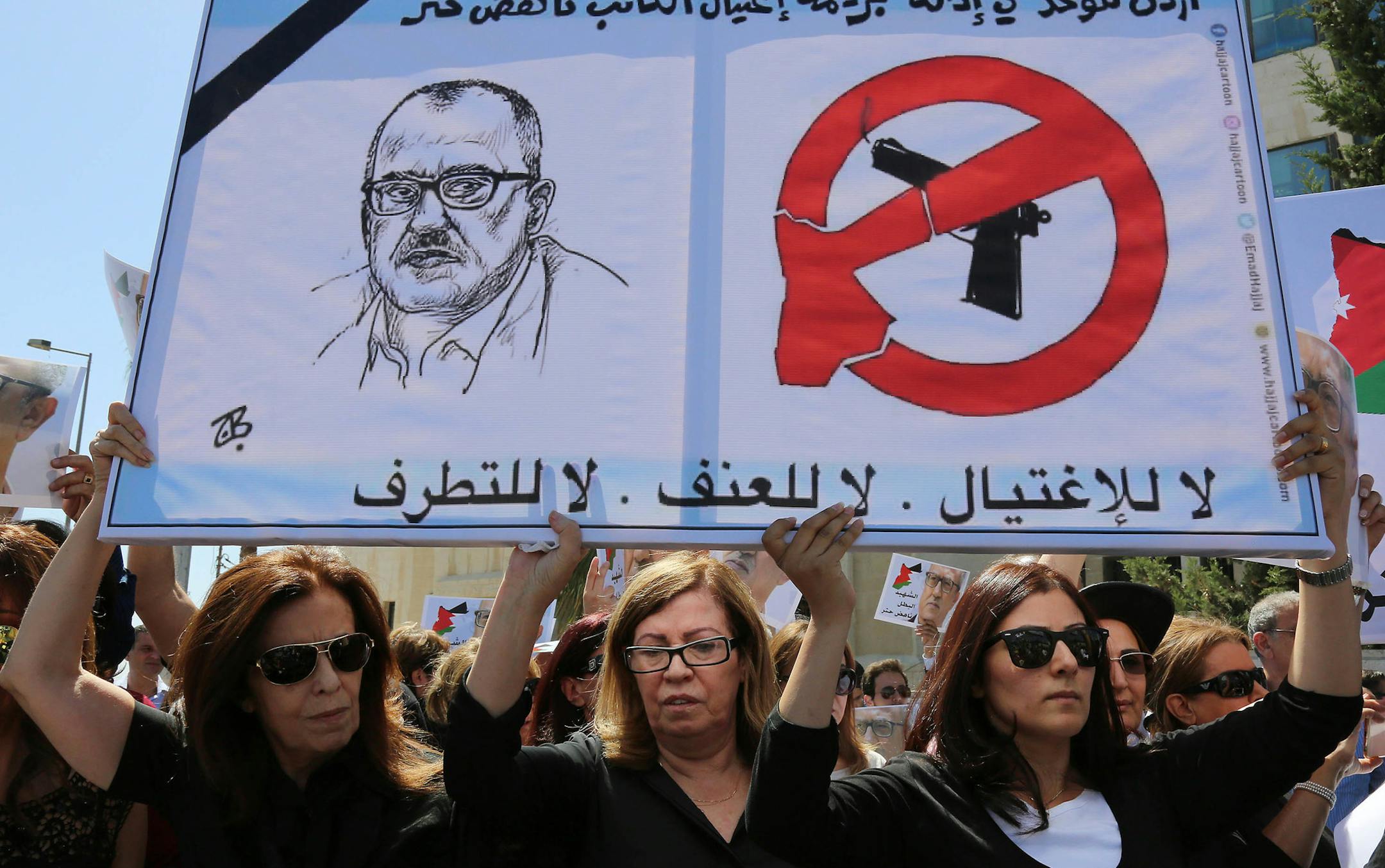
The kingdom's tranquillity is threatened in other ways, too. Crime is climbing. At the end of September a well-known journalist, Nahed Hattar, was shot dead on the steps of Amman's courthouse before a hearing on blasphemy charges; the killer was an education-ministry official. In rural areas, where elections are fiercely contested as tribal shows of strength, the losers have blocked roads and clashed with police. "The ballot boxes were stolen," said Hind al-Fayez, a candidate who accused the interior minister of corruption and then lost her bid for re-election.

Fayez has gone to court alleging that the vote was rigged, but even if the result is reversed she said she will not take her seat. "Street movements have more power than parliament," she said.
Other disillusioned politicians are also challenging the system. A former parliamentarian from Tafila, in southern Jordan, is trying once again to register a new party calling for a true constitutional monarchy. Marwan Muasher, a once-loyal foreign minister, has launched a campaign for citizens' rights.

Economic hardship has accompanied the political. Growth has fallen to less than 2 percent. Public debt has leapt to 93 percent of GDP since the Arab Spring. A fresh bout of tax and price increases on essentials like water and bread is in the offing. A huge refugee influx from Syria increases the battle for jobs and resources. Economic trouble in the rich Gulf states, particularly in Saudi Arabia, suggests worse could be coming. Aid, tourism, investment and remittances are all sharply down. "The economy is based on foreign aid," said Samer Tawil, a former economy minister. "We cannot prosper without it."

Years of price rises and subsidy cuts have eroded the kingdom's once-comfortable middle class. Amman, where almost half of the country's 9 million people live, is the Arab world's most expensive capital, but salaries are among the lowest. Cuts to education and health services feed discontent.

For all its Western orientation, the kingdom remains deeply conservative. Fewer women go to work than in Saudi Arabia. Hattar's killer might have been a lone wolf, but social media was full of support for him. Thousands of Jordanians are waging jihad abroad and might one day come back and wage it at home.

Jordanians felt the regional storm had passed them. Now they are fretting again about how strong their borders are, and what depth of support the jihadists could expect should they come.


King Abdullah of Jordan and Queen Rania wave to citizens on the historic town hall balcony in Muenster, Germany, Saturday, Oct. 8, 2016. King Abdullah was awarded the Peace Prize of Westphalia in recognition of his endeavors for peace and international security and stability. (AP Photo/Martin Meissner) ORG XMIT: MME104
King Abdullah, with Queen Rania, called elections “one more step on our country’s positive, evolutionary path.” (The Minnesota Star Tribune)
Relatives of Jordanian writer Nahed Hattar protest in front of Jordanian Prime Ministry in Amman, Jordan on Monday, Sept. 26, 2016, to demand the overthrow Jordanian Prime Minister Hani al-Mulki over Hattar's death. The prominent and outspoken Jordanian writer on Sunday was shot dead in front of the courthouse where he had been on trial for posting a cartoon deemed offensive to Islam on social media. Sign reads in Arabic: No to assassination, no to violence, no to extremism. (AP Photo/Raad Adayl
Across the kingdom, protesters have taken to the streets, including the relatives of slain journalist Nahed Hattar. (The Minnesota Star Tribune)
about the writer

about the writer

Economist

More from Business

See More
card image
Aaron Lavinsky/The Minnesota Star Tribune

New York-based investment firm Taconic Capital and developer Polaris Properties were optimistic after the 17-story west tower’s renovation completed in late 2024. But tenants were hard to land.

card image
card image