

Now that two of the world's five biggest economies — Germany and Britain — are headed by women, and the biggest one of all, the U.S., has a woman front-runner in its presidential election, the glass ceiling in politics can probably be declared broken, and it's time to consider what kind of change this brings to the world.
The overall statistics of female leadership do not look particularly encouraging. There are fewer women heads of government today than there were last year. Not even 5 percent of government leaders are women. Yet they are winning where it matters: If there were a way to weight women's influence by the might of the countries they run, the U.S., Germany and Britain would swing the balance in their favor. It's infinitely harder for women to break through to the top in big, fiercely competitive democracies than in smaller countries like the Nordics and the Baltic states, which have provided most female government leaders in recent years. And it's doubly hard for a woman to reach high office in a country with a conservative Catholic tradition like Poland — where Beata Szydlo is currently prime minister. Besides, in a number of other powerful nations women are important opposition figures or strategically placed one day to take over the leadership of governing parties.
Adding to the collective clout of Merkel, May and, potentially, Clinton, some important nations that aren't run by women have women strategically placed one day to take over the leadership of governing parties or win high office as strong opposition figures.
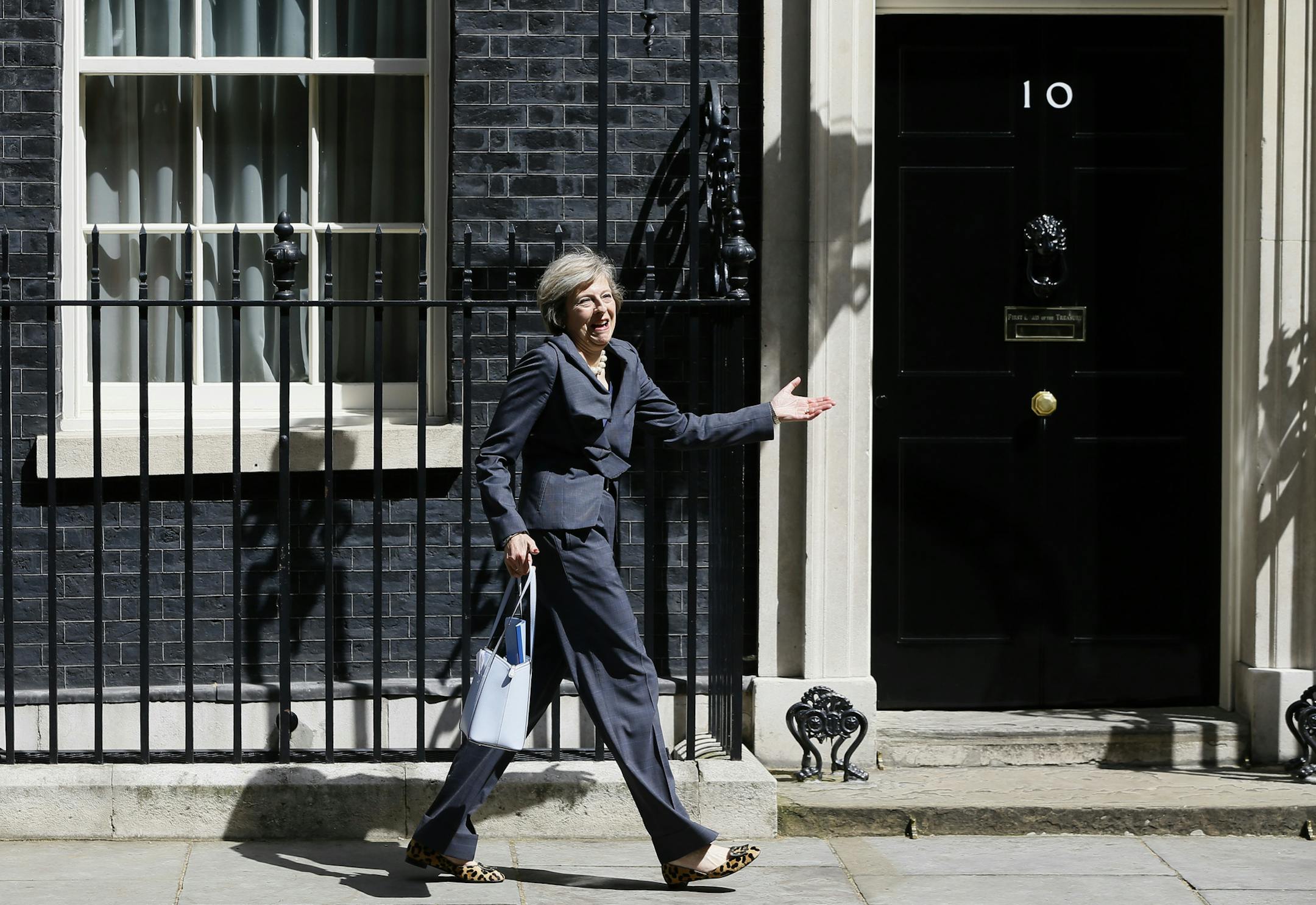
In Britain, presumptive Prime Minister Theresa May won the position after another woman, Andrea Leadsom, dropped out of the race for Conservative Party leadership.
In Germany, Julia Kloeckner is seen as a potential successor to Chancellor Angela Merkel, as is Ursula von der Leyen, the current defense minister. In Portugal, Assuncao Cristas is the first woman to lead the conservative party and the face of the country's center-right opposition. In Spain, Soraya Saenz de Santamaria has long been Prime Minister Mariano Rajoy's second in command; though she's seen as a technocrat rather than a politician, she has been indispensable to the center-right Popular Party. In Britain, Angela Eagle is a contender for the top post in the Labour Party, and the Scottish Nationalist Party is run by Nicola Sturgeon, who may yet preside over another Scottish bid to leave the U.K.
Women, of course, have attained political heights before, but many of those were from political families or clans that were part of their countries' business elite. The current generation of leaders is different. Merkel and May are the daughters of pastors. Clinton's father was a small-business man. Polish Prime Minister Beata Szydlo comes from a miner's family. Most of the opposition figures do not have an elite background, either — Kloeckner's family are vintners, Eagle and Sturgeon come from working-class stock. Von der Leyen was perhaps the only one born into the political establishment: Her father was a senior Eurocrat.
Some common characteristics of past women leaders still hold, though. Women of high political attainment tend to have few children. May, Merkel, Sturgeon, Kloeckner and Eagle have no children; Clinton and Saenz de Santamaria have one child each. Szydlo has two. Cristas and von der Leyen are exceptions, with four and seven kids, respectively.
The most striking similarity among the current crop of women leaders, however, is that they are mostly conservative, nonideological and compromise-oriented. May is a star example: She was a mild supporter of the "remain" camp but is willing to make a success of Brexit. Merkel, Szydlo, Saenz de Santamaria, Clinton — all of them are known for being flexible, versed in the workings of political machines and skilled, common-sense negotiators. No firebrands. Even Eagle, far from being a political conservative, has a Blairite past that some Labour supporters begrudge her: She served in the Blair and Brown governments, and she voted for the Iraq war.


