

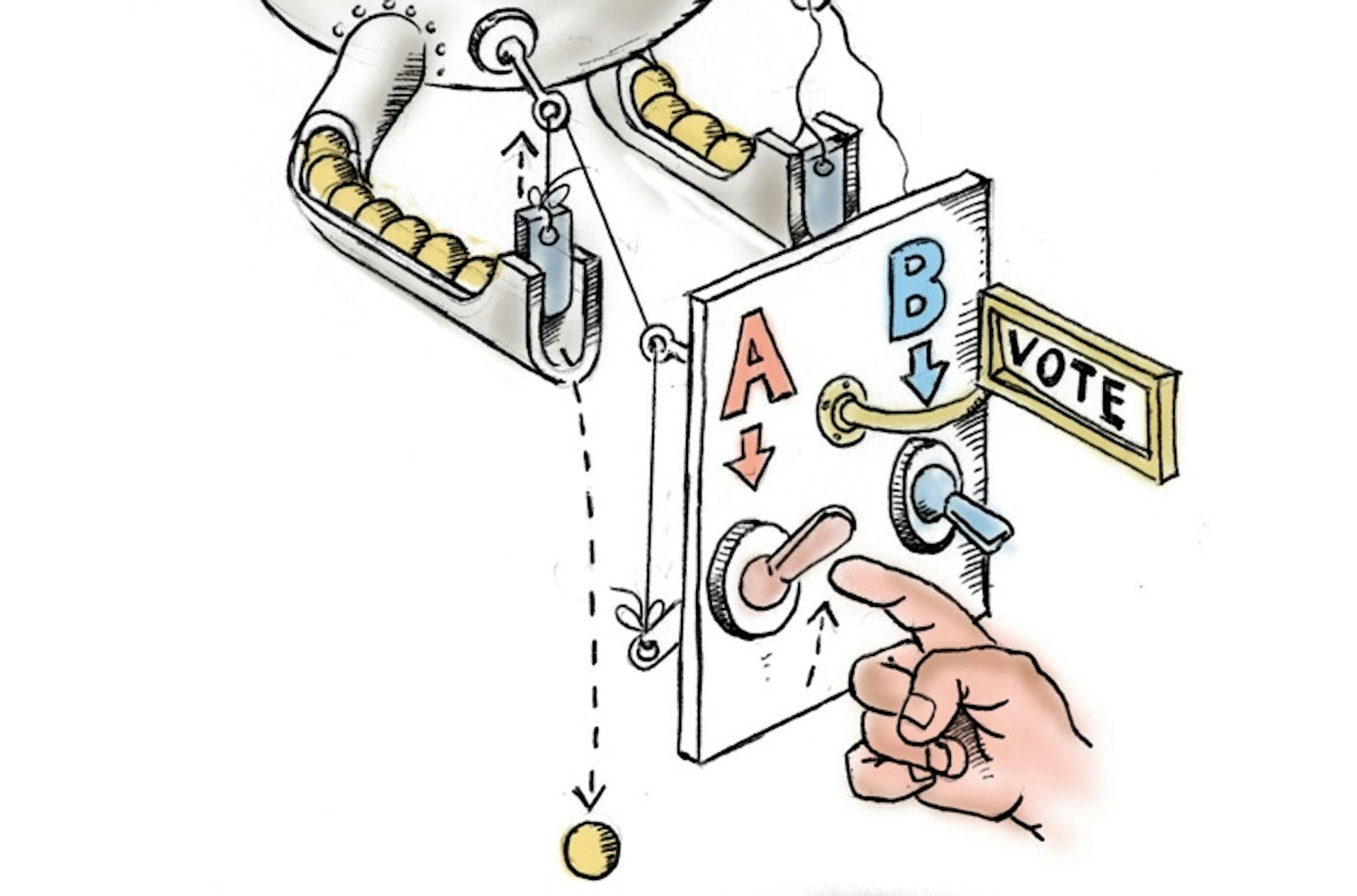
Are you excited by your party's candidates? No?
Americans cherish the right to vote. But most of us play little role in selecting the candidates from whom we ultimately choose an officeholder.
A tiny number of political activists do the choosing for us. They attend their local party caucuses in February. (It's cold in February, and most of us stay home.) An even smaller handful use that stepping stone to advance to the party conventions. There, they select and endorse candidates, who then have an advantage in a primary. Most of the activists' choices win -- and now they're on the ballot.
This time-consuming and unfamiliar process tends to discourage moderates -- both the moderately interested and the moderately leaning. It rewards the relatively small number of activists who are ready to walk on red-hot coals for their issues -- whether it is abortion and same-sex marriage or single-payer health care.
For most Minnesotans, the candidate-selection process is too hard to understand, or too onerous, to make participation worthwhile. So we don't participate. And, then, we have to choose among the candidates the handful of activists select and who don't reflect many of our views.
In 2012, the GOP presidential nomination battle devolved into a competition that marched steadily rightward to please the party activists.
In Arkansas, in 2010, liberal activists targeted incumbent Democratic U.S. Sen. Blanche Lincoln, a moderate. She was politically damaged but hung on to her party's nomination. But the activists lost when Arkansas elected a conservative Republican to replace her. That made the entire liberal agenda more difficult to advance. One wonders if any of these folks thought of that.
Tea Partiers "won" multiple nomination contests in 2010. But their favorite candidates were often too conservative to win even in a year when Democrats in general got crushed. Republicans lost winnable seats in Nevada, Delaware, Colorado and, perhaps, Connecticut, costing them the opportunity to secure the majority in the U.S. Senate.


