

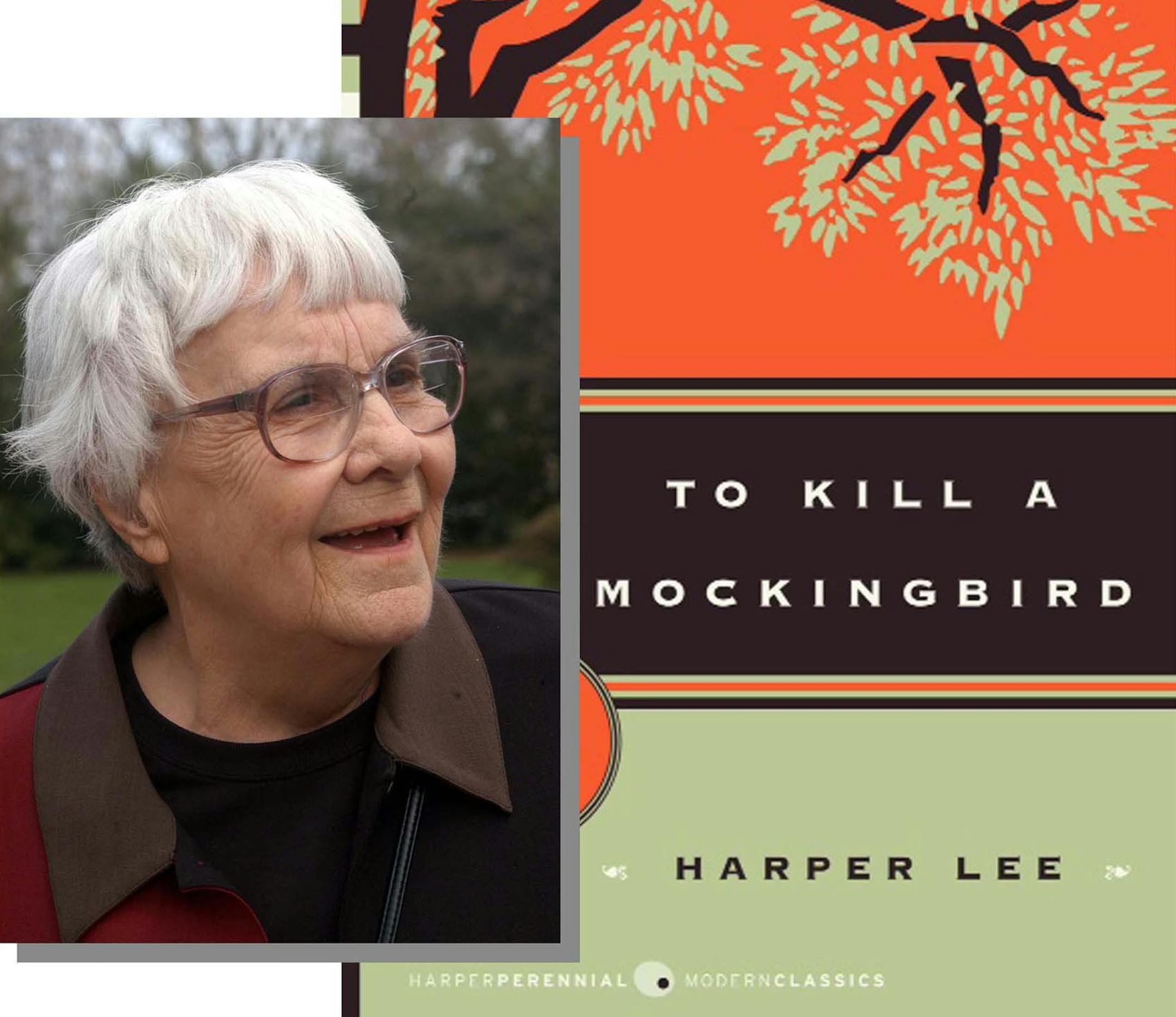
Some authors are so prolific they are said to have a canon.
Until this week, it was thought that Harper Lee wrote just one book. But it was a cannon.
Her seminal novel about racial injustice, "To Kill a Mockingbird," was published in 1960. Since then it's been translated into 40 languages and has sold more than 40 million copies. The 1962 cinematic adaptation is one of the relatively few films to do justice to classic literature.
The lasting power of "To Kill a Mockingbird" made many wish she would publish again. To the shock of the literary (and indeed, wider) world, she will — 55 years later — with a "new" novel that will be published this July. "Go Set a Watchman," which Lee thought was lost, was found attached to an original "Mockingbird" manuscript. Featuring some of the same characters and themes of Lee's classic, "Go Set a Watchman" is in some ways a sequel, since the story takes place 20 years later. But from a writing perspective it's a prequel, since it was written before "To Kill a Mockingbird."
Lee's singular success is an accomplishment equaled by few other authors — or anyone in any field, for that matter. "One-hit wonders" in music may score a hit, but it's not their only recording. In sports, it would be like an unknown rookie skating a shift in the NHL, scoring the winning goal in the Stanley Cup Finals, only to never play — let alone rarely speak about the feat — again.
The stunning success of "To Kill a Mockingbird" may actually have been one of the reasons why, said MJ Fitzgerald, an associate professor in the University of Minnesota's English Department. "I think that starting even in the 50s, and certainly continuing now, there was such pressure for writers to be public figures that I really think that kind of skews the writing process very deeply," said Fitzgerald, who writes fiction and teaches creative writing and literature.
Fitzgerald added that some of Lee's cohorts, like Philip Roth and Saul Bellow, became lasting literary sensations even though they may have realized that their later works might not be as well received as their breakthrough novels. Others, like J.D. Salinger, became good at playing "the game" of hiding. Lee was not interested in playing games and, in fact, she seemed genuinely uncomfortable with fame.
No matter. Her novel spoke volumes at a time when voices rose over racial injustice in America.


