

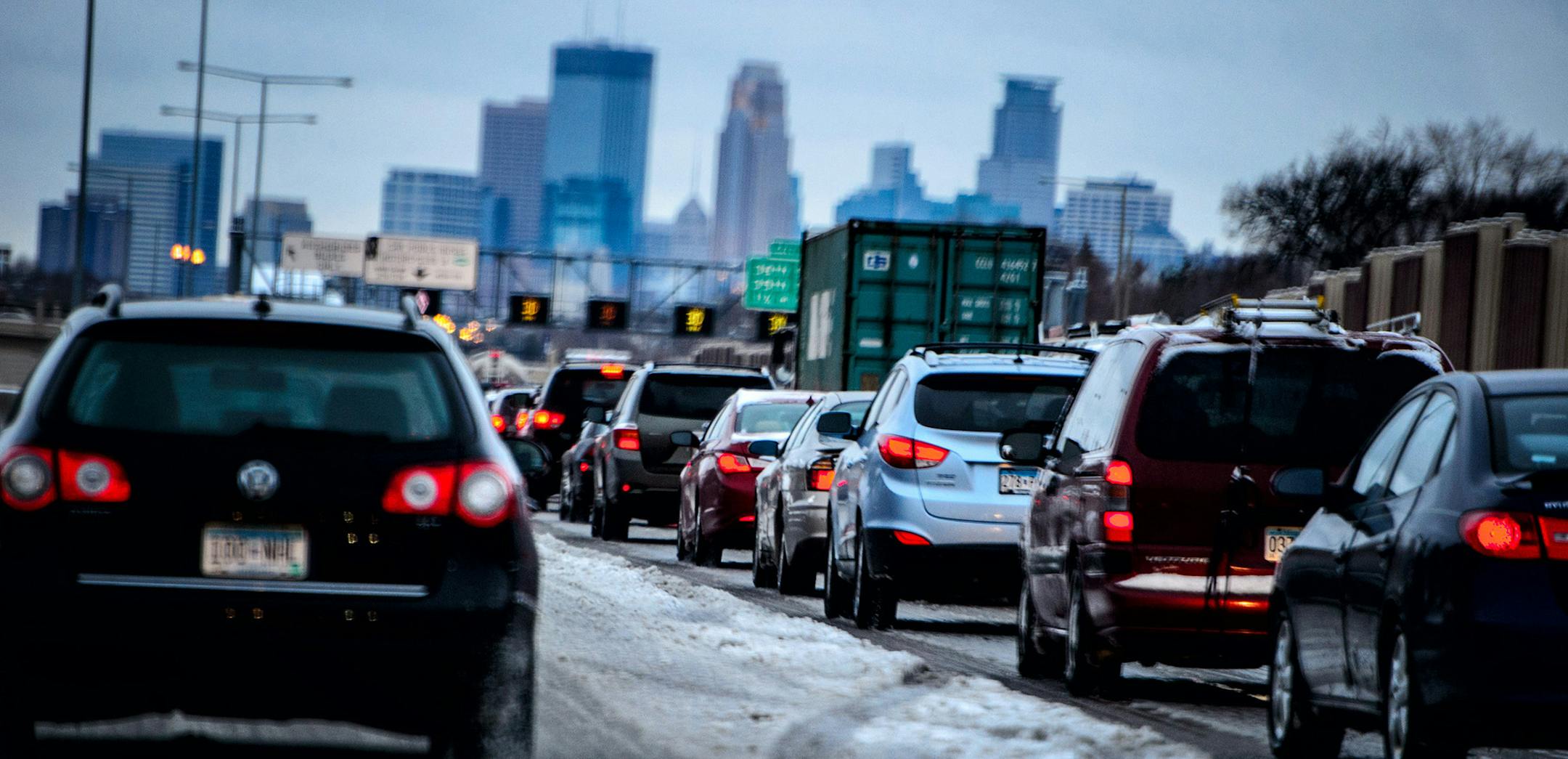
It's no secret that a light dusting of snow can bring traffic on metro area highways to its knees, turning a 20-minute commute into an hourslong white-knuckle drive. But instead of sitting there and stewing about it, tweet it.
(Of course, you'll have a passenger compose your snarky rant or wait until you get off the road to complain about how bad the roads are.)
Aside from being cathartic, those 140-character tweets can provide valuable information.
When integrated with computer models, they can help traffic analysts recommend safe driving speeds and suggest which roads motorists should avoid when the weather turns foul.
That's the finding of researchers with the Institute for Sustainable Transportation and Logistics at the University at Buffalo in New York. They set out to learn how social media reports might complement traditional weather observations and improve travel information relayed to motorists, said Qing He, who co-authored the study that appeared in the October issue of the journal Transportation Research Record.
"Tweets happen in real time and provide good information," he said. "You get lots of information on social media and better understand the problems." That can tell an agency that "we need to get a plow to [location] because we see all these tweets."
Traffic analysts often rely on models that take data from cameras and sensors embedded in the road, and from weather stations that relay information like temperature, wind speed and precipitation.
6,000 tweets a second
While an effective way to gauge the effect of inclement weather on traffic, the researchers say the approach doesn't provide specific information on road surface conditions. The models don't account for icy conditions that may still persist after a storm had subsided or factor in vehicle speeds on roads that have been properly plowed.


