

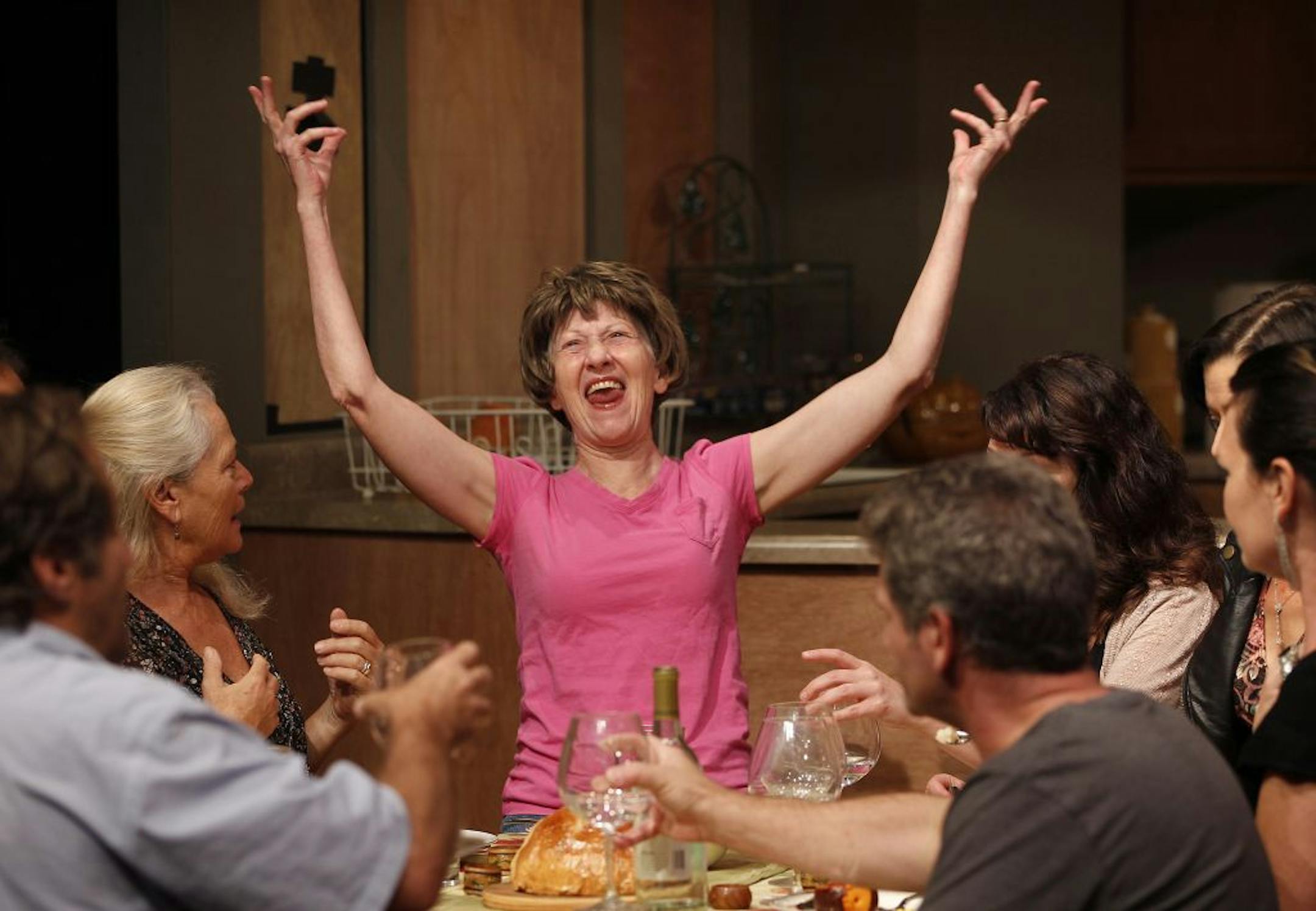
No, Oklahoma is not OK in Tracy Letts' jaundiced update of American exceptionalism, "August: Osage County." The playwright uses tumbleweed heat to roast cherished notions of family and optimism. The American dream is vapid at best and more likely a nightmare.
These are not the freshest ideas. Letts draws from established literary influences in what some have called a pastiche of O'Neill, Williams, T.S. Eliot and Albee. His originality, though, lies in the savory cynicism of his scathing wit and a plot that unfolds to the very end.
Director Leah Cooper's staging, which opened Friday at Park Square Theatre in St. Paul, takes its cue from the snarky humor and finds an audience thirsty to laugh. Indeed, the withering rejoinders and insults are funny stuff, but the question resting in our gut in conclusion is whether the comedy lets us off the hook. How, as we chuckle about drugs, pedophilia, incest, chemical dependency and death, can we absorb the devastating totality of a play that won a Pulitzer and Tony?
Michael Hoover's set signals the tone of Cooper's staging. Fresh painted walls and newer kitchen cabinets mask the ghostly vacancy of an Oklahoma manse that should ache with age. The modernity puts us in mind of a domestic drama rather than a timeless classic.
The iniquities of the parents have been visited upon the children of Violet and Beverly Weston. Faustian deals with the demons of drugs and alcohol have allowed these two bereft souls to scratch out an existence on the arid high plain, and their three daughters bear the scars.
"Life is very long," says Stephen D'Ambrose's Beverly Weston, quoting Eliot in a weary and eloquent opening monologue. Beverly will soon vanish, and his disappearance triggers an ensuing family vigil overseen by his distraught wife, Violet, who devours painkillers and psyches with equal relish.
Barbara Kingsley's portrayal of this definitive harridan elicits more sympathy than the steely evil Estelle Parsons found on Broadway and a national tour. This Violet is less a creature of nature and more a wounded mother and wife. Still, Kingsley's Violet drinks from a wellspring of hardship -- dispensing truth, however harsh, and imposing on her daughters a relentless and critical tongue.
Carolyn Pool's mousy and resentful Ivy is the favored target of Violet's insistent chisel: "Put on some makeup; what man would have you? You look like a schlump; spruce yourself up."


