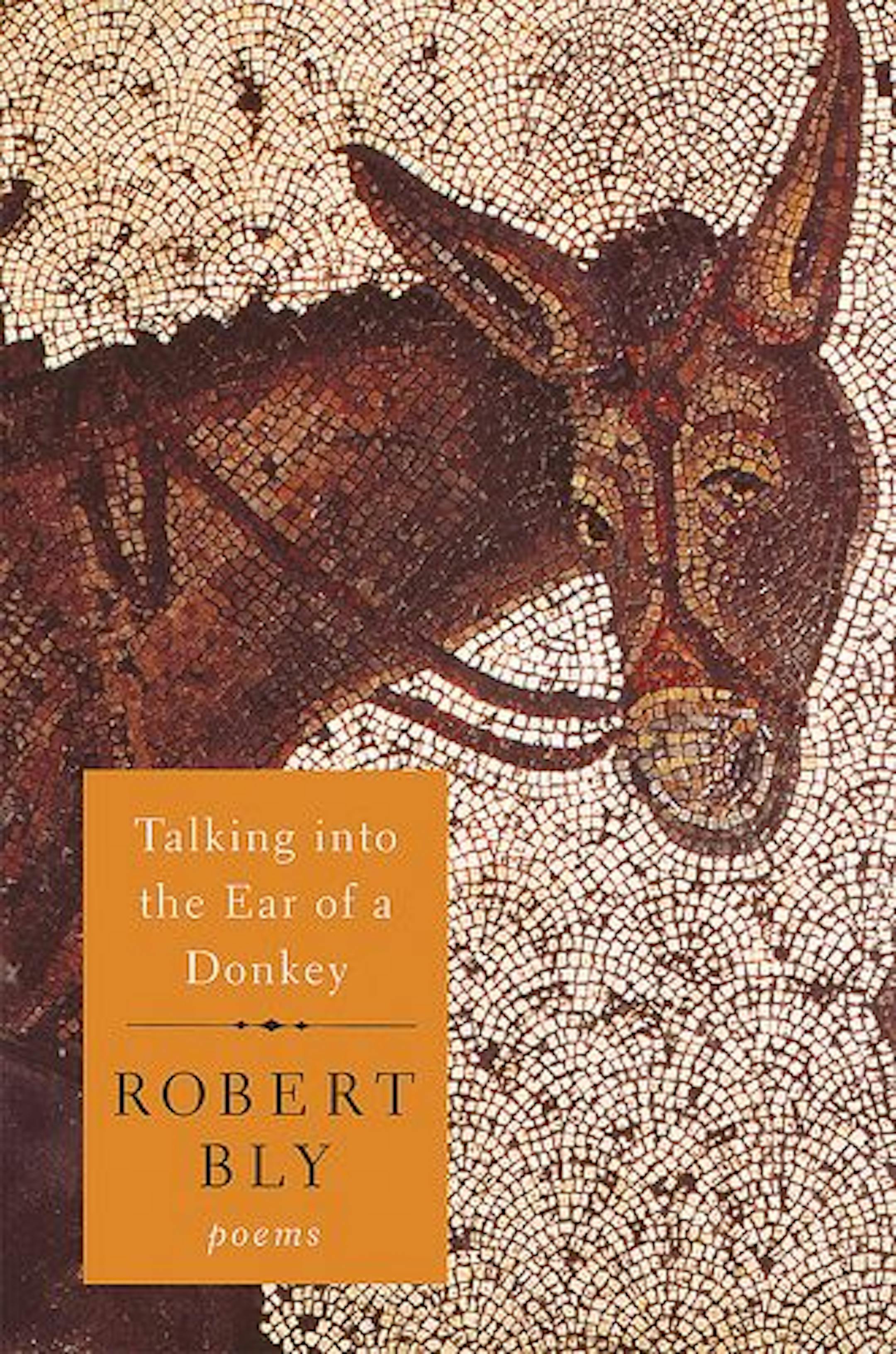
In a note to his first book of poetry, "Silence in the Snowy Fields," published in 1962, Robert Bly wrote that he was "interested in the connection between poetry and simplicity. ... The fundamental world of poetry is an inward world."
Nearly 50 years and 30 volumes later, simplicity remains a primary concern for this Minnesota poet; his gaze, however, has shifted outward. The clear diction of "Talking Into the Ear of a Donkey" makes accessible its transcendental themes, including the wisdom of the animal world and the spiritual connection between humankind and nature.
Now in his 80s, Bly has exerted enormous influence on American poetry not only as a poet, but as a publisher and translator. His translations introduced American writers to poets such as Pablo Neruda, Cesar Vallejo and Georg Trakl. His magazine The Fifties (renamed in subsequent decades) cultivated a generation wanting to shake off modernism's intellectualism in favor of the passion of Spanish poets like Federico García Lorca.
Throughout his career he has drawn from the ecstatic veins of world literatures, poetry he called "leaping." His own work leaps instinctually, moving from an image of herons "stitching the heavens together" to meditating on death.
"Talking Into the Ear of a Donkey" begins with a series of ghazals, a poetic form used by mystic poets in ancient Persia. The form is associated with the themes of love, longing and metaphysical questioning.
Bly writes: "Everywhere people are longing for a deeper life. / Let's hope some acrobat will come by / And give us a hint how to get into heaven."
The simple declarative sentences have a homiletic quality, which is furthered by the smattering of biblical references.
"We have never understood ... how heaven and earth can appear in a poem," he writes. His poems, while spiritual, celebrate the worldly delights: shining fish, giant moose and bird song. He often contrasts the contented wisdom of nature with the human longing for meaning.