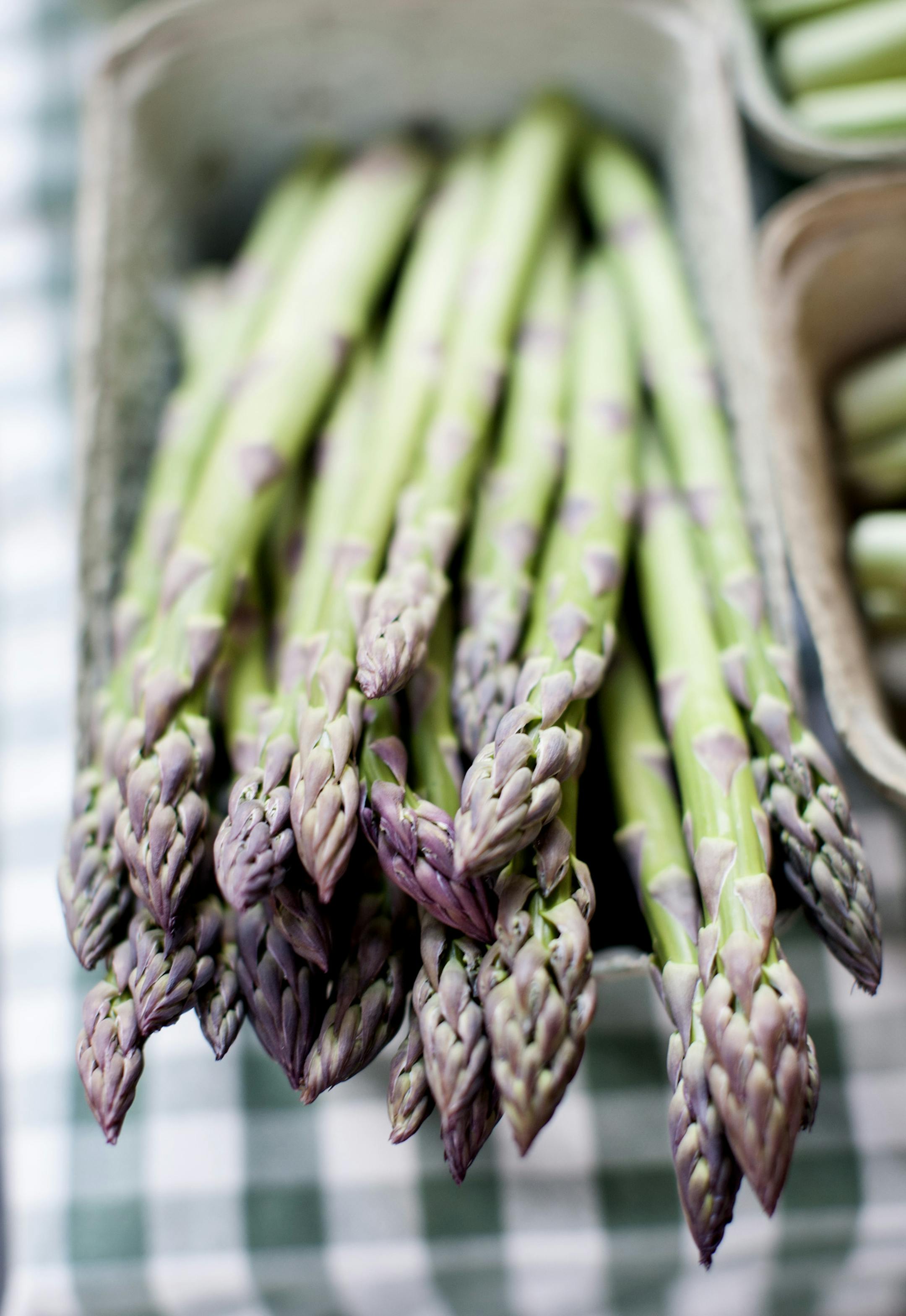
Asparagus is the deal breaker: Strawberries are pretty, and tender lettuce is nice. But the arrival of fresh asparagus is the sign that spring is official.
It's also a deal breaker on cooking: With really fresh asparagus, boiling or steaming isn't the best way to go. Its grassy flavor is better with methods that concentrate the flavor — roasting, or pan-frying, even microwaving. It's perfect for really fast cooking. Overcooked asparagus is limp. Good asparagus needs just a little crunch.
The season for the very best asparagus doesn't last long, just a month or so. Make the best of it with these tips, and the three easiest asparagus dishes I know:
Choose it: Look for tight heads (if they're shedding, skip them). Check the bottom of the cut ends. If they're so dry they have holes, skip them. Avoid stalks that have ridges, a sign they're old or woody.
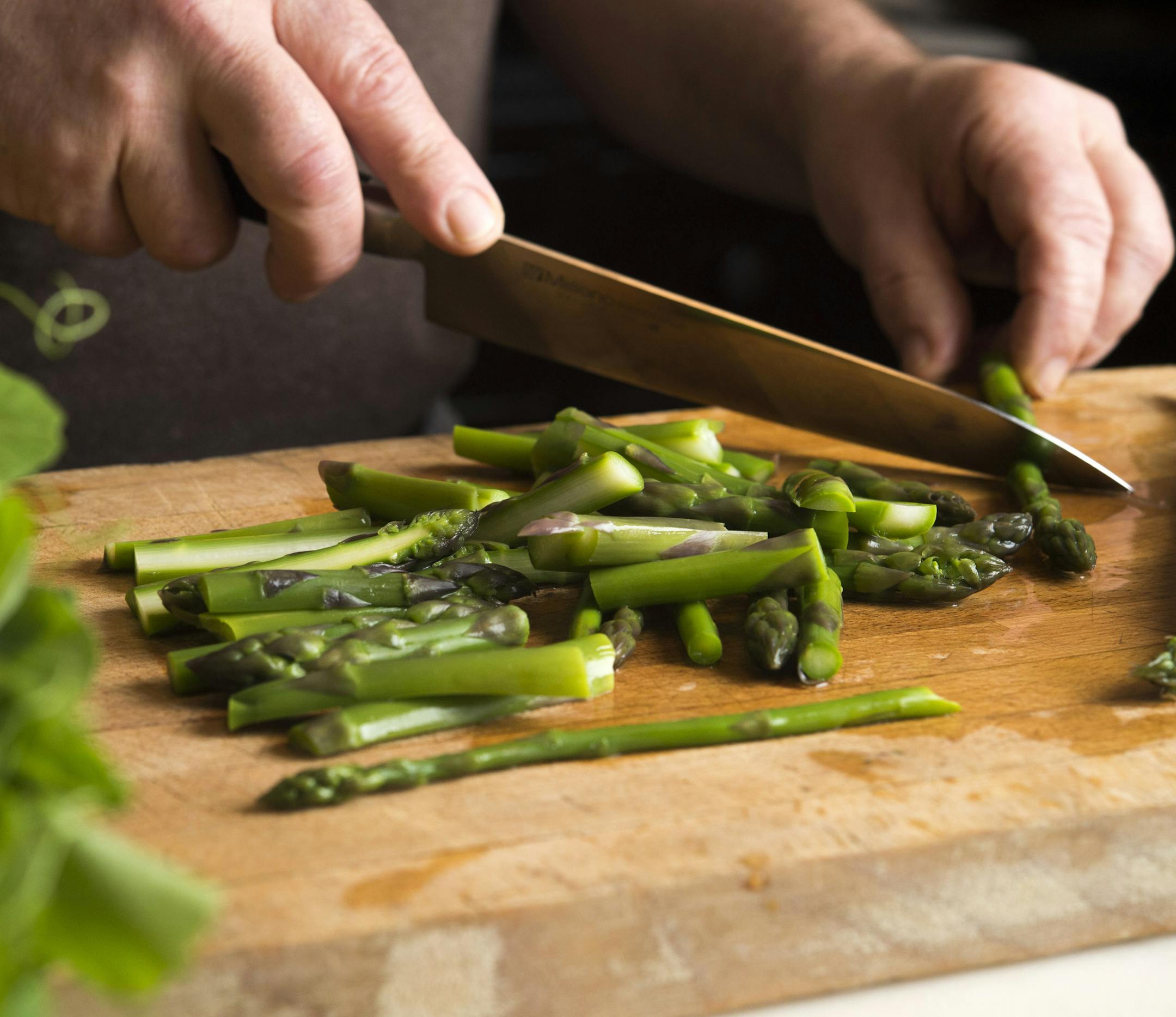
Which size? Depends on what you're doing with it. Thin spears are great for slicing into short sections and sauteing. Fat are best for roasting, grilling and shaving into raw asparagus salad. Medium can go either way.
Store it: Wrap a wet paper towel around the bottoms and tuck into an open plastic bag with the tops sticking out. If you have the room, you can also stand the bunch up in a little water in a jar and refrigerate it. Keep it up to a week.
Snap or peel? If you hold a stalk between your two hands and gently bend it, it will snap off right where the bottom of the stalk gets too tough. If you can't bear to lose that much, cut off the bottom 2 inches, then use a vegetable peeler to shave off the tough skin for several inches up the stalk. (Snapping is faster, though.)
Pick an appliance
Oven: Toss trimmed stalks with a little oil. Spread in a single layer on a baking pan. Sprinkle with some coarse salt. Place in the oven at 425 degrees and roast for 10 to 12 minutes, giving the pan a good jerk about halfway through to roll the spears.