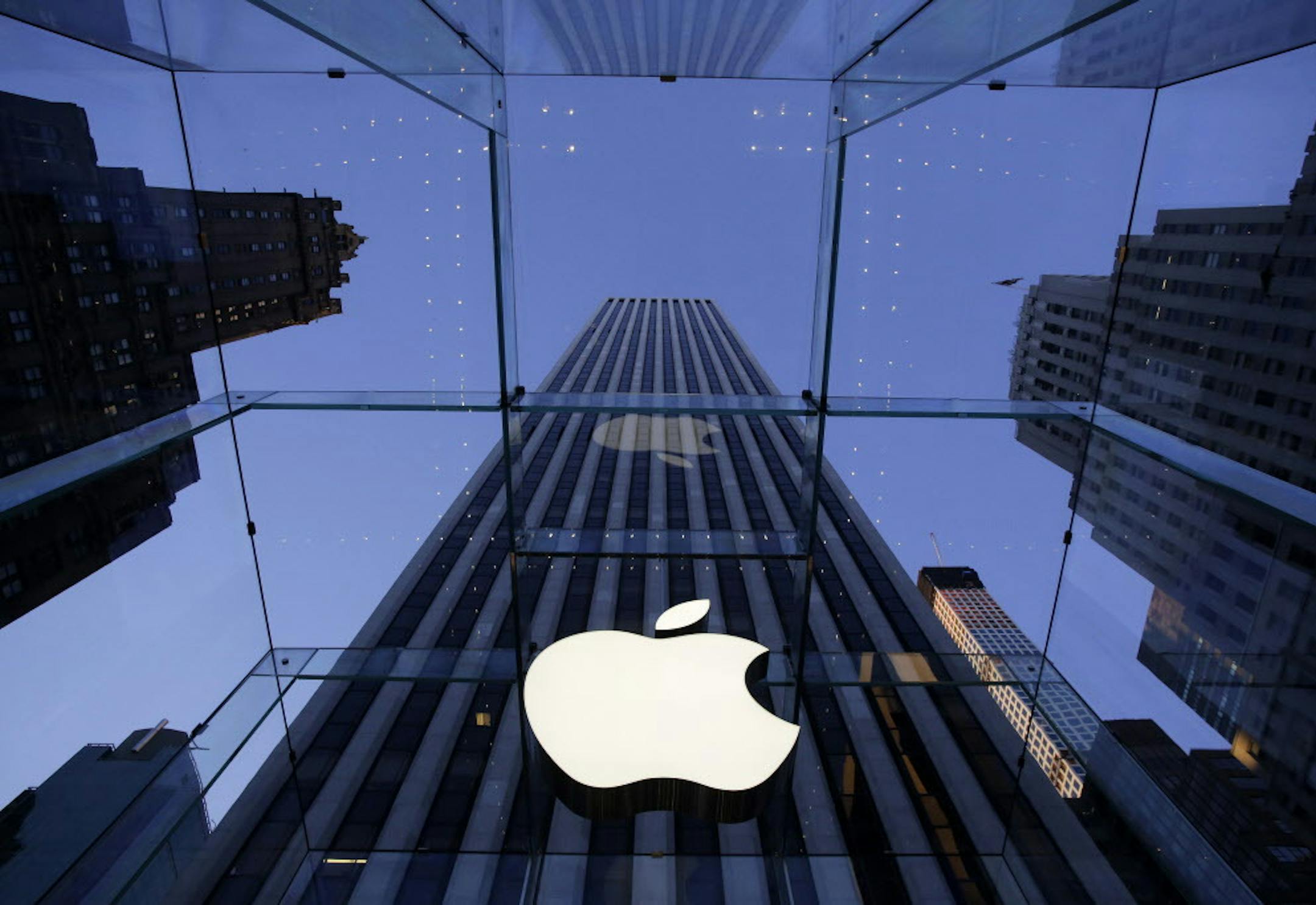
NEW YORK – The big money doubted Apple this year. Oops.
"It's been a really confusing year," said Kim Forrest, an analyst at Fort Pitt Capital Group Inc., which oversees about $1.7 billion in assets under management. "There have just been a handful of stocks that drove the market, and Apple was obviously one of them. It's been tough."
Aversion to the iPhone maker is turning out to be one of the worst blunders in 2014 for money managers, who are trailing benchmark indexes by the most in nearly a decade. Shares of the world's largest company rose four times more than the Standard & Poor's 500 index as Chief Executive Tim Cook's product plans eased concern over the company's future growth.
Investors who clung to winners from the first five years of the bull market, from Internet companies to small caps, got burned in the sixth as chipmakers, utilities and dividend shares rallied. In many ways, 2014 was the year of the hated stock. One of the best things you could've done was own companies with the highest short interest and the lowest analyst rankings, according to data compiled by Bloomberg. Such a strategy would have steered you to Exelon and Micron Technology, with average gains of 26 percent since January.
Going against the grain now would lead you to buy energy shares, the industry whose 2014 loss is triple the next worst-performing group in the S&P 500. That's what Bill Nygren is doing after his $6.7 billion Oakmark Select Fund beat 97 percent of its peers this year. Nygren bought Apache Corp., a Houston-based oil producer, during the energy sell-off as crude went from $107 a barrel to $58 in the past six months.
"Unloved companies tend to be the most interesting hunting ground for future outperformance," said Nygren, who is based in Chicago. "The reason that Intel and Microsoft were able to do so well is that they were so unpopular."
Like their colleagues in the bond market, many equity managers entered the year believing economic growth would pick up and interest rates rise. They avoided defensive stocks such as power generators and loaded up on retailers and other industries that benefit when Americans spend money on nonessential goods.
Instead of rising, yields on 10-year Treasury notes fell to 2.08 percent from 2.88 percent a year earlier, as central banks from Europe and Japan boosted monetary stimulus in a bid to spur growth. That fueled a surge of at least 20 percent in utilities and REITs, two groups whose dividends are among the highest. Consumer discretionary shares rose half as fast as the rest of the market.