

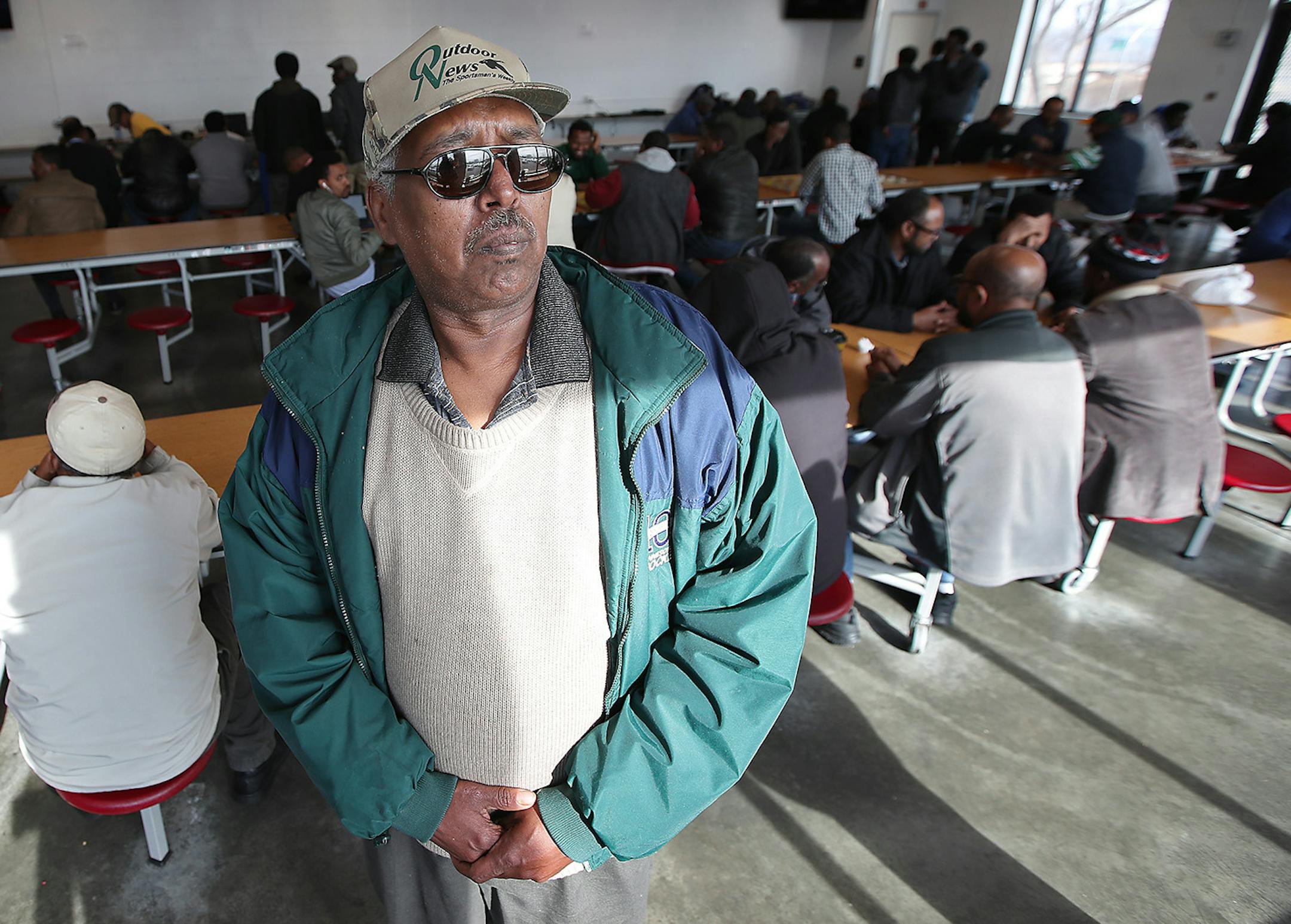
Abdul Mohammed sits in his white van and frets.
In front of him in a parking lot near Minneapolis-St. Paul International Airport are 300 other taxis, each of whose drivers will wait for hours to make the 1.5-mile trip to the terminal to pick up a passenger.
Mohammed has been driving an airport taxi since 1989, but he's not sure how long he can hang on. The day before, he worked for 12 hours and made just two trips. After gas and his daily lease payment, the $80 in fares he collected shrunk to just $25.
"Our American dream has been cut short," said Mohammed, an Ethiopian immigrant who lives in Brooklyn Park. "Our business is saturated. There are too many drivers. You can't even raise a family."
Business has gotten tougher for Mohammed and hundreds of other cabdrivers in the Twin Cities for a simple reason: Uber and Lyft. The ride-sharing services have transformed the transportation business since their arrival in 2013, and cabdrivers have lost out.
Now, some of them are improving their games in an effort to compete: embracing technology, spiffing up their vehicles and improving customer service. But the ride-sharing companies are still usually cheaper and often more convenient.
Nowhere is the challenge more obvious than at the airport, where Uber and Lyft have been allowed to pick up passengers since April. Cabdrivers, who now wait as long as six hours for a customer, are horrified by the change.
"I think in the next year or so we may be out of business," said Jamal Adem, owner of Airport Express Super Taxi, the second biggest operator at MSP. "Most of the drivers are looking for another job. This is serious."
![Cab drivers waited in a gigantic holding pen near the airport waiting for a call, Wednesday, February 22, 2017 in Bloomington, MN. Many of them have waited more than four hours. ] ELIZABETH FLORES • liz.flores@startribune.com](https://arc.stimg.co/startribunemedia/3TUX32KCRHDHXZMDEO4MC4SP7E.jpg?&w=1080)


