Government taxes things it wants to discourage — not as much to generate revenue as to change behavior. Cigarettes are taxed. So are sugary drinks, and, in places where it's legal, marijuana.
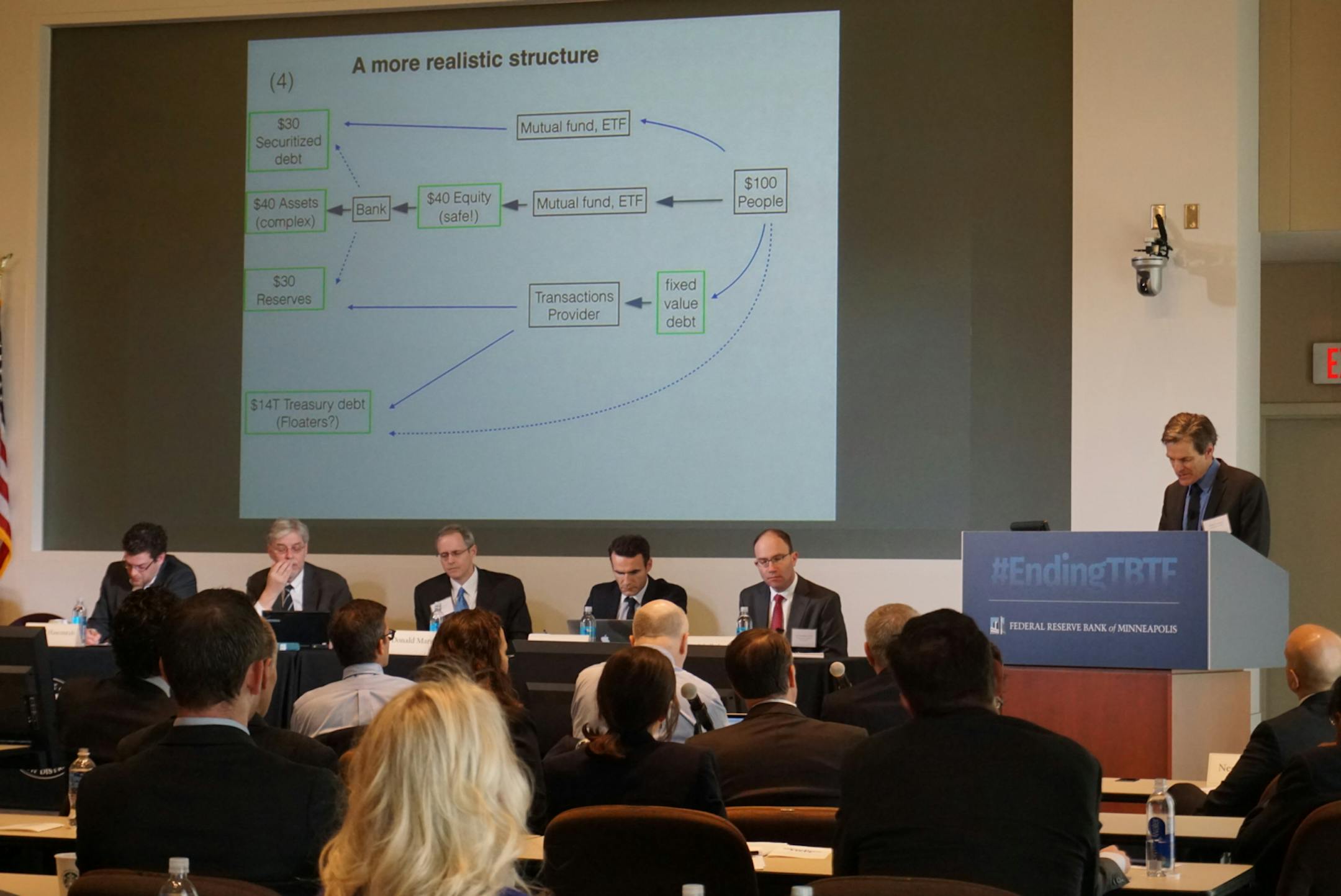
Why not impose a tax — or a fee — on bank debt, John Cochrane, a University of Chicago economist, asked Monday at the Minneapolis Fed's second symposium on bank industry risk.
Cochrane, who has proposed a 5 percent tax on all short-term debt held by banks, argues that it would encourage banks to only hold debt they absolutely need. That would raise capital ratios and make the financial system safer.
"A 100 percent equity-financed institution cannot fail," Cochrane said.
A tax is a better way to control debt than higher explicit capital requirements or "intensive discretionary supervision," Cochrane has said. Those ideas, as well as a proposal to break up the big banks, have been floated at the Minneapolis Fed this year.
Confronted with the point that taxes always meet objections from a certain sector of the population, Cochrane said he will refer to his proposed tax as a fee, to avoid that controversy.
"I will use the word fee henceforth," he said.