

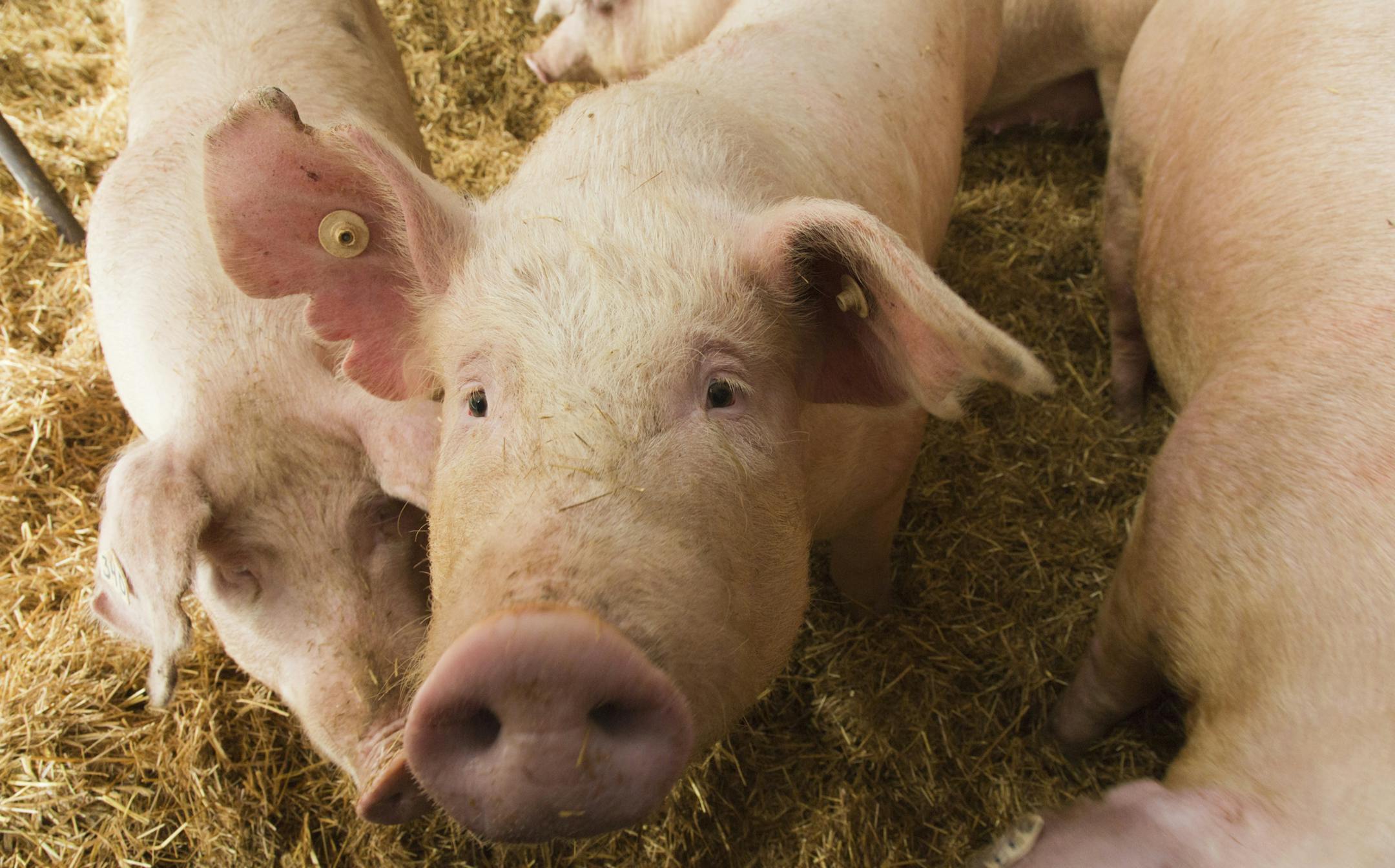
Mama pigs at the University of Minnesota have a somewhat cushy life compared to those in most conventional hog farms. The pregnant sows live together in small groups with straw bedding, unlike the traditional swine housing of individual stalls and slotted flooring above concrete manure pits, where sows have only enough room to stand up or lie down during their 114 days of gestation.
Studying group housing for pregnant sows is one of the ways that researchers at the U's West Central Research and Outreach Center are helping pork producers and processing companies respond to public pressure about animal welfare in the swine industry. Recent studies include housing options for pregnant sows, aggressive behavior of swine in confinement, and how different amounts of living space affect swine behavior, growth rates, stress and other factors.
"A lot of our effort has been to address societal concerns about pork production," said swine scientist and operations director Lee Johnston. "Those concerns are raised by consumers and market chains, and producers in turn are asking themselves and us how to respond to those market signals or satisfy those questions and demands."
Some questions are about animal welfare, he said, and some are about nutrition and feed additives.
Protests against confinement of pregnant sows and treatment of pigs are not new, but they were brought to the surface again two weeks ago when the international animal welfare group Mercy for Animals presented undercover video of what it called cruelty to pigs and sows by a Hormel supplier in Oklahoma, the Maschhoffs. Both Hormel and Maschhoffs said they have strict codes of conduct and policies related to animal care, and both launched investigations.
At the U's center near Morris in west-central Minnesota, Johnston and associate professor Yuzhi Li, an expert in swine behavior and welfare, have been on the forefront of animal welfare and nutrition issues for the swine industry.
The center has barns that accommodate about 60 breeding sows, 900 nursery pigs and 800 finishing pigs (those from about 50 pounds to full-grown market weight of about 280 pounds). The farm is nowhere near the size of some commercial operations, Johnston said, but it's large enough to conduct research that pork producers don't have the time, space, money or expertise to study on their own.
Some studies are financed by the National Pork Board and the Minnesota Pork Producers Association, but funds also come from state and other sources.


