

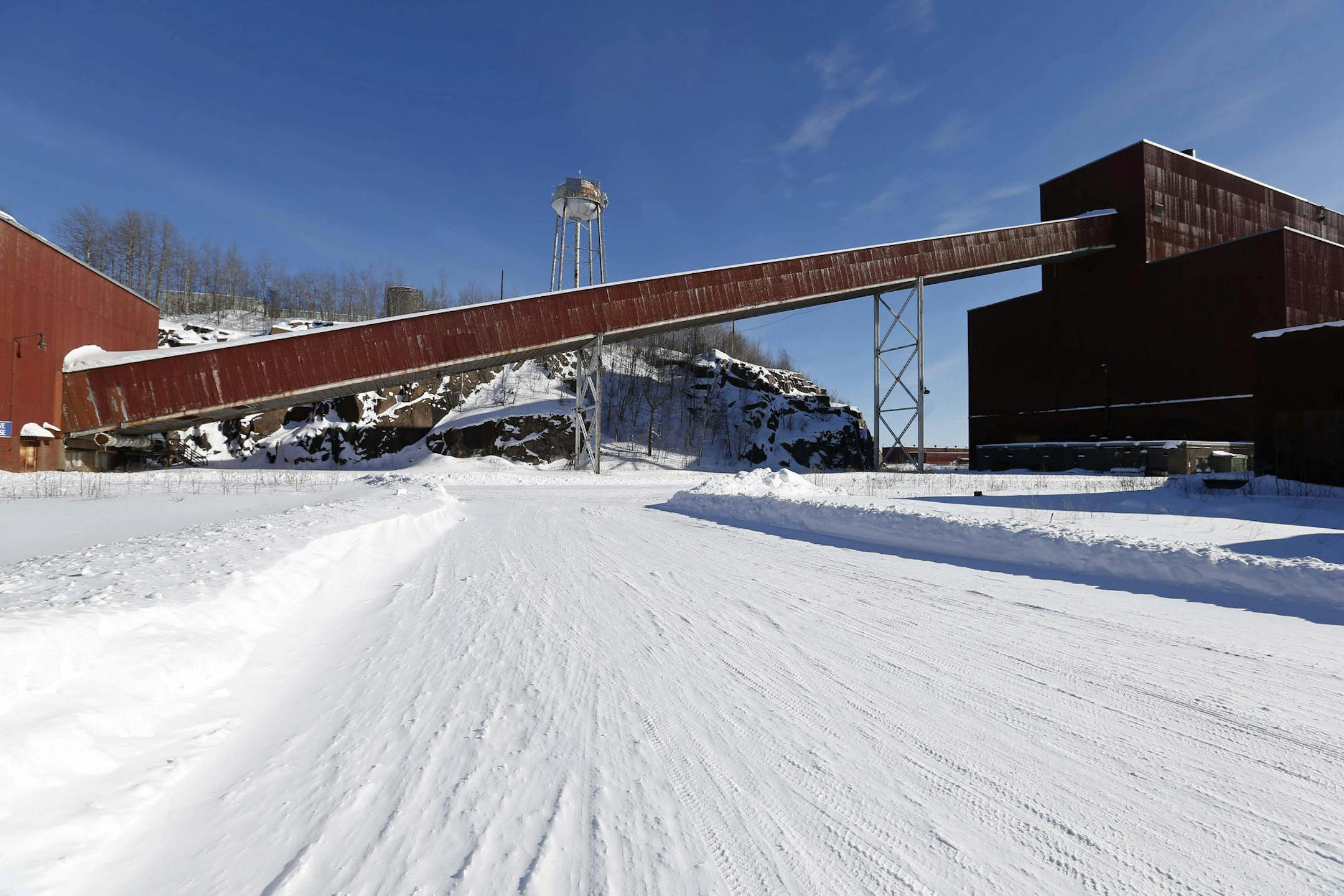
The Minnesota Court of Appeals' decision last month tossing out permits issued to PolyMet Mining to build the state's first copper-nickel mine brought to mind a famous quote from the late U.S. Supreme Court Justice William O. Douglas: "Common sense often makes good law."
Apart from the serious legal questions raised by PolyMet and the Minnesota Department of Natural Resources (DNR) on appeal to the Minnesota Supreme Court, the lower court ruling falls well short of common sense in numerous ways.
It opens an endless new loop of costly litigation and delay for both businesses and municipalities seeking state building permits. It ignores legal precedent and practical regulatory practices in place for many years. And it effectively replaces the judgment of experienced scientists and engineers who, in this case, worked for the DNR and spent months and years reviewing technical data on behalf of the public, with the judgment of solitary outside lawyers working as administrative law judges (ALJs).
We sincerely hope the state Supreme Court takes up the appeal. The threat to business growth and job creation in the state from the appeals court ruling doesn't stop with PolyMet, which spent 15 years navigating the state's comprehensive environmental review and permitting processes. In late 2018 the company finally secured the last permits needed from the DNR and state Pollution Control Agency to start building its $1 billion mine near Hoyt Lakes.
That's when their opponents pushed things into overtime. They asked the courts to order a do-over, contending the DNR erred by failing to outsource to ALJs a laundry list of issues to be argued separately in contested case hearings. These hearings allow citizens to challenge acts by the government, but only when certain narrow criteria are met, such as disputes over facts or jurisdiction that the agency hadn't reviewed previously.
Under Minnesota law, ALJs hold such hearings, deliberate the issues and finally issue recommendations back to agencies, whose decisions are then again subject to appeal.
It would be hard to imagine a better recipe for regulatory uncertainty than having a loose outside process that allows virtually anyone who loses a permitting fight to demand a do-over, as happened in the PolyMet situation.
Communities and the skilled labor that build and maintain these projects are hard hit when opponents use these delay tactics. Investors, especially those pouring millions or billions of dollars into big-ticket, job-creating projects like mines, light rail, waste treatment facilities, pipelines or energy plants, need certainty that permitting processes will be fair, objective and predictable.


