

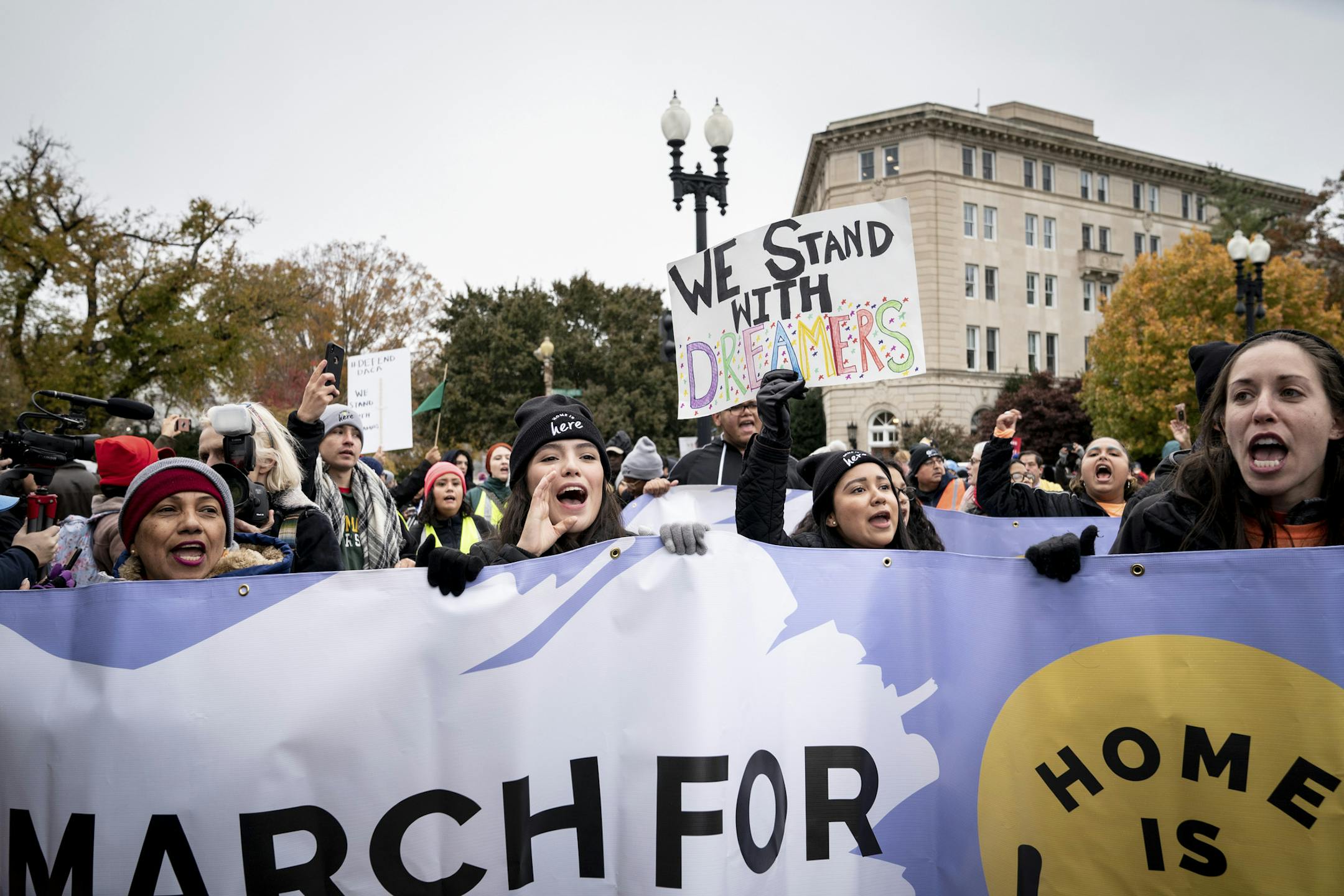
On Tuesday the U.S. Supreme Court heard arguments in a monumental case that will determine the future of approximately 800,000 people in the Deferred Action for Childhood Arrivals (DACA) program — friends, family members, bosses, colleagues and co-workers of many of us.
Business leaders across the Minneapolis-St. Paul region have told me they support DACA on both moral and economic grounds. Eliminating DACA would disrupt the lives of thousands of people and families in our community. It would also lead to substantial economic losses.
The Supreme Court should allow Dreamers the opportunity to keep strengthening the fabric of our communities and our economy.
Dreamers work in nearly every sector of our economy. Research shows DACA-eligible individuals earn nearly $19.9 billion in total annual income and contribute more than $3 billion to federal and state taxes across the U.S. After taxes, they have nearly $16.8 billion in spending power.
Unfortunately, Dreamers have been in limbo since September 2017, when President Donald Trump ordered a halt to the renewal of temporary work permits for those in the DACA program. Now it's time for the Supreme Court to end the uncertainty, and for all of us to work together on a long-term solution.
Many Dreamers were brought to the U.S. as toddlers, including friends I attended school with growing up in the Shoreview area. I recall one friend who didn't realize his legal status was an issue until we were in high school looking for jobs. Eventually he went on to graduate from the University of Minnesota and is now an attorney, but he had to wait to finish his education until DACA was in place. My children's friends and the students we serve today in the Mounds View School District don't have those kinds of barriers, thanks to DACA.
The approximately 800,000 Dreamers in the U.S. are engineers, doctors, students, teachers, manufacturers, public servants, restaurant owners, entrepreneurs and more. DACA has given them the ability to seek financial security. Roughly 75% of DACA recipients have increased their earning power, helping their families, including supporting 256,000 U.S. citizen children whose parents are DACA beneficiaries.
Minnesota is home to roughly 8,800 DACA-eligible residents. The average age at arrival was 6. Under DACA, these Minnesotans have had hope and opportunity as they establish their lives. This is something we should celebrate and enhance, not end.


