Harrison Smith is a throwback safety trying to figure out how to play a position that's increasingly foreign to him because of the NFL's zealous enforcement of rules against hitting offensive players in the head.
"The game has changed over time, for good or for bad," the Vikings second-year free safety said. "People talk about safeties that used to cause people to fear coming over the middle. Now, I don't think anyone fears coming over the middle because there are no consequences anymore. It's an offensive game. That's just how it's built."
As Smith prepared for Sunday's return from a turf-toe injury that sidelined him for eight weeks — he was activated Saturday — he and everyone else saw what has been discussed all week as a classic example of the ugly flip side of conditioning defensive backs to hit low.
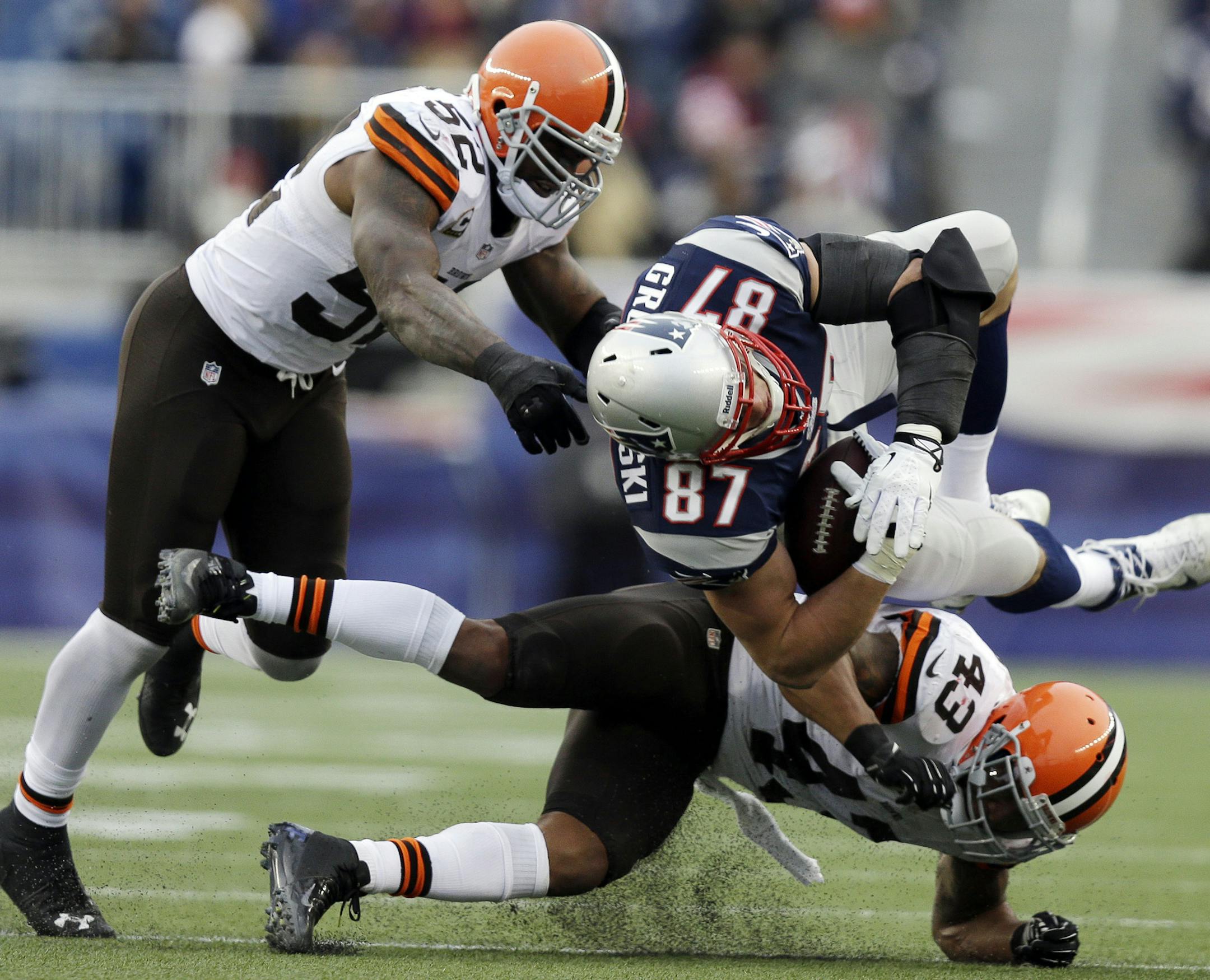
A week ago, Patriots tight end Rob Gronkowski caught a pass down the middle of the field and took a hard, direct shot to the right knee from Browns safety T.J. Ward. A day later, ESPN reported that Gronkowski was the 41st player put on season-ending injured reserve because of an anterior cruciate ligament injury. With three weeks left in the season, that's already a 64 percent increase over 2011 (25).
"I'd say right now that Gronkowski would rather get hit in the head," Vikings defensive end Jared Allen said. "Officials are going to err on the side of caution. That's fine. But the other alternative is you take someone's knees out."
Smith called the decision Ward had to make on that tackle "kind of a no-win situation." The rules say don't hit high, but an unwritten rule among players is to avoid direct attacks on the knees.
"People say, 'Oh, you can hit him in the middle,' " Smith said. "But it's kind of hard to control when you're trying to get the guy on the ground."
Smith said he finally relented and worked on lowering his target area after a couple of fines and penalties last season.