

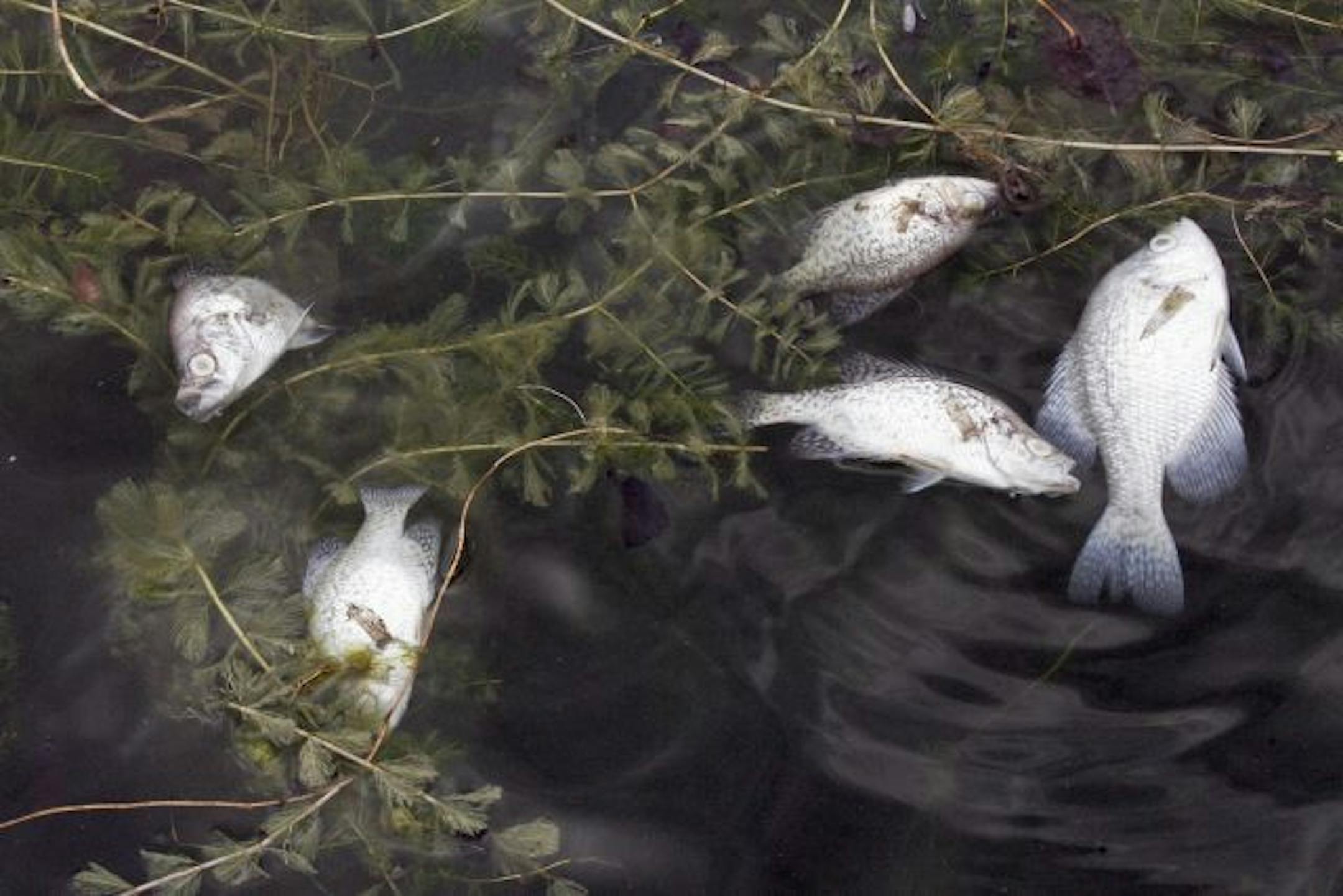
Thousands of dead fish have floated to the surface along the shores of the Chain of Lakes in Minneapolis this month, stinking casualties of a "summer kill" mainly caused by the heat.
The mass death of fish during the summer is not uncommon, officials with the Minneapolis Park and Recreation Board and state Department of Natural Resources (DNR) said Wednesday. The phenomenon usually begins around this time and is seen more often in the metro area and southwest Minnesota, said Sean Sisler with the DNR.
This time, the fish have been spotted in the city's popular lakes. About a thousand fish in Cedar Lake and a thousand in Lake Harriet have died, said Rachael Crabb, a water resources supervisor with the Park Board. More dead fish have been found in Lake Calhoun/Bde Maka Ska. They have all been crappies about 4 inches long, she said.
The kills were first reported in Cedar Lake around July 4 and Lake Harriet July 19.
"I don't know if the fish are still dying, but we're still picking up fish," Crabb said.
A combination of high temperatures and high nutrients drives down the oxygen level in lakes, leading some fish species to die at higher rates, Sisler said. And higher water levels caused by heavy rain this month means less sunlight reaches deeper areas of lakes, leading aquatic plants to produce less oxygen, Crabb said.
The summer kills are not expected to have a major effect on the fish population in these lakes, which are home to hundreds of thousands of panfish, Crabb said.
Beaches at Maka Ska/Calhoun remain closed because of excessive levels of E. coli bacteria. Cedar Lake beaches are open, and "the water quality is fantastic," Crabb said.


