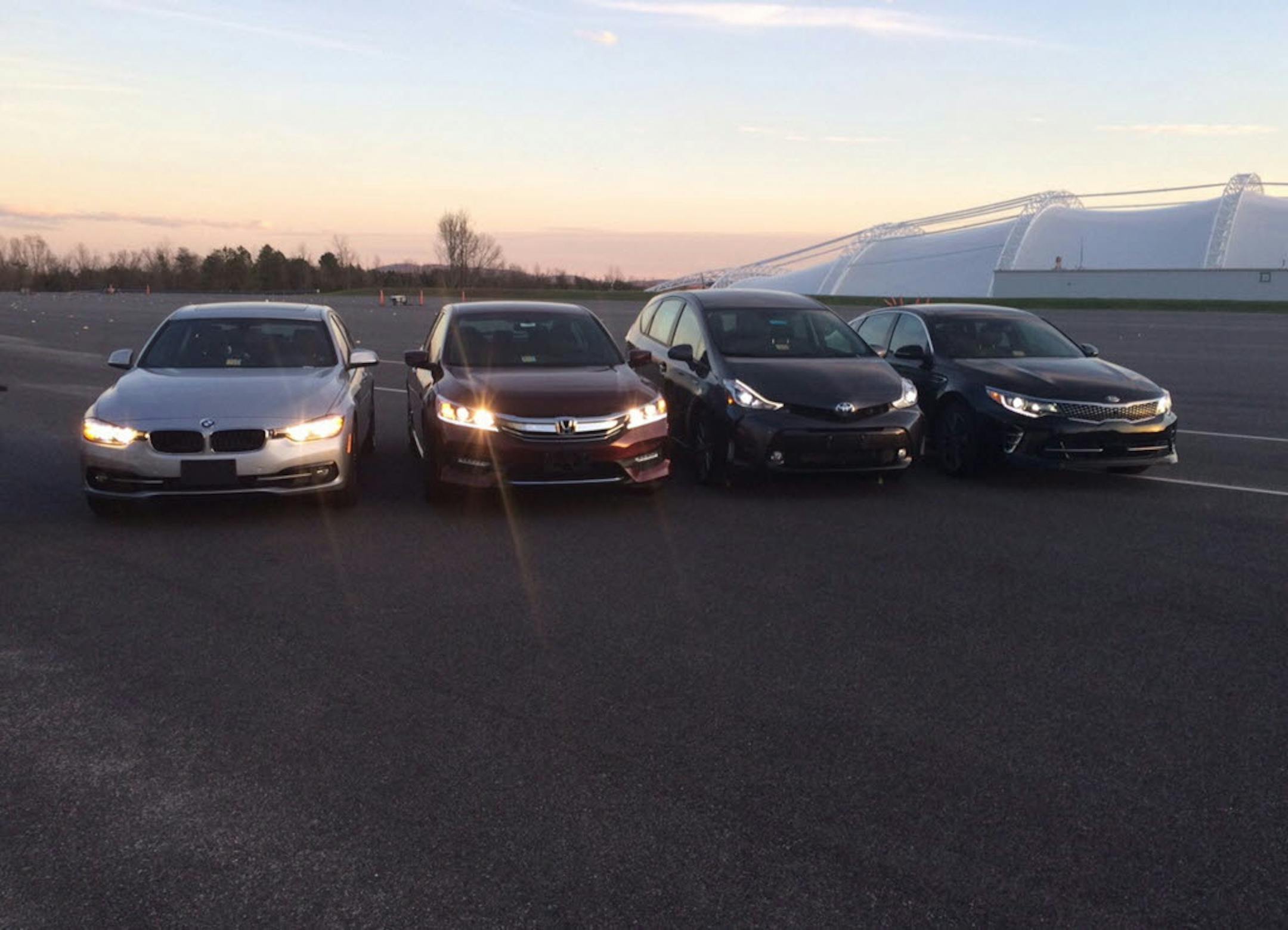
The folks who are well-known for crashing cars and issuing safety ratings have taken a look at how headlights perform and the results are not good.
In fact the results are dismal, the Insurance Institute for Highway Safety said.
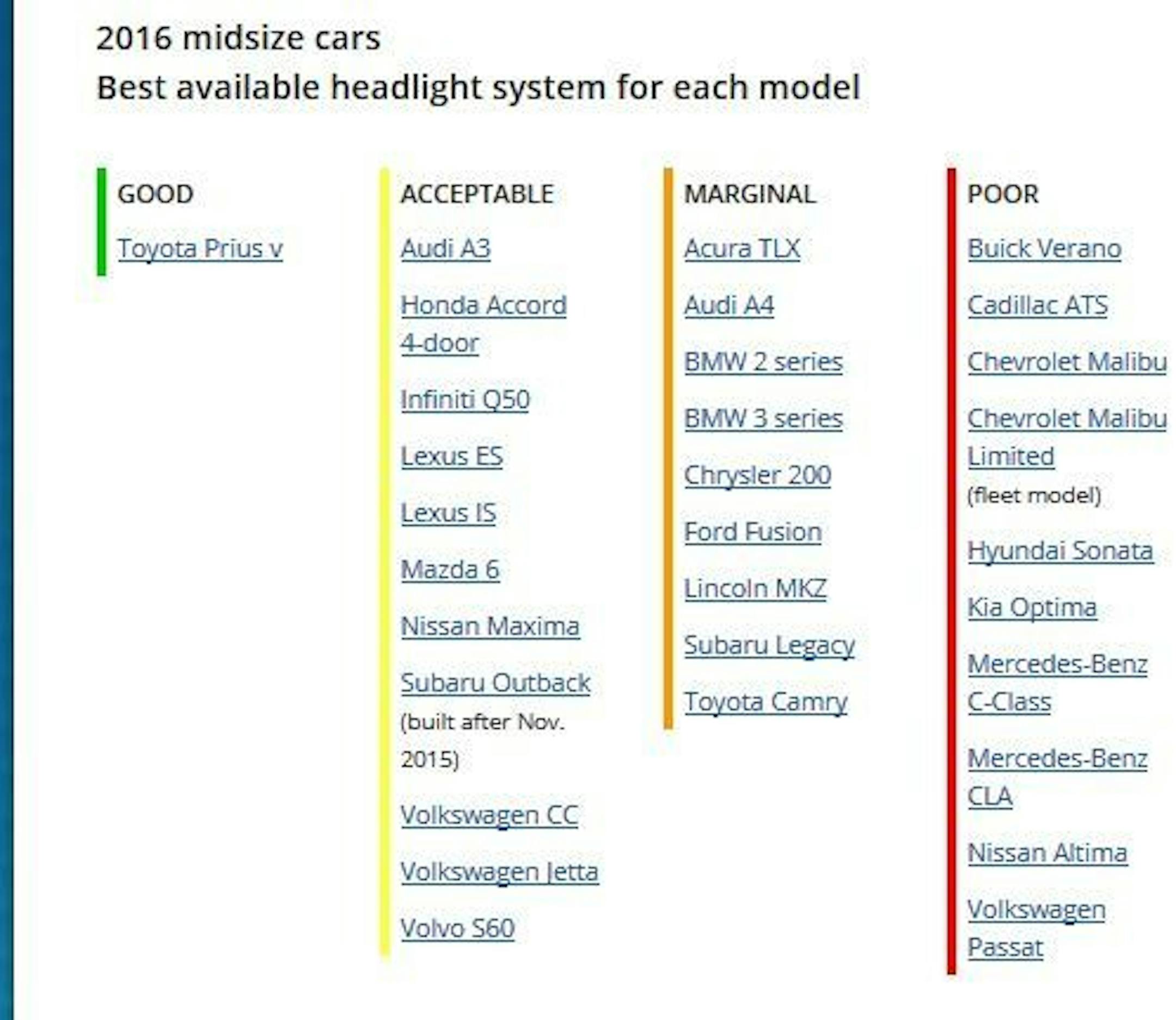
The IIHS looked at the performance of 82 sets of headlights that come on 31 models of new 2016 midsize vehicles and only one - the Toyota Prius V - earned a good rating. Eleven earned an acceptable rating, while nine only reach a marginal rating. Ten of the vehicles can't be purchased with anything other than poor-rated headlights, the institute's study found.
"If you're having trouble seeing behind the wheel at night, it could very well be your headlights and not your eyes that are to blame," says David Zuby, IIHS executive vice president and chief research officer.
The ability to see the road ahead, along with any pedestrians, bicyclists or obstacles, is an obvious essential for drivers. However, government standards for headlights allow huge variation in the amount of illumination that headlights provide in actual on-road driving.
About half of traffic fatalities occur in the dark or in dawn or dusk conditions, so improved headlights have the potential to make nighttime driving safer, Zuby said.
Headlights are often designed as a styling statement rather than to provide good light for drivers, Zuby said. "But good headlights could help drivers see well far down the road and prevent a lot of crashes."
During testing, IIHS used a special device that measures the light from both low beams and high beams as the vehicle is driven on five different approaches: traveling straight, a sharp left curve, a sharp right curve, a gradual left curve and a gradual right curve.