TURTLE LAKE, Wis. – Carol O'Connor and Tina Simmons were floating calmly on Loon Lake in northwestern Wisconsin when they heard a distant rumbling noise and saw treetops swaying in the wind.
Out of caution, the two St. Paul women paddled to shore and strolled toward the remote, lakefront cabin they had rented for the weekend.
Moments later, they could barely see out the windows, as high winds ripped trees from their roots and cracked limbs all around them. A nearby shed was lifted off the ground by the wind. "It was the most horrifying experience of my life," said Simmons, who hid under a stairwell during the storm. "It was like a tsunami, with walls of water and wind coming at us in all directions."
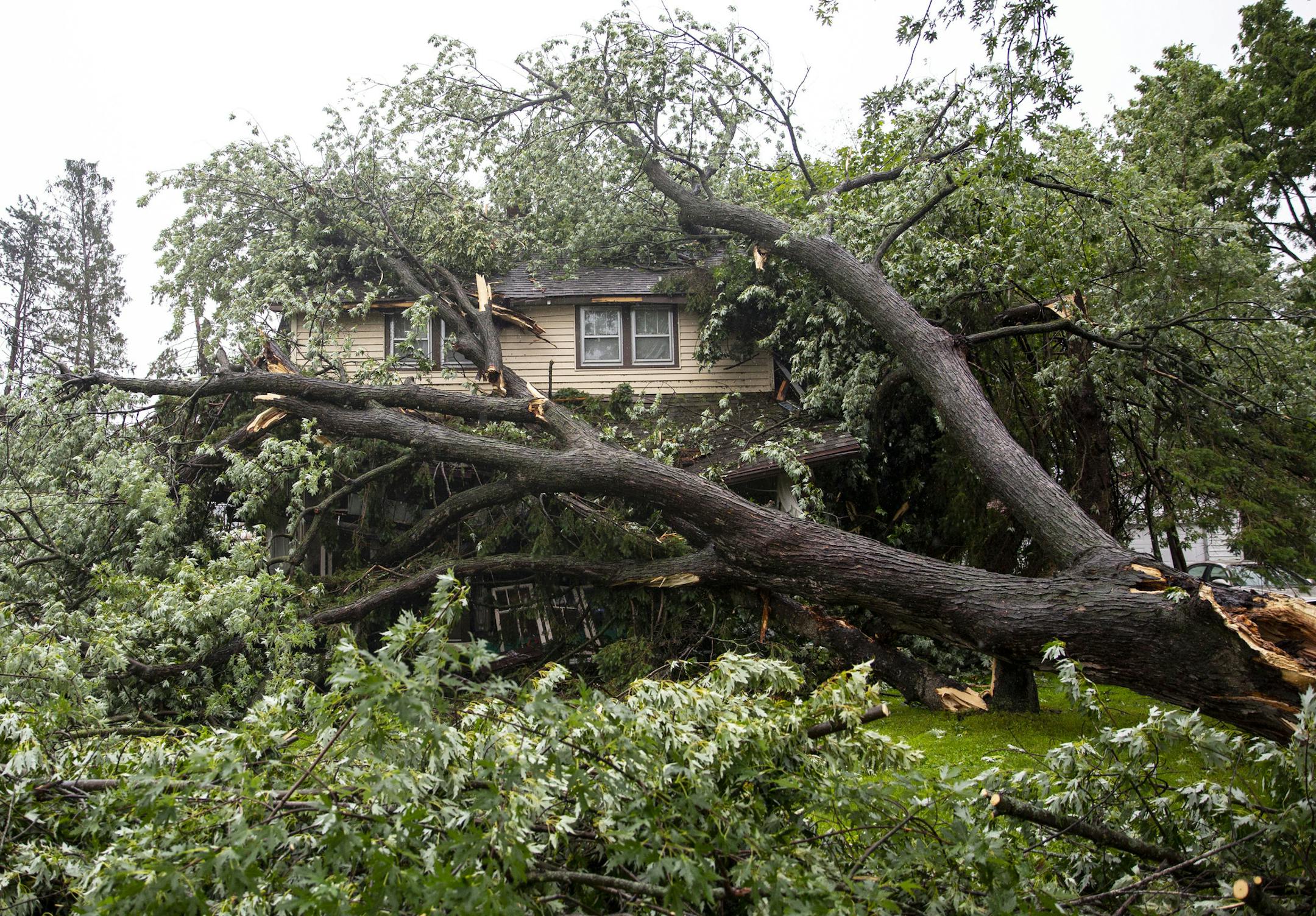
A ferocious storm with a potent mix of hurricane-force winds, torrential rains, hail and lightning tore through a broad swath of northwestern Wisconsin on Friday evening, leaving thousands of people without power and forcing scores of others to flee their homes. While no one was seriously injured, the storm left a trail of visible destruction across much of rural Barron County, about 90 miles northeast of the Twin Cities.
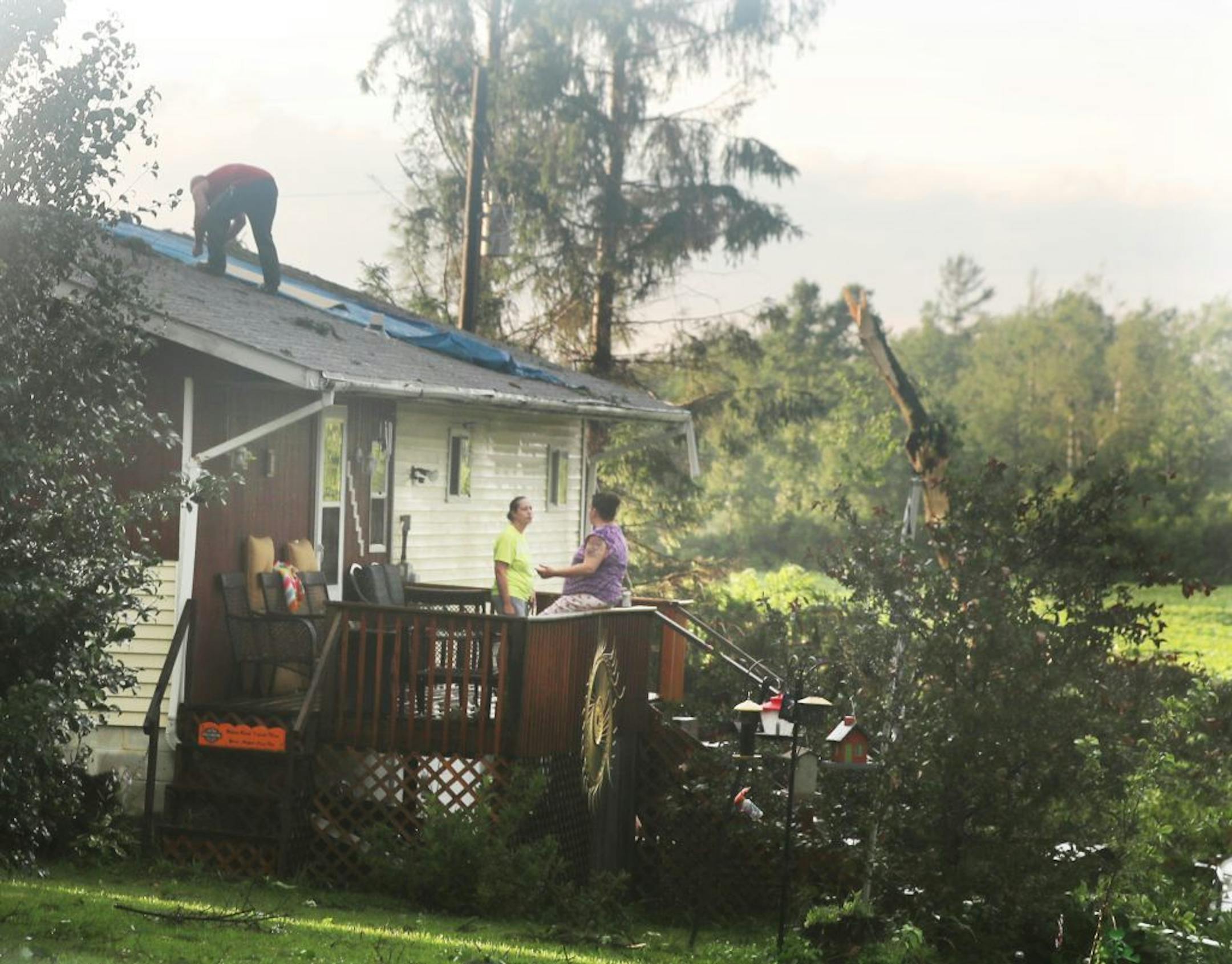
The storm was so intense that the local utility company deployed snowplows to clear trees and other debris from highways so emergency responders could get to stranded residents. In Barron and Turtle Lake, the towns hardest hit, evidence of the devastation was everywhere. Roofs were torn off buildings, siding from barns lay strewn along highways and random debris (even a trampoline) hung from power lines.
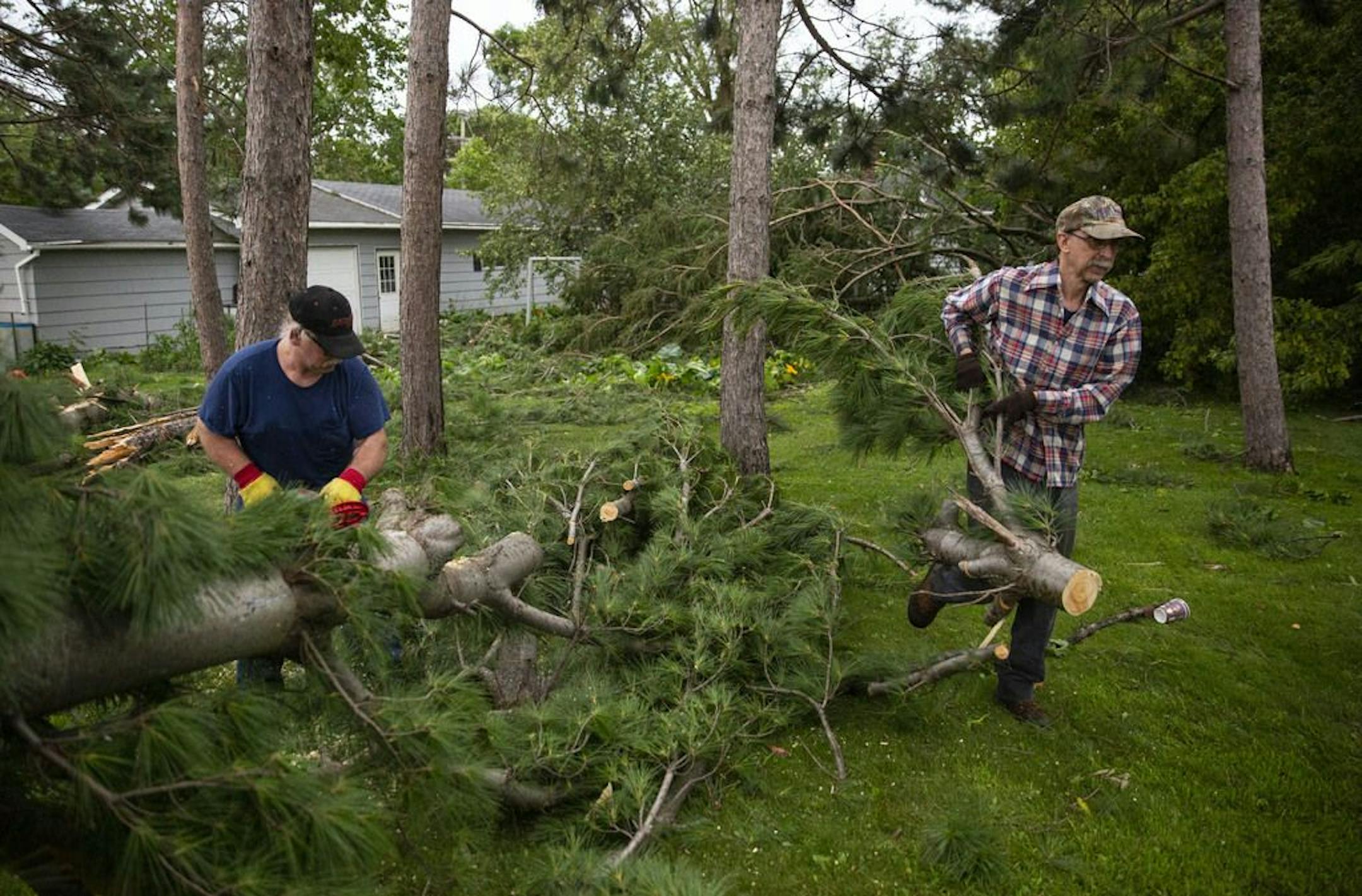
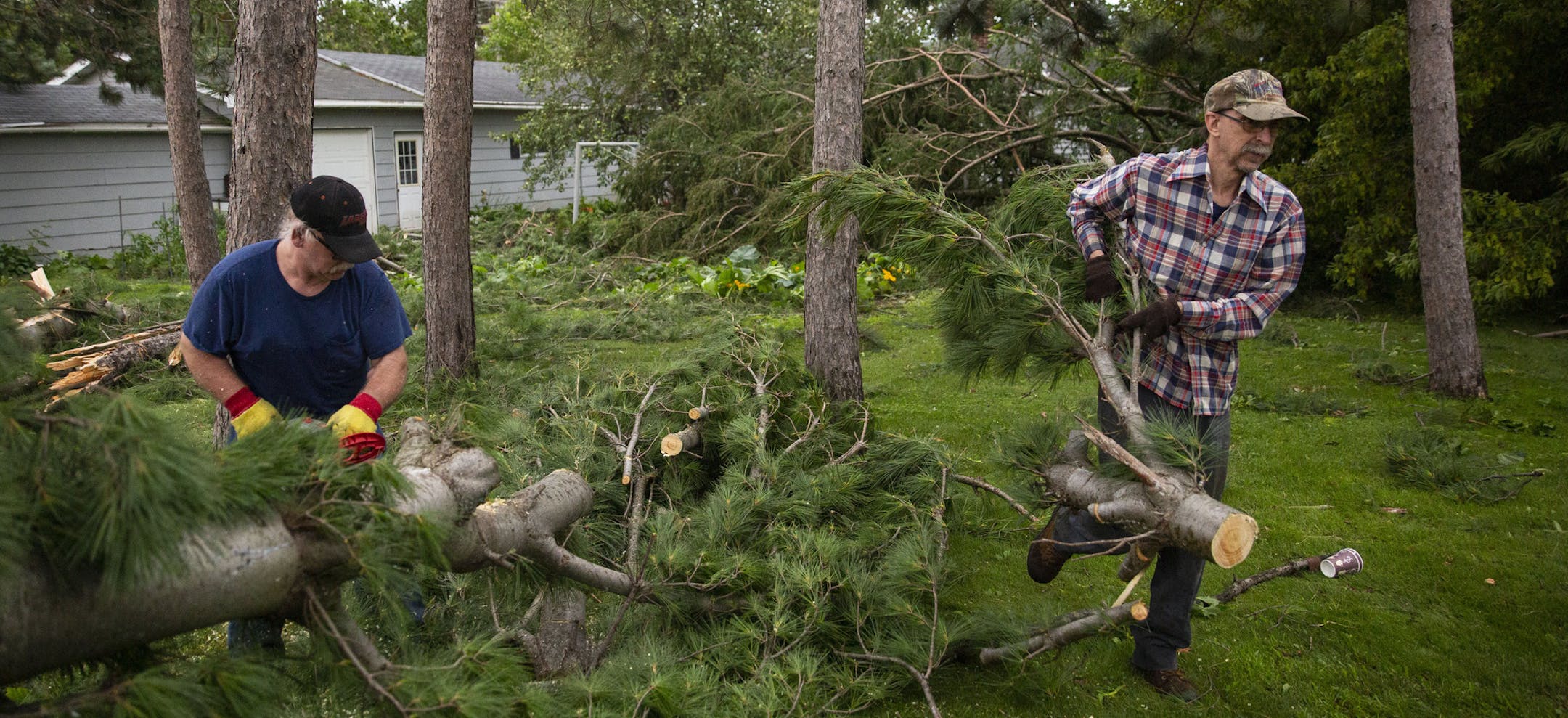
Armed with chain saws, fire and utility crews worked through the night and Saturday, cutting up hundreds of downed trees.
On Saturday afternoon, more than 10,000 people in Barron County were still without power, and 115 utility crews from Wisconsin and Minnesota were busy cleaning up debris and fixing power lines blown down by the high winds. They were joined by dozens of good Samaritans, including building contractors, electricians and others, who cruised the wreckage in their pickup trucks on Saturday, helping neighbors dig out and repair damaged buildings.
"It was a powerful reminder of what Mother Nature can do," said Diane Fowler, who lives in Hertel, Wis., and is a member of the St. Croix Chippewa Indians of Wisconsin. "I just thank the creator that no one was hurt. It could have been a lot, lot worse."