

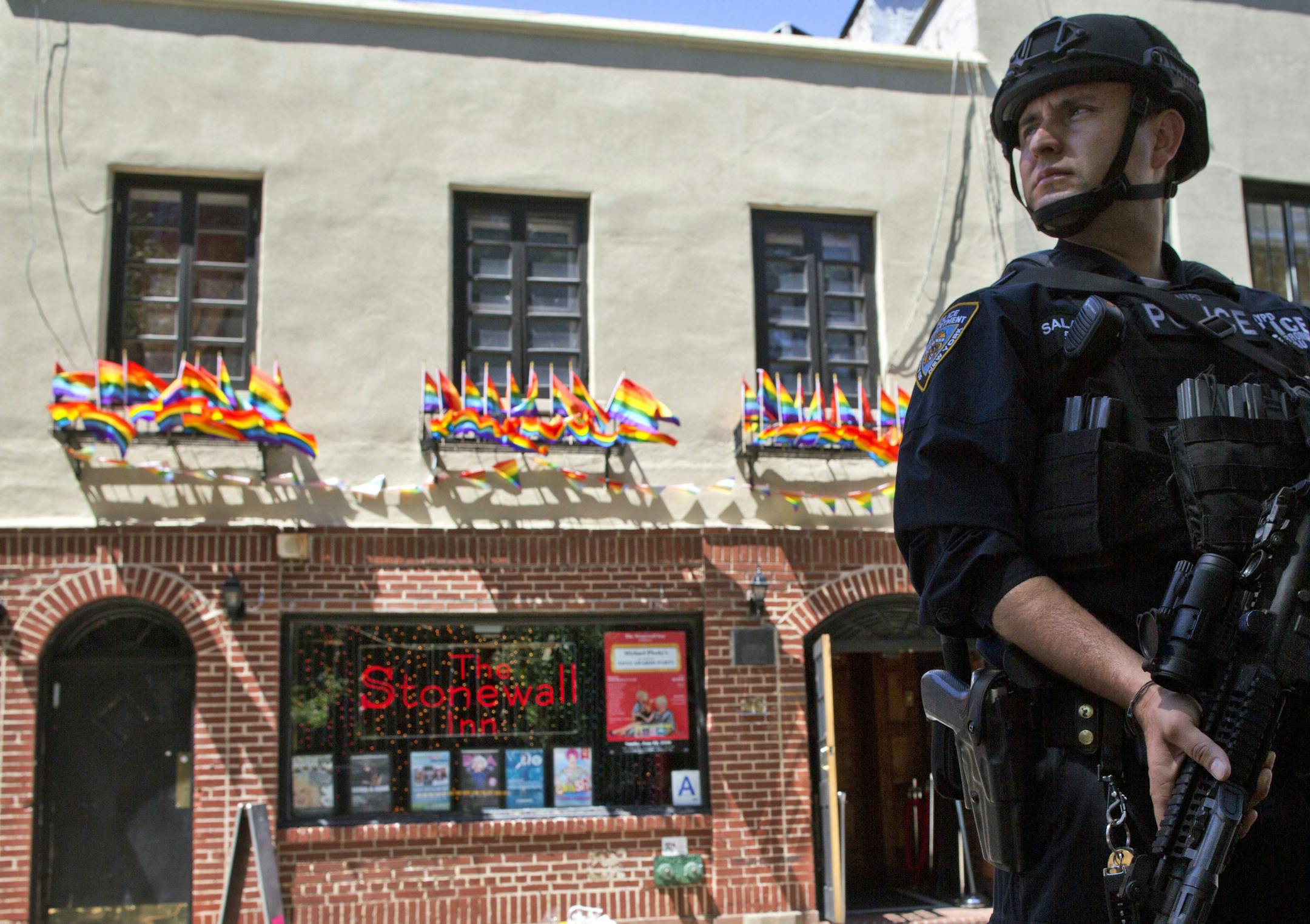
When police raided gay bars back in the day, they expected the patrons to scatter. But one hot Friday night 50 years ago this week, at the Stonewall Inn, no one was going anywhere. Gay, lesbian, bisexual, transgender, old, young — they booed and jeered as the cops walked their prey out of the bar. Kids across the street started throwing pennies, then bricks. Finally, the riot squad was called in, and even they couldn't clear the streets.
Martin Boyce remembers sitting on his stoop the next day, exhausted from the melee. "My God, we're going to pay so desperately for this," he thought. But that's not what happened.
"The next day we were there again," he says. "We had had enough. Every queen in that riot changed."
On June 28, 1969, what happened at Greenwich Village's Stonewall Inn became "Stonewall," the legendary uprising against homophobic abuse.
The telling and retelling of the Stonewall story makes it seem like Martin Luther King Jr.'s famous arc of the moral universe isn't long — as he claimed — but explosively short. Much of the 50th anniversary coverage of the uprising has marveled at how quickly gays won their civil rights, at how everything changed in one night when, in Boyce's words, "We had had enough."
But nothing about Stonewall was sudden. The homophobia was an age-old story, and the riot was the product of activism that had been building for decades. King's quote is correct: History's arc traces a very long line. It only bends toward justice because so many activists over so many years hammer relentlessly upon it.
The movement that erupted into a riot at Stonewall in 1969 dates back to the early 1900s, when LGBTQ people began to migrate to cities. Abuse and harassment followed them.
The repeal of Prohibition in 1933 empowered states to license liquor, and with licensing came the requirement that bars must be "orderly," which gave authorities cover for harassing gays even in their own establishments. In the 1940s, the Red Scare became a "Lavender Scare," as investigators applied the "subversive" label to gay men and lesbian women working for the government. The longest surviving gay resistance organization, the Mattachine Society, was founded, alongside the lesbian Daughters of Bilitis, in the early 1950s; it all but unraveled under the pressure of government scrutiny.


