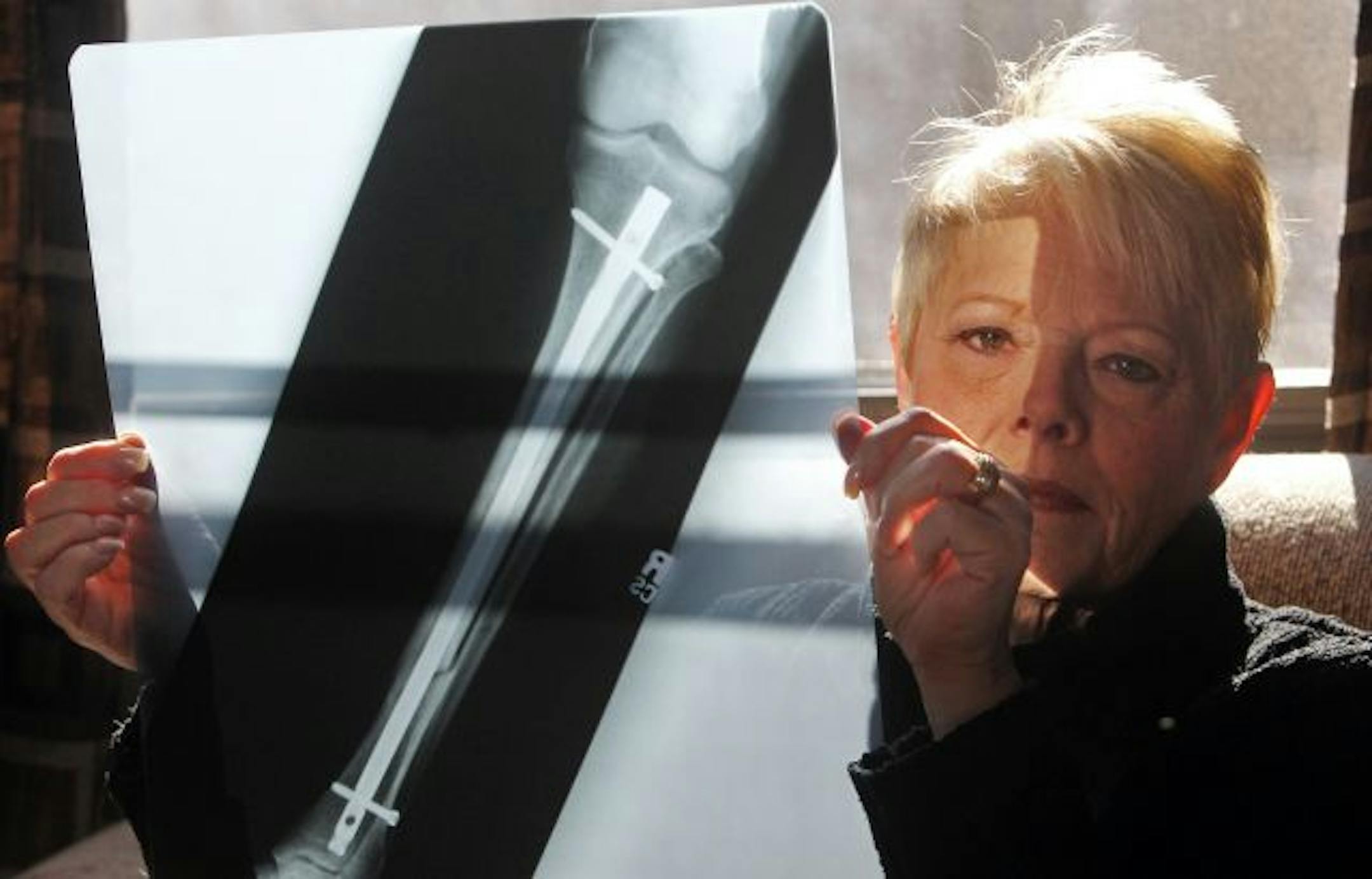
Much has changed since Barbara Anderson slipped on some ice two years ago in the parking lot of a Denny's restaurant in Coon Rapids. Anderson, 65, has a titanium rod in her right leg, a profound anxiety about walking outside in winter and the remnants of a $120,000 legal settlement.
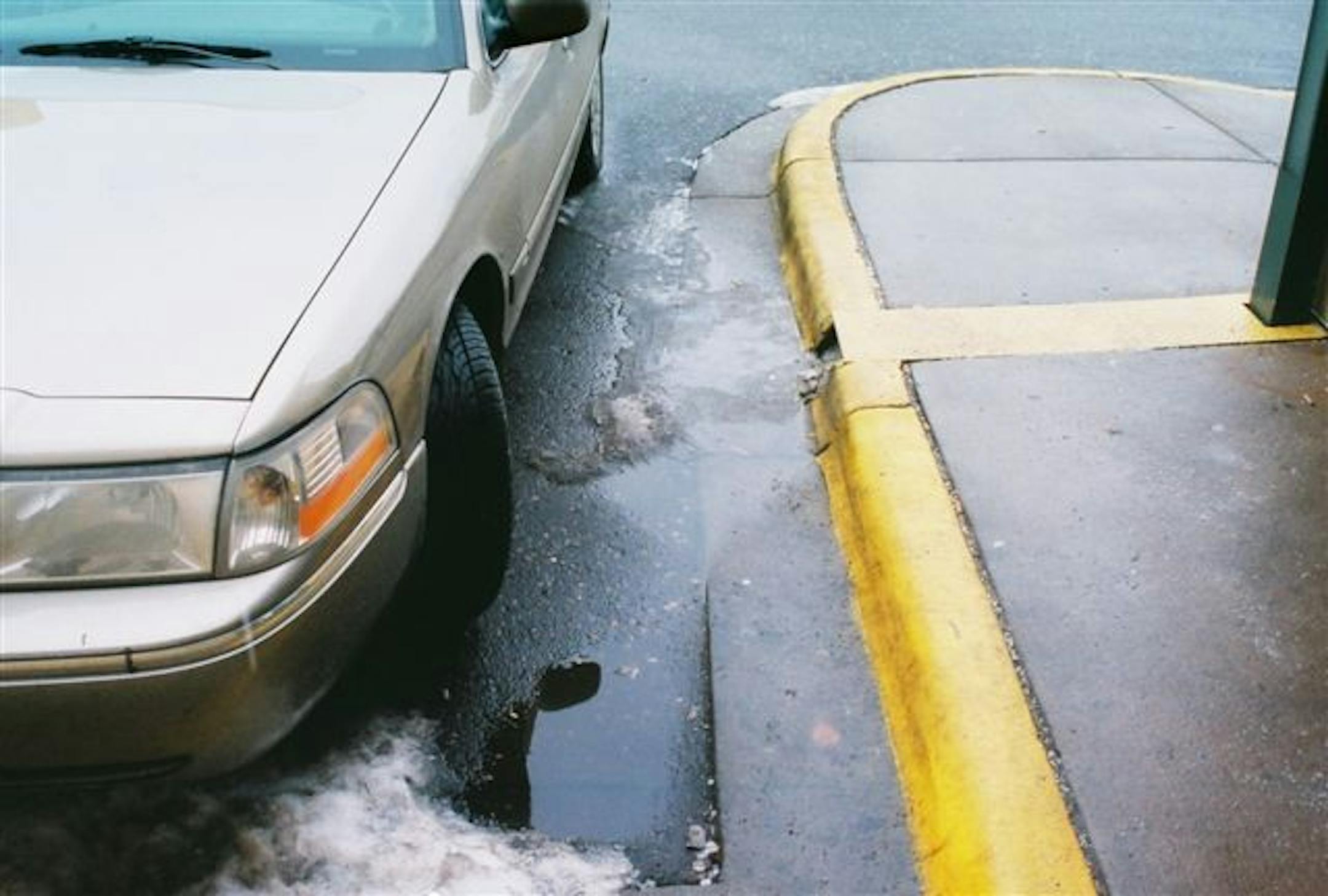
But one thing is the same: The downspout from the roof of the Denny's still empties into the handicapped parking space, creating what one safety consultant called a "freezing lake effect" that left Anderson flat on her back and screaming in pain. Earlier this month, an icy mound had built up once again in the handicapped parking space, despite a generous sprinkling of ice melt crystals.
Anderson and her family are disturbed that her accident didn't prompt the restaurant to move the downspout so the hazard would be eliminated. A spokeswoman for the restaurant chain declined to comment.
According to slip-and-fall experts, it's typical for property owners and their insurers to pay settlements and go back to business as usual.
"Most companies look at slip-and-fall injuries as a cost of doing business," said Russ Kendzior, who has served as an expert witness in more than 400 slip-and-fall cases, for both plaintiffs and defendants.
Kendzior, a former flooring salesman who started a Texas-based organization called the National Floor Safety Institute, thinks businesses ought to take steps to improve safety after accidental falls. But even after costly legal settlements and verdicts, that doesn't usually happen. Kendzior said insurance companies should put more pressure on property owners, perhaps by refusing to pay claims for known hazards.
Anderson's lawyer, Jeff Sieben, said Denny's helped make Anderson "whole," but that's all he could ask for in litigation.
"We can't demand that they try to prevent other people from having this problem," he said.