

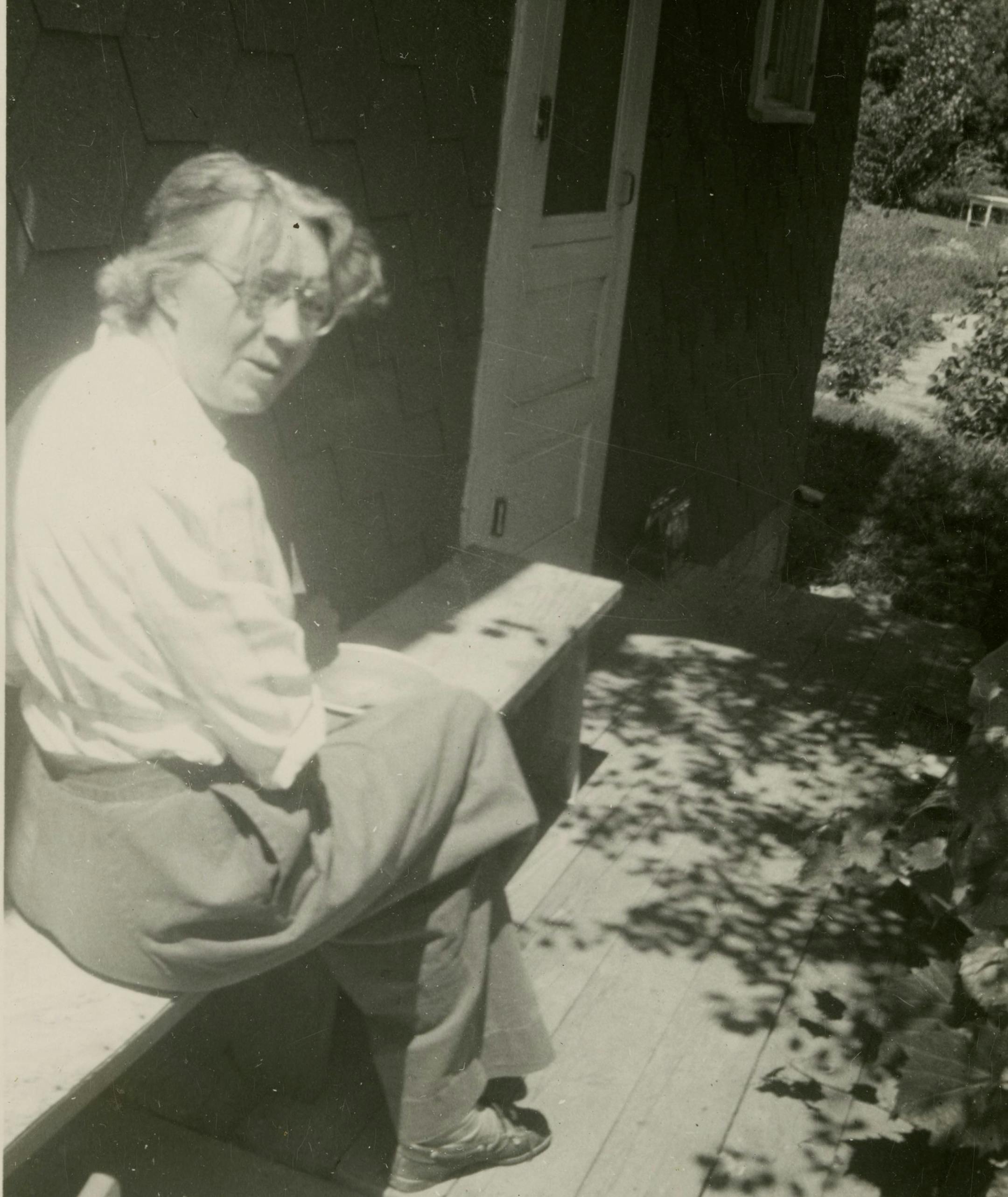
With winter descending on their northwestern Minnesota farm, Norwegian immigrants Anders and Helene Schey became parents in November 1895. They named the first of their four children Engla — Norwegian for angel.
And Engla Schey grew into a little angel, all 5-foot-2 and 103 pounds of her. In her early 30s, she experienced a life-altering epiphany while visiting her father at the castle-like, overcrowded Fergus Falls State Hospital. Suffering from depression, Anders checked himself into the institution in the 1920s and died there nearly 30 years later.
"Quick as a flash," Schey later wrote, she decided to do all she could do "to improve conditions in mental hospitals. … That was the best way to help father." So she quit her job as a social worker, aiding the poor, and launched a 20-year career as a front-line attendant in three state hospitals — determined to make life better for 10,000 Minnesotans locked in seven state institutions in the 1940s.
"She started out wanting to care for patients, discovered the horrendous conditions in the hospitals and the cynical bureaucracy that ran them, and began a one-woman crusade to inform the public about the conditions … in an era when the stigma was extreme," said Susan Bartlett Foote, a retired public health professor and author of the 2018 book, "The Crusade for Forgotten Souls."
Schey emerges as the book's heroine and became Foote's focus in a 2015 Minnesota History magazine article (available at tinyurl.com/EnglaSchey).
As a low-ranking attendant at state hospitals in Anoka, Rochester and Hastings from the late 1930s into the '60s, Schey was "an ordinary citizen who made a difference," Foote said. "Her name does not appear in the voluminous press coverage of mental-health reform efforts. She received no public recognition or accolades."
But nearly 40 years after her death in 1980 at age 84, Schey's letters and journals echo her outrage and activism. After World War II, Life magazine shocked Americans with coverage of inhumane conditions in the nation's mental institutions. The St. Paul Pioneer Press assured readers that things were better here, insisting "there are no snake pits in Minnesota."
In a 1946 letter to the Minneapolis Star and Journal, Schey urged readers not to be "so gullible as to swallow the propaganda … that there are no 'snake pits' in Minnesota."


