The night sky has become a tourist destination.
But wait a minute. Can't we see the night sky simply by stepping outside after dark and looking up?
Well, yes. But for most of us, that means seeing the glow from artificial lights reflecting off clouds, water vapor and dust particles in the air. It's called sky glow; the night sky is so bright that it's hard to see the stars.
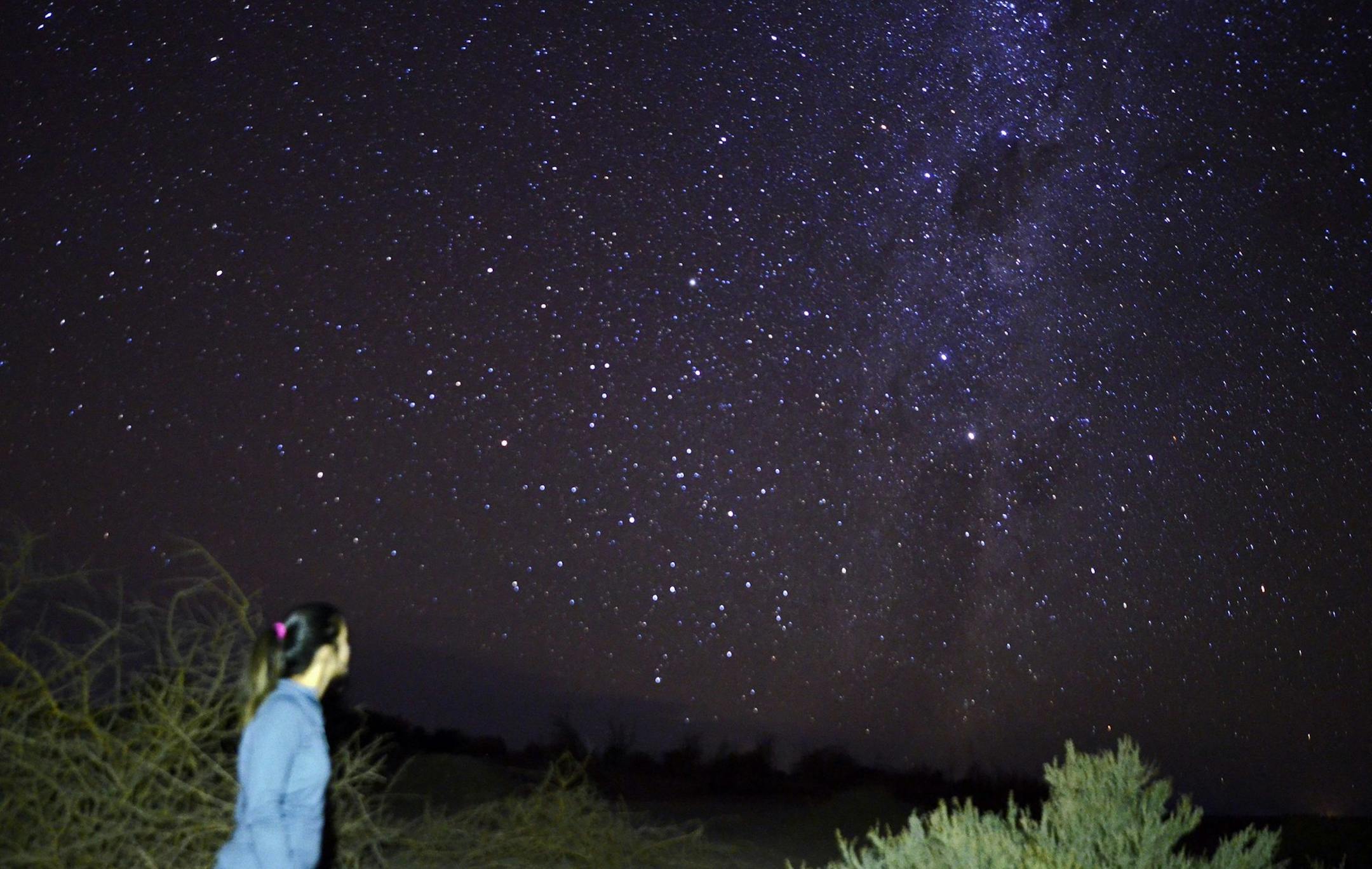
For most of the time people have lived on this planet, the night sky was inky dark and filled with visible celestial objects. It's inspired poets and dreamers, artists and scientists, linking humankind with its past and perhaps its future, as people looked to the sky to ponder life's mysteries.
It's only been in the past 100 years or so that light and air pollution have diminished those views. And it's only been in recent years that people have started traveling in search of what has been lost, whether it's seeking out spots in the Midwest or venturing farther afield in the Southern Hemisphere.
"We're seeing dark-sky tourism as a reaction against our increasingly busy, tech-filled lives," said Daniel Levine, a travel trends expert and director of the Avant-Guide Institute, a global trends consultancy. "It's a chance to decompress, be somewhere quiet and be awed by the biggest question in life: Why are we here?"
'Envoys of beauty' in Chile
Hoping for a dark-sky experience myself earlier this year, I headed to a mountain plateau west of the Andes in Chile's Atacama Desert, one of the driest places on Earth and a mecca for astronomers and stargazers.
I settled in at the small town of San Pedro de Atacama with plans to do some stargazing and to visit the Atacama Large Millimeter/submillimeter Array. Better known as ALMA, it's billed as the "most complex astronomical observatory ever built on Earth" by the U.S.-based National Radio Astronomy Observatory. In cooperation with the Chilean government, an international partnership from North America, Europe and East Asia built and operates the facility. Scientists from around the world share time on the telescopes for research.