

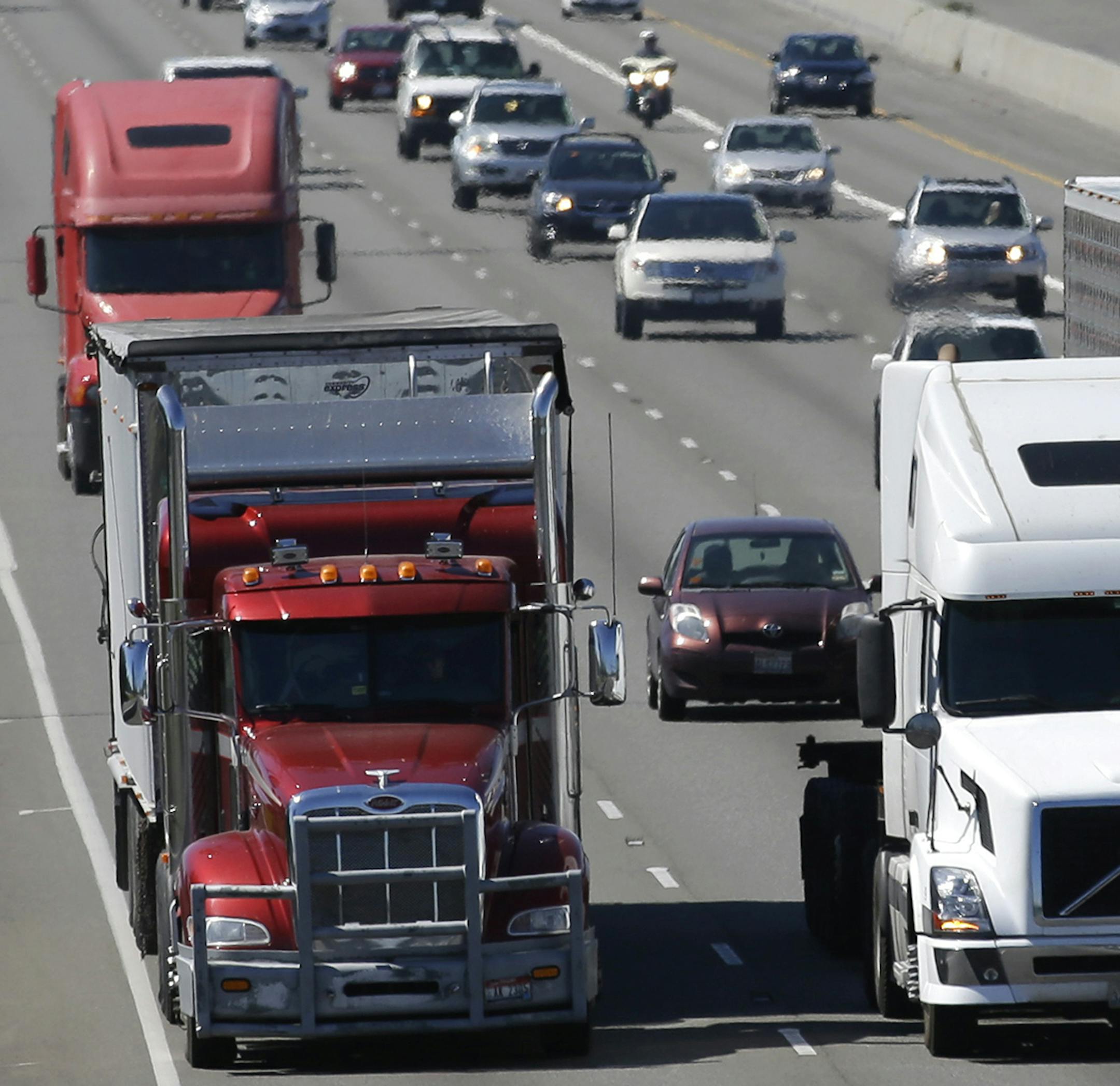
Last week, I sat down with a member of the Star Tribune's Editorial Board to lay out my case for allowing heavy truck loads in our state when building and maintaining our roads. Despite a cordial discussion, almost none of the view opposing the Star Tribune's was included in the recent editorial ("Heavier trucks vs. the rest of us," March 29). It is important for readers to understand the rationale behind this legislation.
First, larger truck loads would decrease the overall number of trucks on the road. By allowing 20 percent more in a load, we could theoretically take one of every five trucks off roads throughout the state. I think we can all agree that fewer trucks means less pollution and congestion, and can save on fuel costs for local government or small businesses.
Second, it's important to know that these trucks won't be one inch longer than current trucks. There's no effect from extra-long trucks hurting roads, and each will have one or two extra axles. This displaces the weight on road pressure points, and includes braking capability on all six or seven axles instead of the current five. We're upgrading current trucks to support the weight in order to lessen pressure and increase safety.
Third, for the past nine years our agriculture industry has had an exemption allowing 90,000-to-99,000-pound truck loads depending on the season. I, for one, haven't heard of any serious issues with these heavier trucks on our roads. Why would other trucks suddenly be different?
The legislation respects local governments. This bill ensures counties still have the authority to post any road or any bridge they do not want heavier trucks to drive. If your county wishes to keep heavier trucks off certain roads because it is believed it will do too much damage, they have that right. We have ensured that local control is part of the bill.
Lastly, the editorial is correct in saying a federal law from 20 years ago stills exists that bars heavier trucks on interstates. But what the commentary failed to mention was that all four of our neighboring states have heavier weights on their interstates because of individual laws passed by each state. That's an important detail to omit.
The Star Tribune wants to paint this issue in a negative light without giving the whole story. I hope Minnesotans will see the logic in the way this bill is crafted, so we can move forward with this needed legislation.
Dave Baker, R-Willmar, is a member of the Minnesota House.


