

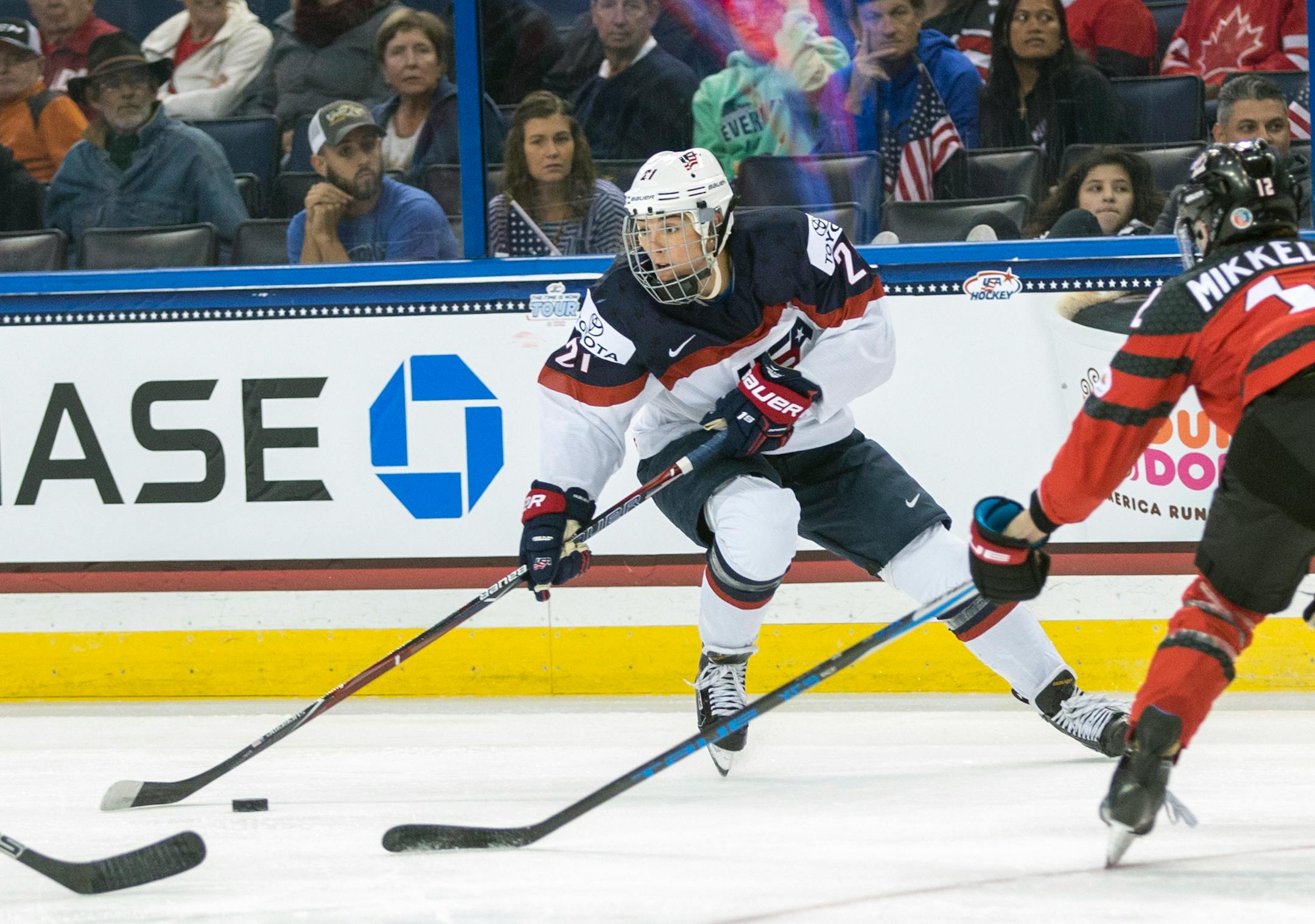
PYEONGCHANG, SOUTH KOREA – Hilary Knight's moment of clarity came in a grocery-store parking lot in Boston, when the sticker shock set in after only a few days in that very expensive city.
Knight, a member of the U.S. women's hockey team, didn't move there by choice. She needed to be in Boston to play and train in 2012. But the lack of funding for her sport sent her there with empty pockets, and that trip to the store left her worried she would have an empty stomach, too.
"I called my mom, and I was crying," Knight said. "I told her, 'I can't afford to live in Boston.' And she said, 'You're going to have to get a job.' She didn't understand that if I'm going to do what I want to do in this sport, I can't have a job.
"That's when it really clicked for me, that this needs to change. It's not OK anymore."
Knight and her teammates made a risky choice last spring, threatening to boycott the world championships unless USA Hockey gave them more funding and resources. They got what they wanted, along with a surprise benefit. The solidarity that made their ultimatum work also tightened their trust and devotion, sending them to the Pyeongchang Olympics with more unity than ever before.
The U.S. opens play Sunday against Finland looking to win its first Winter Games gold since 1998. As part of the agreement it struck with USA Hockey in March, players now receive increased stipends, larger bonuses for winning medals and benefits that equal what the men's national team receives. Its pre-Olympic residency period was held in Florida, where the team lived at a resort and trained at a state-of-the-art facility.
The deal also includes more marketing and promotional support, which players believe is vital to growing the game. They realize that nothing would gain more attention than an Olympic gold medal, which they feel better equipped to chase after what they gained last spring.
"To have these contracts is a huge weight off our shoulders," said three-time Olympian Monique Lamoureux-Morando, a native of Grand Forks, N.D., who played for the Gophers and North Dakota. "Now it's not a financial burden to continue playing post-graduation. You're not worrying about trying to get work; your sole focus can be on just being a hockey player, which is what we deserve.


