

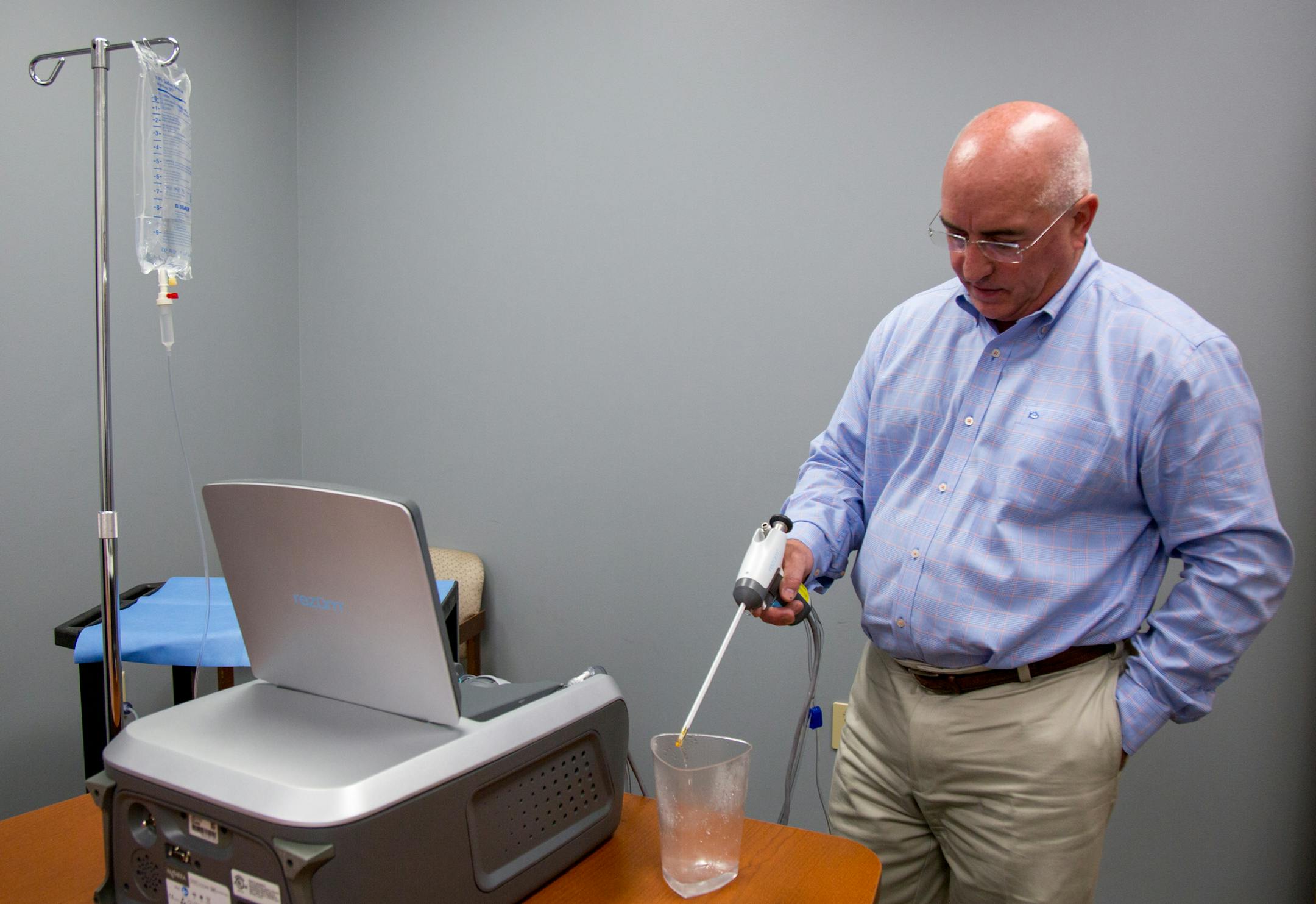
WASHINGTON – At this point, a Republican health care bill that kills a medical device tax put in place by the Obama administration may be beyond the reach of the GOP. But in Minnesota, Bob Paulson and hundreds of other executives in the massive medical technology sector are planning business operations on the assumption that the device tax is dead.
Paulson, president of NxThera, a small device company financed with venture capital, is betting that Congress will declare a truce in its interparty and intraparty civil war long enough to keep him from paying a 2.3 percent tax on gross sales.
Paulson calls the levy "an abhorrent penalty" on small companies like his because "it is a tax on revenue, not on profit."
"The current expectation," he said, "is that it is not coming back."
Yet as things stand, collection of the medical device tax is only suspended until the end of 2017. Despite the device industry's seven-year investment of tens of millions of dollars in lobbying and campaign contributions to kill it, the device tax refuses to die.
The Advanced Medical Technology Association (AdvaMed) targeted the Republican initiative to repeal the Affordable Care Act (ACA) as the best chance to quickly and permanently end the device tax. The trade group, which includes most of Minnesota's major med tech companies, dutifully supported every version of the House and Senate health care bills that included repeal of the tax.
Now, with the Senate GOP health bill on life support, AdvaMed is hedging bets by looking for a less loaded legislative vehicle on which to hitch a ride.
"I'm frustrated," AdvaMed CEO Scott Whitaker said. "The med tech industry is frustrated, because if Congress doesn't do something, a tax increase is looming."

![The Rezum System sits in the NxThera Maple Grove office; the treatment is is used for BPH. ] COURTNEY PEDROZA ï courtney.pedroza@startribune.com Thursday, July 20, 2017; Maple Grove; The Rezum System; Bob Paulson, president of NxThera](https://arc.stimg.co/startribunemedia/R3FEG7FO3AK45AL4WVHLFJLCPM.jpg?&w=1080)


