

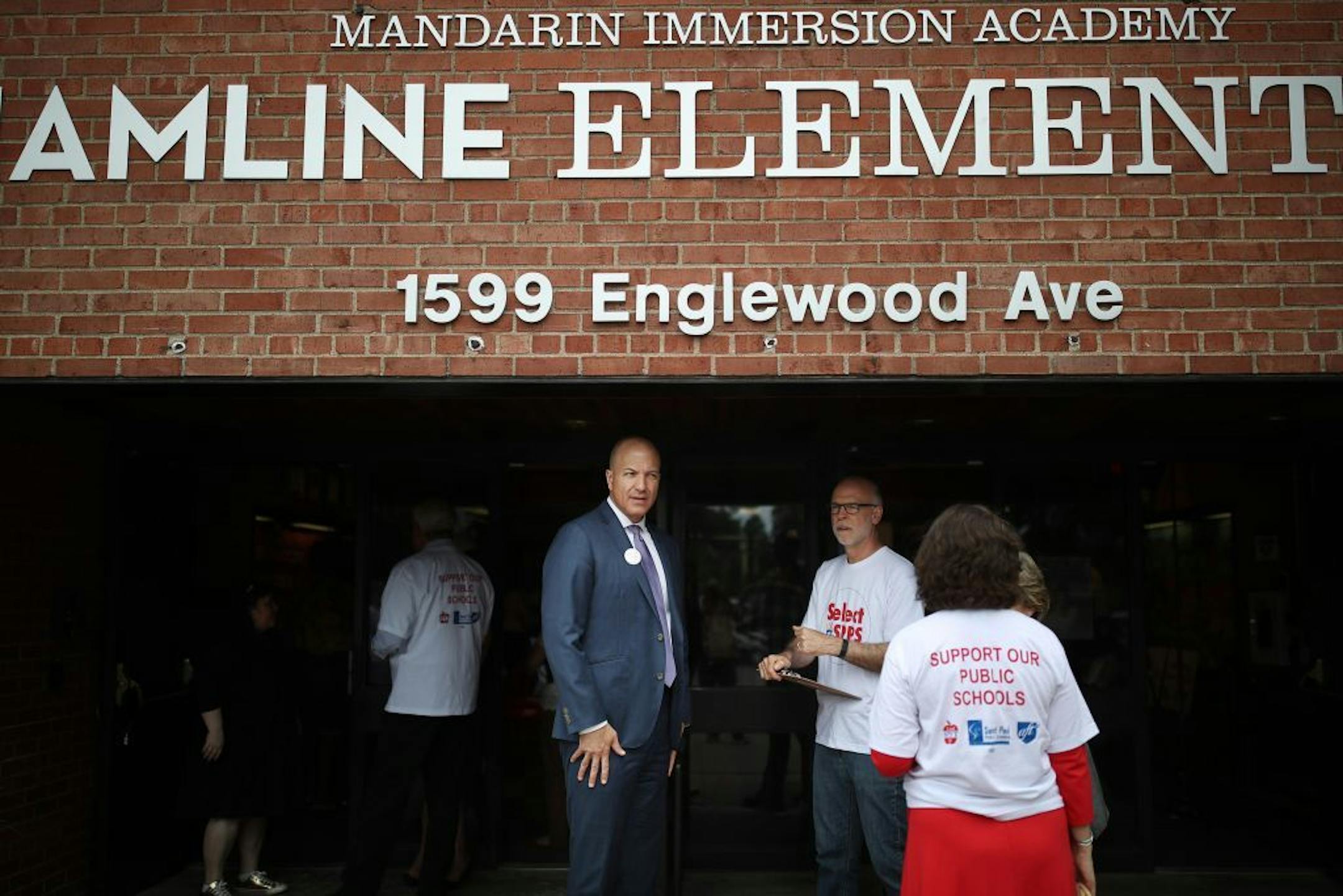
Votes by St. Paul's teachers and educational assistants to move from their current health insurer to a state-run plan are creating a multimillion-dollar headache for the district.
That is because the switch — if it occurs in January, as proposed — would come in the middle of a two-year contract between the district and HealthPartners and could trigger a $4 million early termination fee to be imposed by the health insurer.
Members of other unions also could face premium increases of up to 22%. Some are outraged. Patrick Mulvaney, a custodial engineer, recently told school board members that the St. Paul Federation of Educators (SPFE) and Teamsters Local 320 — the two unions that voted for the change — were spitting in the faces of other employees.
Superintendent Joe Gothard and Board Chairwoman Zuki Ellis also have sent a letter to SPFE President Nick Faber asking that teachers reconsider the move: "Simply stated, the school district does not have the ability to withstand these sudden, unexpected and unbudgeted costs," they wrote.
As of Friday, SPFE leaders and members had yet to be swayed. They say they are attracted to the potentially lower costs, and greater stability, of a move to the Public Employees Insurance Program (PEIP).
At the July 23 board meeting, and again this week, they recommended that the district negotiate with HealthPartners to waive the $4 million penalty or that HealthPartners simply elect not to assess it — or, at the very least, meet the union halfway, Faber said Friday.
The argument brings to mind SPFE's stance in a previous round of contract bargaining in which it stated that corporations and nonprofits should pay more to support schools. The district and the union agreed then to work together to pursue new sources of revenue for the state's second-largest district, with the biggest move since that time being a successful effort in November to persuade voters to fund an additional $17 million-plus a year for schools.
"The fees HealthPartners intends to assess will constitute almost 25% of those new funds," the letter to Faber states.


