

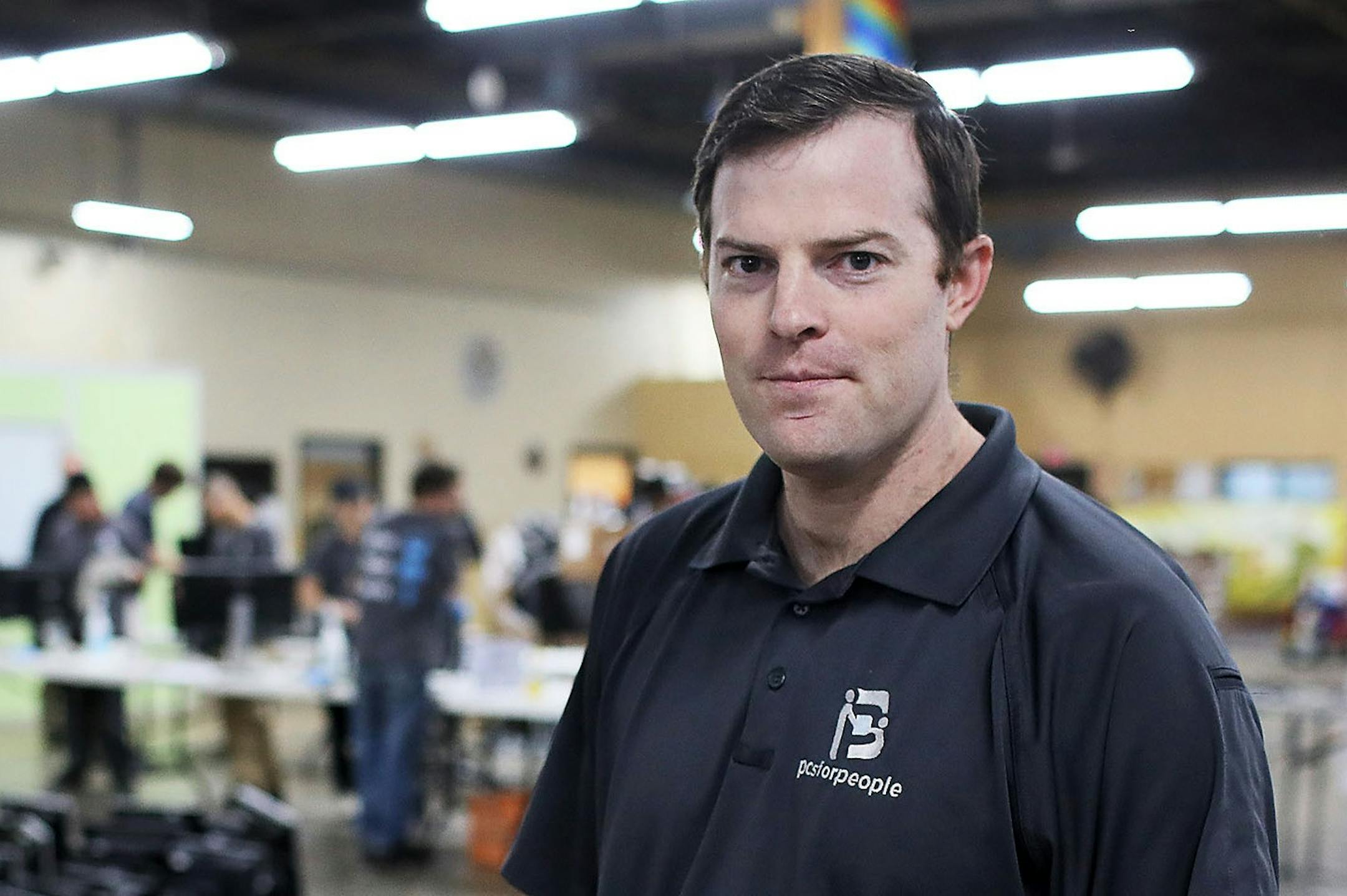
When Casey Sorensen was 9, his mother, a secretary at the local high school, saved her pennies for a full year to get the family a computer and "DOS for Dummies" handbook. Her son recalls being "instantly hooked." He decided he would pursue a degree — and a career — in technology. He's done that in a big, and unexpected, way. Sorensen is CEO of the St. Paul-based nonprofit PCs for People, which is celebrating 20 years of getting refurbished computers and low-cost internet into homes across the United States. Recently honored with the Charles Benton Digital Champion Award, which recognizes national leadership in advancing digital equity, Sorensen talks about expansion, what he still worries about and how he unplugs.
Q: Congrats on 20 years. What makes you most proud?
A: From our humble beginnings in Minnesota, we are now a national program. We have distributed over 80,000 computers, which means that more than 265,000 people have access to a computer in their home. We have retail locations here and in Colorado and Ohio, where lines form before we open, and we have distributed computers to people in all 50 states and Puerto Rico. Every day of the week, it looks like Christmas in our warehouse as we fill a UPS truck with computers heading across the U.S.
Q: What's on the horizon?
A: We are expanding our Minnesota headquarters to a new 31,000-square-foot facility and talking with prospective funders on both coasts. With coastal operations, we would have a more robust national network for corporate IT recycling; we already have diverted 76,500 computers from landfills. In addition, we could provide broader accessibility. It's an exciting time to be involved in digital inclusion.
Q: Has the term "digital inclusion" replaced "digital divide?"
A: I would say it is the evolution or modernization of the term digital divide that has occurred over the last 20 years. When "digital divide" was coined, computers and the internet were tools for productivity and information. While that is still true, someone who lacks digital skills, a computer and internet connection today can no longer fully participate in our society, democracy and the economy.
Q: Who is your average recipient?


