

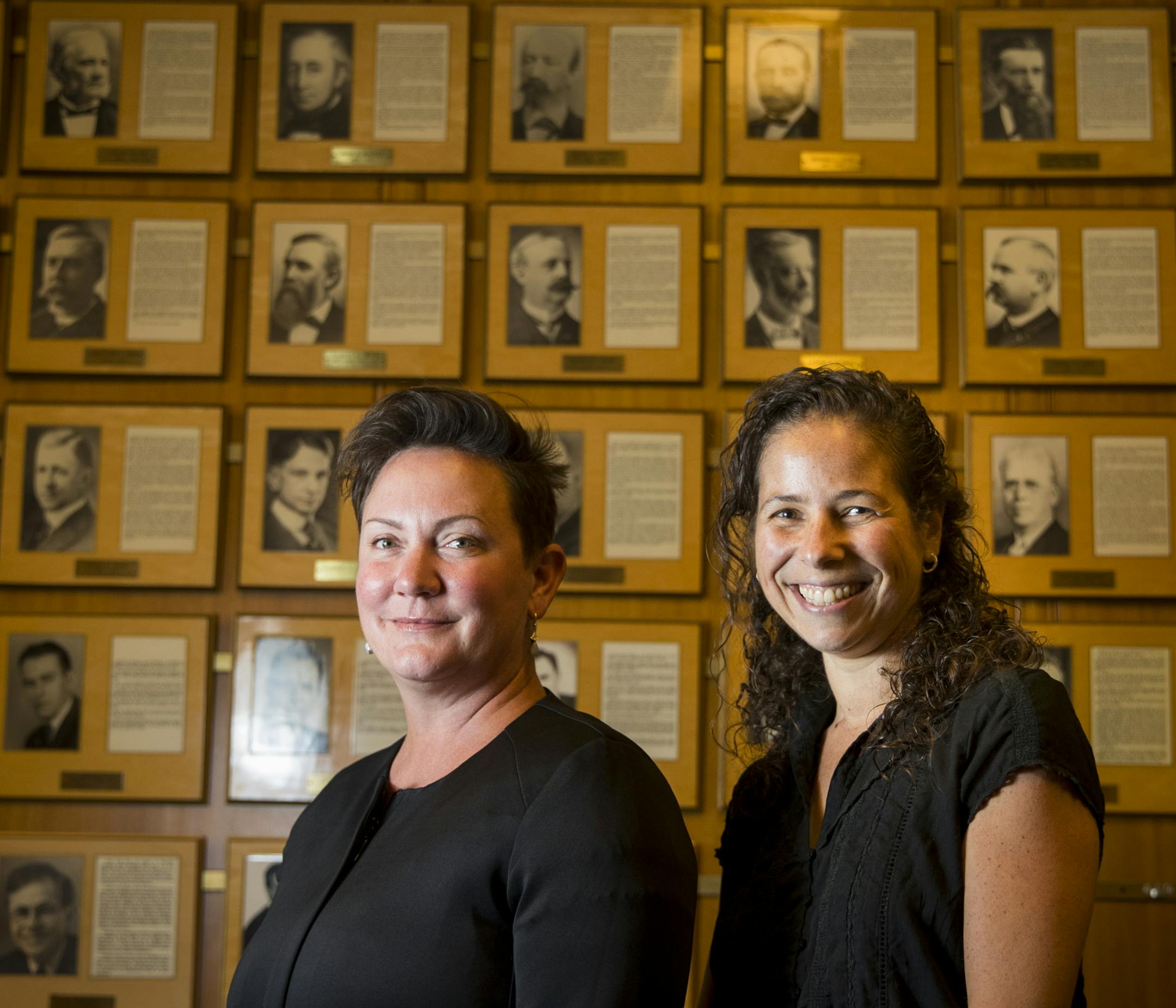
Erin Dady cringed when students touring the mayor's office looked at the wall covered in pictures of St. Paul's leaders.
"Just because there are only white men on here doesn't mean you can't be mayor," Dady, Mayor Chris Coleman's former chief of staff, would tell them.
She is one of many qualified women — along with City Council members, deputy mayors and legislators — whose pictures residents said they would like to see on that wall. But as DFL delegates prepare to endorse a mayoral candidate June 17, one thing is fairly certain: It will be a man.
Despite a full roster of women with political experience and the wave of activism spurred by Hillary Clinton's presidential campaign, St. Paul has stubbornly remained among the ranks of cities yet to put a woman in the top job. Duluth elected its first female leader last year, and Betsy Hodges, Minneapolis' second female mayor, is running for re-election. Yet five of Minnesota's 20 largest cities have never had a female mayor, and the gender gap persists at all levels of government — and can impact policy priorities. The state is 0-40 on electing a woman to the governor's office, though several women have entered the 2018 race.
For decades, only men were in the pipeline that starts with lower-level boards and commissions and leads to the mayor's office and beyond, St. Paul Deputy Mayor Kristin Beckmann said. Nearly all incumbents are re-elected, so she tells women, "An open seat is like gold."
But, when Coleman opted not to run again, she remained one of the many women who decided not to heed that advice.
What are the roadblocks?
St. Paul women see particular systems in the city that might have better positioned men for office.
The Catholic Church and labor unions traditionally have been very prominent in the city, Dady said. Members of those male-dominated organizations can connect with a network of support and funding. And the groups that endorse candidates, from various trade unions to firefighters and police, are almost all men, Council Member Amy Brendmoen said.


