

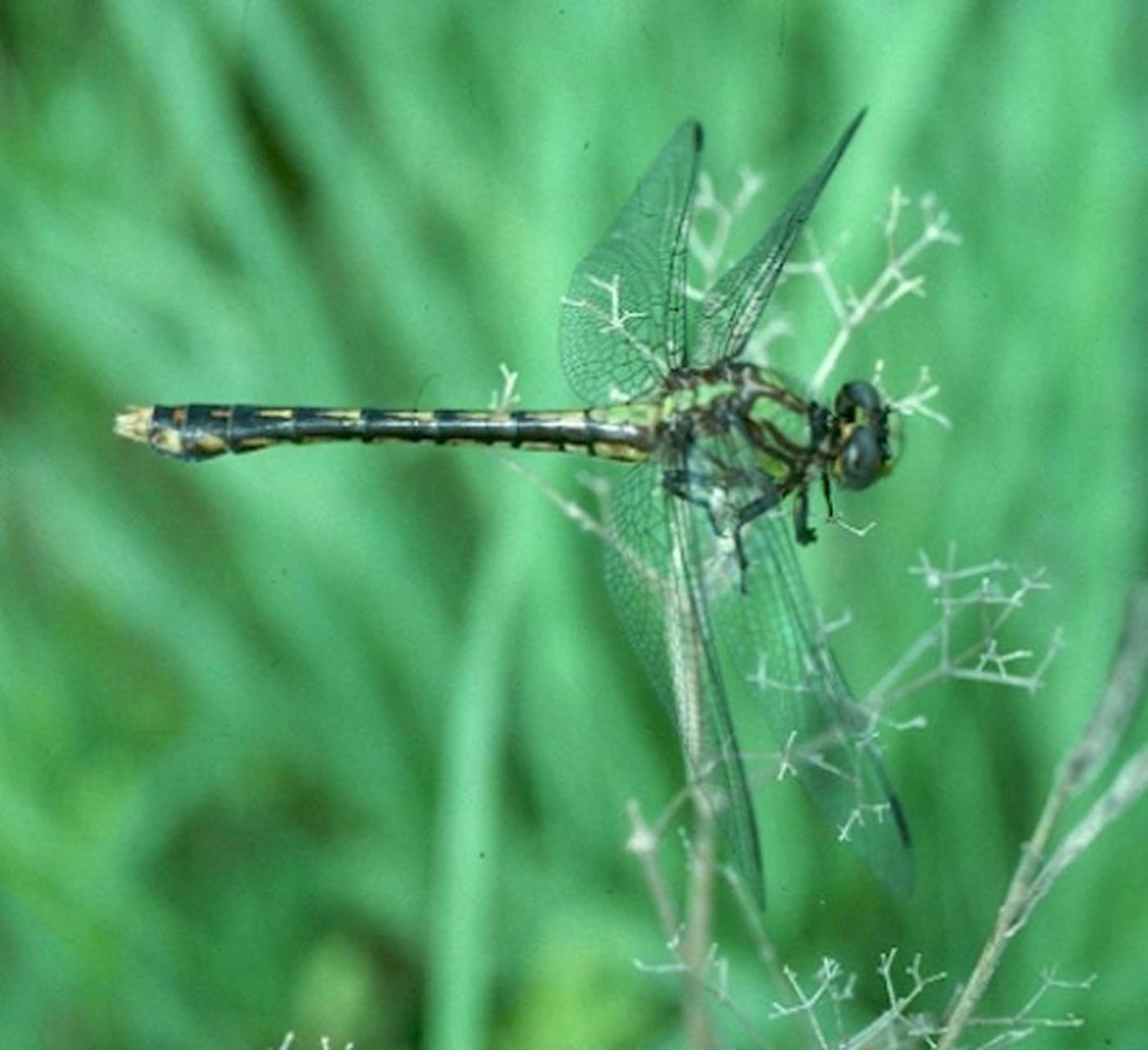
At a quick and untrained glance, it's just a dragonfly. But there's something unique about this one, and it's not just its bulging gray eyes, luminous green-and-black color, or the flared tail that resembles a cobra's hood.
The clue is in its name: St. Croix snaketail. The last part describes that tail; the first part is named for the river where it was discovered 23 years ago, and where the species almost exclusively makes its home on Earth.
But its numbers, already scarce, are getting scarcer. The St. Croix snaketail is one of more than 300 species of animals, plants, insects, fish and other types of species whose protective status is up for review under a proposal from the Minnesota Department of Natural Resources (DNR). Some species would be offered greater protection, such as the moose; for others, like the gray wolf, protective status would be deemed less necessary.
The St. Croix snaketail's status would be downgraded from "special concern" to "threatened," mostly because its limited breeding area is vulnerable to changes in water quality -- especially from tributaries -- as a result of agricultural and municipal pollution, silt, logging in the watershed and water level fluctuations, said Richard Baker, the DNR's endangered species coordinator. There are 43 dragonfly species in the St. Croix/Namekagon river systems, and 11 of them are considered under some level of threat.
The process for changing the list, which includes a series of public hearings, will take about a year, and culminates years of surveys and research. "We wouldn't be making these kinds of changes if we didn't have a basis for doing them," he said.
The work is painstaking because lives, literally, are on the line.
"Ecosystems are complex webs of interaction," he said. "We can't say with any confidence what the effects would be of removing a species from that system." He likened that complexity to a jet airliner having its rivets removed one by one. "At what point do you remove too many and the thing falls apart?" he said.
Bill Smith, natural heritage inventory zoologist with the Wisconsin DNR, discovered the St. Croix snaketail with research partner Tim Vogt in 1989, and the process for confirming it as a species took another four years. The dragonfly is listed as endangered in Wisconsin, and he said the increased concern in Minnesota is justified.


