

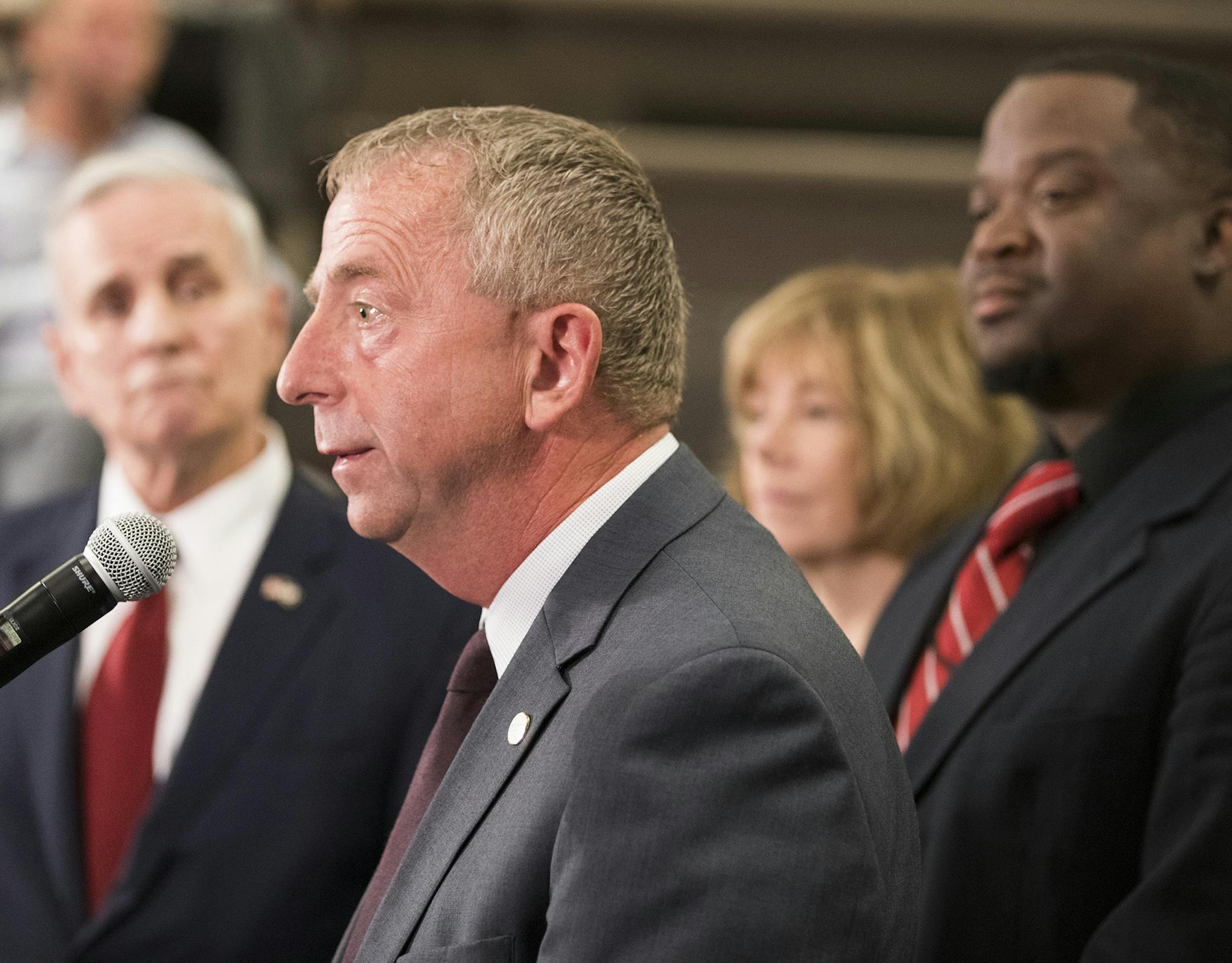
A citizen of St. Cloud called the mayor's office Wednesday to complain about a traffic problem. Mayor Dave Kleis was delighted.
"We're back to some normalcy!" Kleis exuded the next day.
Well, some. It will take more time for the 10 people who were stabbed by a knife-wielding assailant at the Crossroads Center mall on Sept. 17 to heal physically and emotionally. Same goes for the other victims of 20-year-old Dahir Adan — among whom Kleis counts the off-duty cop who stopped Adan's rampage, the event's witnesses, the mall's businesses, the city's Somali-American community and pretty much everybody who calls St. Cloud home.
But the messages that flowed out of Kleis' town in the days after the bloodshed exhibited a degree of civic health and cohesion that some might call remarkable — especially those who remember St. Cloud's reputation a generation ago as a city less than tolerant of human differences.
There were appealing images of a young woman in a hijab playing patty-cake with a plump pink baby; black and white students singing while holding hands high, and the black police chief and white mayor side by side outside the mall on Saturday night and again through the week. "We actually went shopping together," Kleis said with laugh.
It was telling that Twin Cities newsies looking for white backlash to Adan's outrage had to go to little Lonsdale, in the opposite direction from St. Cloud, to find a display of intolerance — "Muslims get out" on a small restaurant's road sign.
Kleis reported with pride that he'd seen no such sentiment writ publicly in St. Cloud. One outbreak of Confederate flag-wavers zipping through a Somali-American neighborhood Saturday night remained by Friday just that — one outbreak.
The mayor's pride is justified. St. Cloud's remarkably quiet week was no accident. It was the consequence of years of intentional effort by civic leaders to not just cope with demographic change, but thrive as a result of it.


