

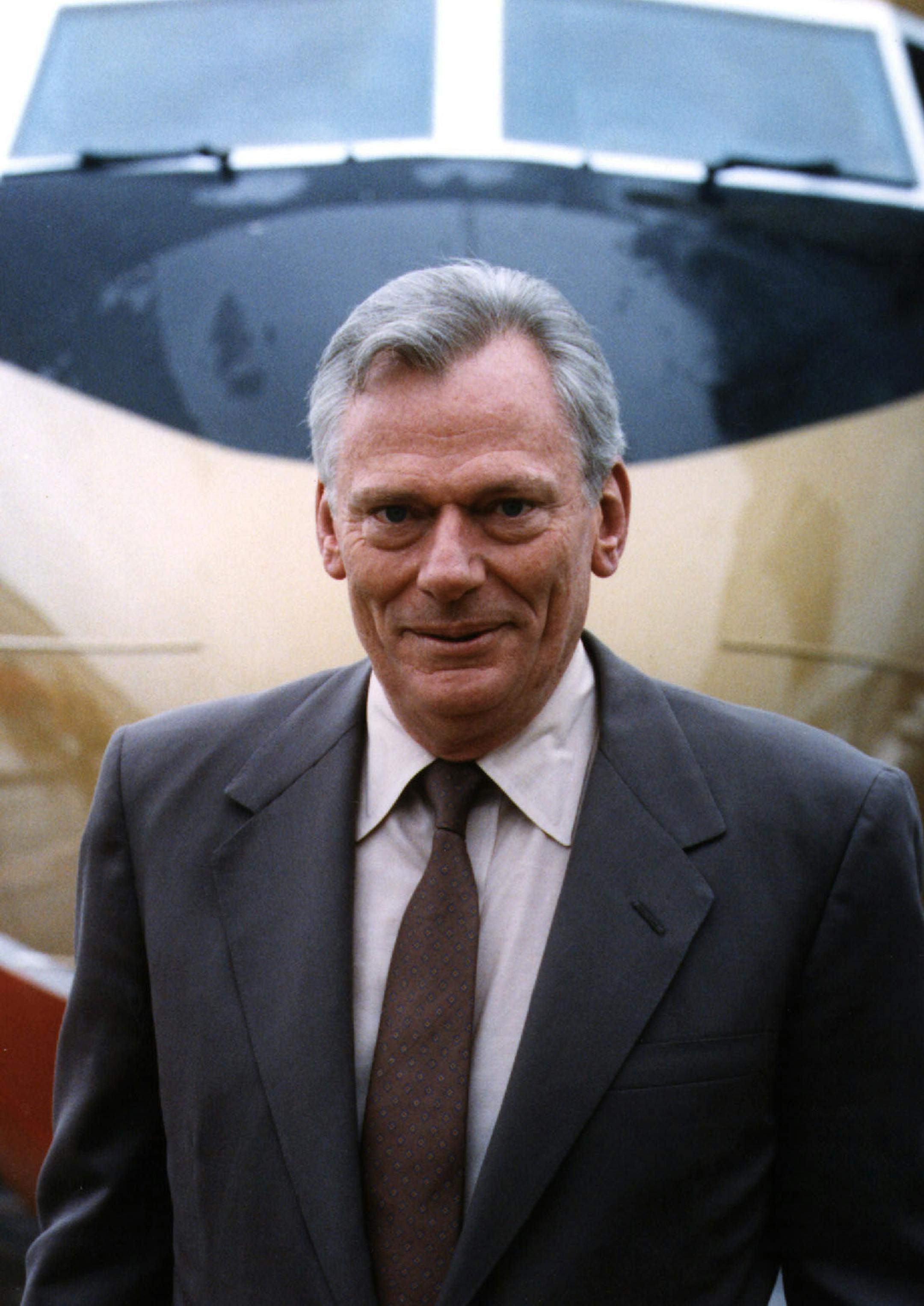
Unusually for a man who believed in cutting costs wherever possible, Herb Kelleher, the boss of Southwest Airlines, the United States' most successful carrier, liked being flexible with trade unions.
In 1994, during discussions over an unprecedented 10-year agreement that would freeze pilots' wages for five years in return for stock options in the airline, he promised Gary Kerans, president of the pilots' association, that if the contract went through, he would freeze his own salary and bonus for five years as well. Chairman and pilots should get the same treatment.
The deal was done.
Kelleher died Jan. 3 at age 87 in Dallas. Born in New Jersey, he studied English and philosophy at Wesleyan University and then law at New York University. It was his wife, Joan, whom he met on a blind date, who persuaded him to start a law firm in Texas.
Southwest Airlines was born, not on the back of a cocktail napkin, as he later liked to boast, but when one of his legal clients, Rollin King, owner of a small commuter airline, and his banker, John Parker, came to his office. Both men found traveling between Houston, Dallas and San Antonio inconvenient and expensive, and thought they could do it better.
U.S. aviation in the 1970s was dominated by the hub-and-spoke approach, pioneered by Delta Air Lines in the belief that the most efficient way to fill planes was to fly through hub cities and collect passengers. What King and Parker were proposing was cheap, point-to-point travel using small, convenient airports near to fast-growing centers. The competition was not other airlines, they believed, but cars.
'Affront to my idealism'
After all, the distance between Houston and San Antonio was less than 200 miles, a three-hour journey by road. Pacific Southwest Airlines had made city-hopping efficient in California, so why would it not work in Texas? Kelleher put up $10,000 of his own money and on Nov. 27, 1967, he filed Southwest's application to fly between the three cities.
What he hadn't reckoned on was the airborne competition. Within a day, Braniff, Trans Texas (later Texas International) and Continental applied for a restraining order stopping Southwest from taking to the skies, arguing that Texas was perfectly well served by existing airlines. For the next four years, through the state district court in Austin, the state court of civil appeals, the Texas Supreme Court and the U.S. Supreme Court, the big airlines pleaded for injunctions that would kill off the new business. As the airline's lawyer, and later its general counsel, he laid out its arguments and rebuttals.


