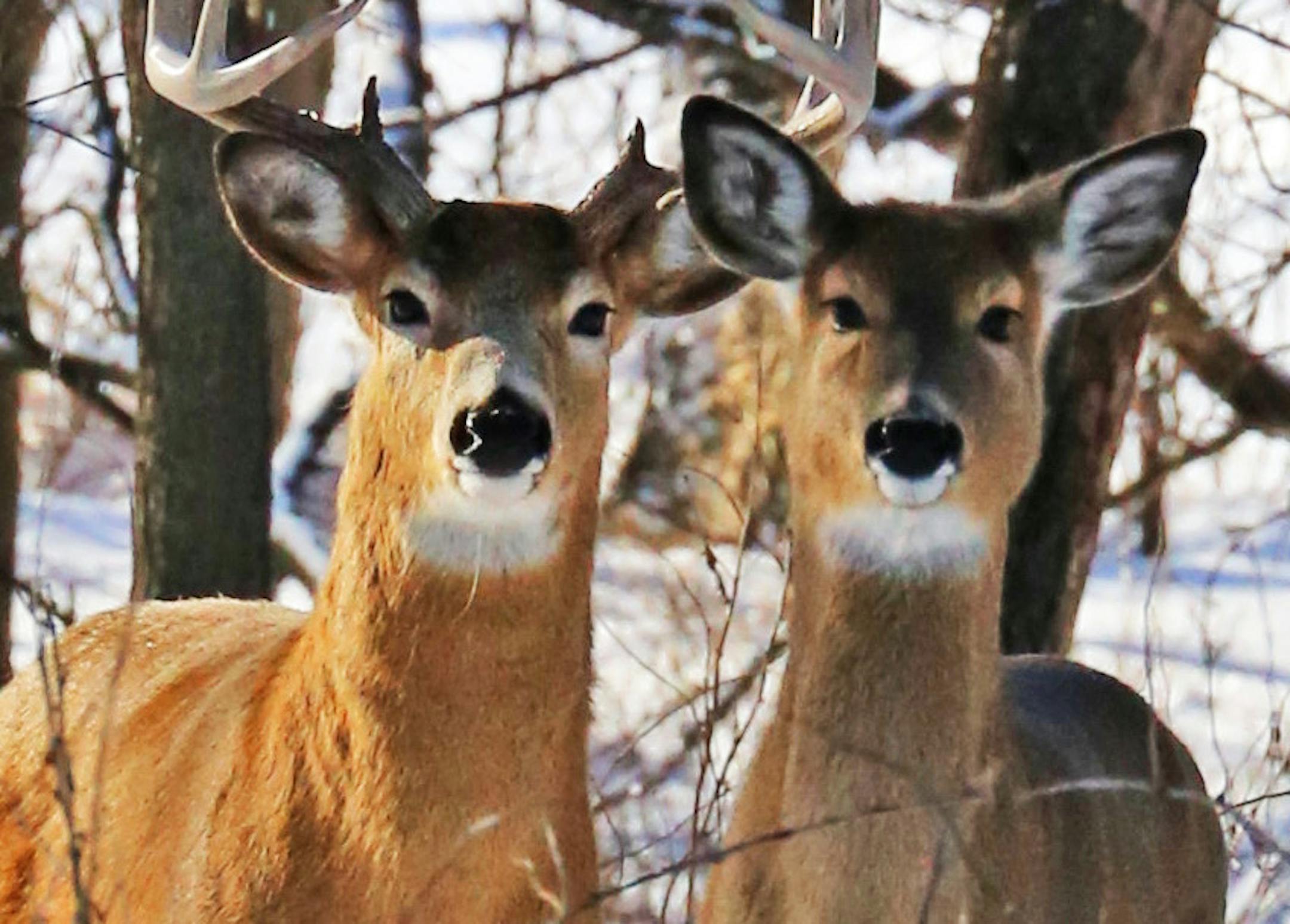
PRESTON, MINN. – The day in 1948 that Phil Kruegel's parents brought him home from the hospital, newly born, his dad spotted the first white-tailed deer he had ever seen in these parts. Grouse were plentiful at the time in the countryside surrounding their home here in southeast Minnesota, about 6 miles from the Iowa border. But deer were scarce.
That changed. By 1959, whitetails were commonplace among the red and white oaks, hickories, maples and aspen that imbue this part of Minnesota with its rich character. Bluffs also tower here, and steep draws snake among its woods, and when men returned from World War II, they cleared more and more of the trees for their livestock, hayfields and cash crops.
Those changes helped boost the deer population. "By 1959 I was hunting deer with my dad, who gave me a 28-gauge shotgun to use," Kruegel said. "That year, Dad shot a buck, a doe and a fawn. I shot a fawn. And our hired man shot a 10-point buck. We were done hunting by 10:30 opening morning."
As Kruegel spoke, the afternoon sun slanted through the picture window of his home, which is constructed of northern Minnesota pine logs. This was on Thursday, and Kruegel, a cattleman wearing bib overalls, a cap and bandanna knotted cowboy-style around his neck, was tired: He had gotten only two hours of sleep the night before, because some of his 100 or so mother cows were due to calve, and he was on watch.
Kruegel had other things on his mind as well, not least the deer that inhabit this part of the state, and the finding in recent months by the Department of Natural Resources of five wild deer in the southeast infected by chronic wasting disease (CWD).
In response, the DNR intends to kill at least 900 adult deer in a 371-square-mile region of the southeast in an attempt to gauge whether the disease, which is always fatal to deer, moose and elk, is limited in scope, or widespread.
Toward that end, a special 16-day public hunt concludes today in the southeast, and on Monday, landowners in the region will begin a special season of their own. A difference between the two: Landowners can use rifles, while participants afield in the past two weeks were limited to shotguns, bows or handguns — the same weaponry allowed them in this part of the state during regular deer-hunting seasons.
Shaped by the land he inhabits, Kruegel has witnessed over his lifetime the disappearance of the southeast's ruffed grouse, the upsurge of wild turkeys and coyotes, the near-disappearance of once-plentiful ducks, the infestation of possums, and the seemingly inevitable undulation of deer numbers.