
South metro cities keeping tabs on water use

The quest for green lawns during an excessively hot July drove up water use in some communities.

August 14, 2012 at 8:08PM
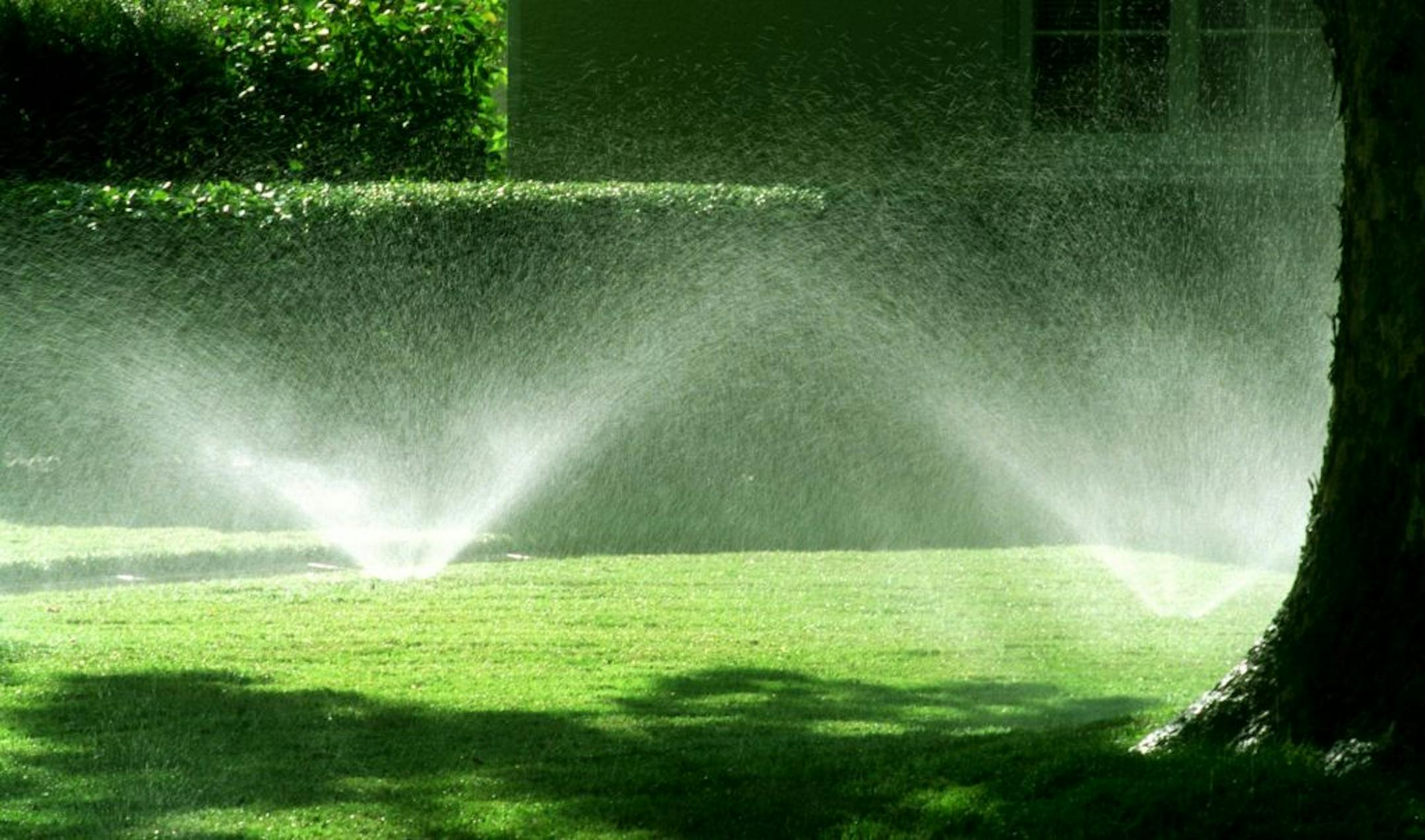
SH03G203WATERING Sacramento, Calif., July 14, 2003 _ A lawn gets watered by sprinklers in Sacramento, Calif., on July 3, 2001. Watering in the morning reduces evaporation and chances of fungal disease.
SH03G203WATERING Sacramento, Calif., July 14, 2003 _ A lawn gets watered by sprinklers in Sacramento, Calif., on July 3, 2001. Watering in the morning reduces evaporation and chances of fungal disease. (Sacramento Bee Staff Photo/The Minnesota Star Tribune)

No one's pushing the panic button, but some south metro cities are keeping an eye on yard sprinkling during this largely hot, dry summer to make sure it doesn't deplete their water systems.

Recent rains have helped, but July was a challenging month, with some cities seeing sharp increases in water use.

"Pools might be a very small part of the reason, but I would say that watering lawns accounts for more than 90 percent of the increase," said Russ Matthys, director of public works in Eagan.

The increased use comes at a price. In an effort to promote conservation, the Minnesota Department of Natural Resources requires municipalities to charge customers tiered, rather than flat, rates for water. That means higher rates are paid by heavy users.

Prior Lake had a nearly five-fold jump in water use through late July, prompting the city to warn residents they could be fined for violating yard-watering rules. Public Works Director Katy Gehler had no specific figures on the number of violators found on late night and weekend enforcement sweeps but said there has been a "significant increase" compared with previous years.

Gehler said the city has encouraged people who live around lakes to pump lake water instead of city water to irrigate their yards. "We're trying to relieve the stress on our system during a period of peak demand," she said.

In Lakeville, average daily water use in July was about three times the typical daily summertime use, said Public Works Director Chris Petree. "That puts a big strain on a community's water system," he said. The city has issued about 600 warnings and about 20 fines this summer, about six times more than previous years, he said.

Daily water use in Eagan in June and July this year was up about 25 percent from the same period in 2011, Matthys said. This year's peak day was July 2, when the city used 24.3 million gallons of water, slightly below the all-time peak of 25.3 gallons used on July 9, 2006.

"We're not concerned, but it's something to keep an eye on," Matthys said. The city has a maximum daily capacity of 28.6 million gallons.

Savage City Administrator Barry Stock said communities have interconnect agreements to share water with each other in emergencies such as fires. Nevertheless, heavy yard sprinkling can put a widespread strain on aquifers that supply the interconnected systems, he said.

Stock said the advent of water-saving shower heads, faucets and other fixtures has helped reduce some water use, leaving lawn irrigation as the prime area to step up conservation efforts.

"Sprinkling is not a necessity, and yet we have to build our infrastructure for that peak summertime usage," he said.

Petree said he believes many people don't knowingly violate rules, such as odd-even watering days that correspond to house numbers or restrictions on early morning and late night sprinkling. He said automated irrigation systems sometimes aren't adjusted properly. "Unfortunately, the system goes on and it shouldn't," he said.

The days of seeing automated sprinklers running when it's raining have largely passed because more modern systems have rain sensors. Soil-moisture sensors have been used in recent years on golf courses and commercial properties and this year became available to homeowners in a new product developed by Bloomington-based Toro Co. The device works to control in-ground sprinkling systems.

Dana Lonn, a managing director in Toro's advanced turf technology group, tested one on his yard when the device was being developed. He installed a sensor to control the sprinkler on half of his yard and continued watering the other half for about 20 minutes every other day, except for days when it rained.

After two months, both halves of his lawn looked healthy. But the sprinkler controlled by the soil moisture sensor had run for only 39 minutes while the sprinkler on the other side had run for 250 minutes.

"People are used to thinking that irrigation should be based on time or the weather in the air," Lonn said. "Soil moisture is a more quantitative measure."

Susan Feyder • 952-746-3282

about the writer

about the writer

SUSAN FEYDER, Star Tribune