

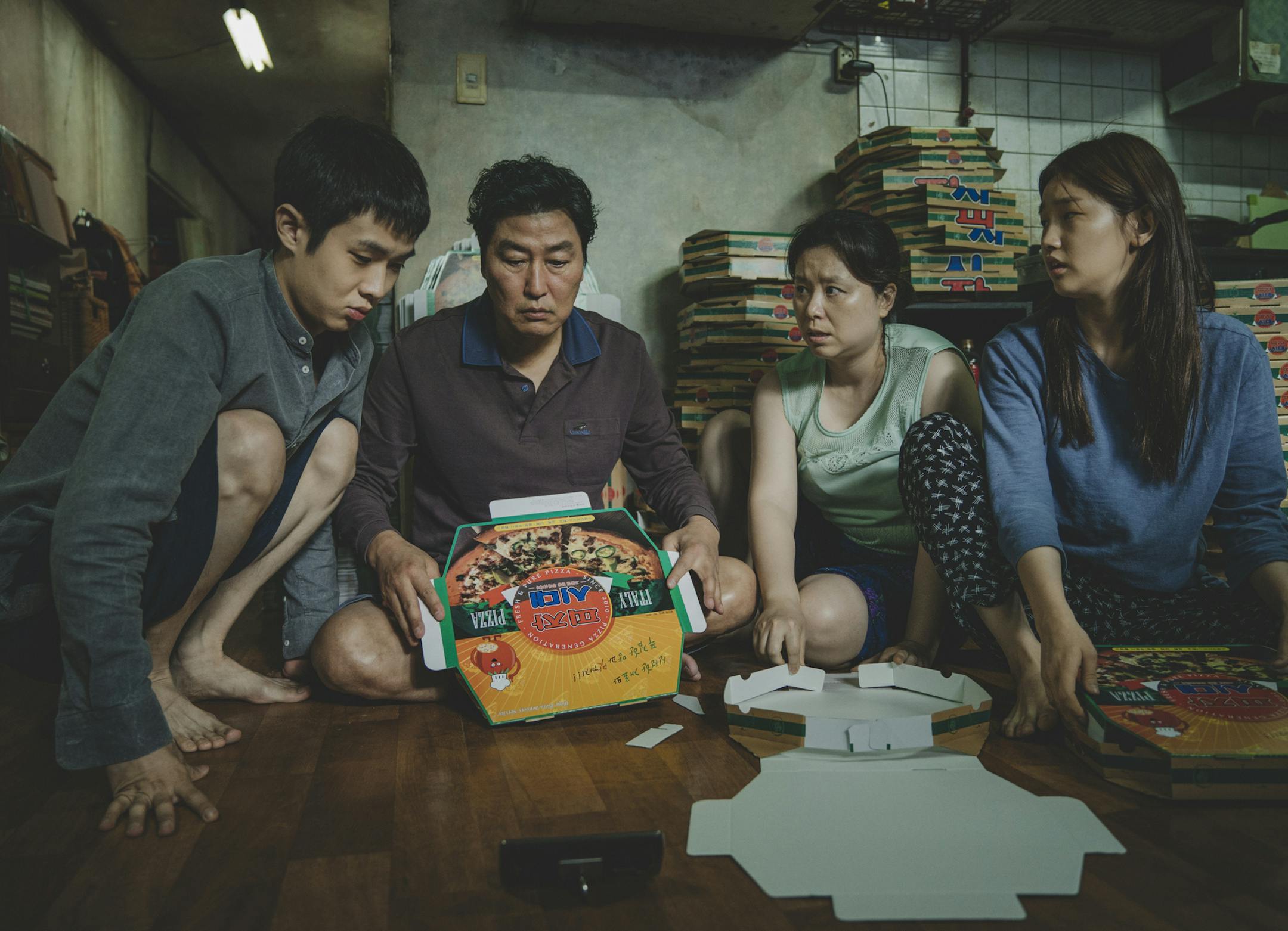
In an early scene in "Parasite," a hit South Korean film, a young woman from a poor family forges a university-enrollment certificate for her brother. He is about to apply for a job tutoring a girl from a rich family and hopes that the false credential will improve his chances.
But when he shows up to the interview the girl's mother barely glances at it, telling him she trusts him because he was recommended by her daughter's previous tutor — his only posh friend, who has left to study abroad.
Even more than in most countries, academic credentials are valuable for getting ahead in South Korea. But the scene captures another truth: that if you know the right people, your exam results don't matter as much. The two siblings in "Parasite" milk that insight for all it is worth, before things inevitably unravel.
The film, which won the top prize at the Cannes Film Festival this year, also struck a chord with South Koreans: in a country of 52 million, cinemas have sold 10 million tickets for it since it was released in May.
The resonance of a satirical film about inequality is hardly surprising. President Moon Jae-in promised to make South Korea "fairer" when he was elected in 2017, after his predecessor was impeached (and later given a long prison sentence) for using her authority to help a friend's child get ahead, among other abuses. Yet over the past couple of months a nepotism scandal has engulfed Cho Kuk, Moon's new justice minister.
Before Cho was appointed, it emerged that his daughter, now in her late 20s, had received unusual benefits during her studies. Among other things, she allegedly received generous scholarships despite twice failing her exams at medical school, and was listed as the primary author of an academic paper while still in secondary school, even though she had only completed a two-week internship at the lab where the research in question was conducted (which happened to be run by a family friend.)
For weeks, Cho apologized for causing "disappointment" but said he wouldn't resign. But on Monday, he did quit. "I should no longer burden the president and the government with affairs concerning my family," Cho said.
For many South Koreans, the story carried echoes of the scandal that brought down Park Geun-hye, the previous president, whose closest confidante persuaded a university to change its admissions criteria to admit her daughter.


