

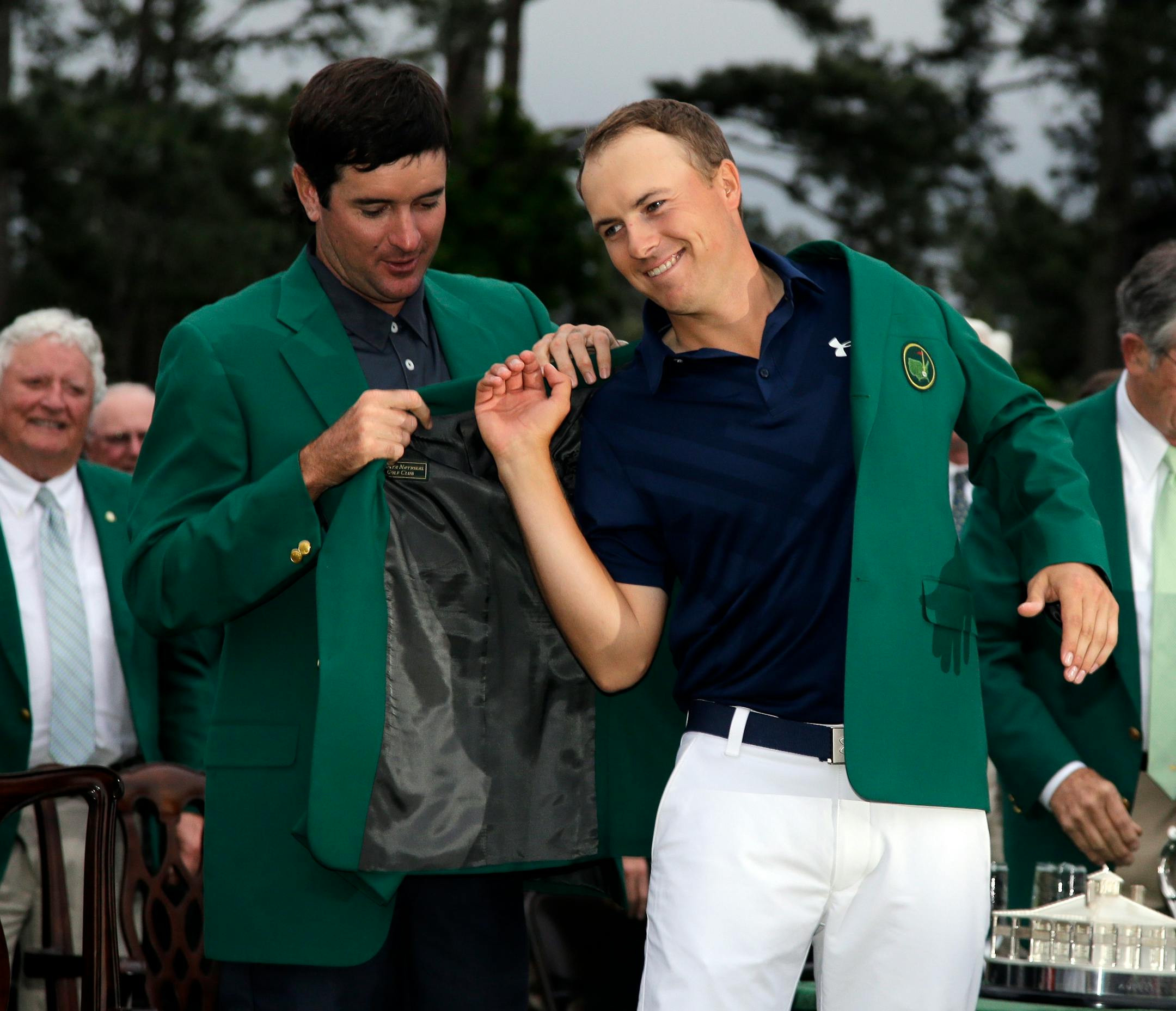
Augusta, Ga. – "Get down. … Land soft. … Just an ounce right. … Be enough. … Oh my gosh! … Be good."
All week at the Masters, Jordan Spieth spoke to his golf ball as if it were a beloved pet that had escaped the leash. What differentiates him from hackers all over the world is that his Titleists perform as if trained.
The first-person oral history of Spieth's historic victory will be easy to access, and worth saving. At 21, Spieth on Sunday became the second-youngest player ever to win the Masters, tying Tiger Woods' record of 18 under par with a rope-a-dope final round during which he replaced the usual Augusta National roars with yawns, winning by four strokes over Phil Mickelson and Justin Rose.
Spieth shot a 70, setting the tournament record with 27 birdies but losing a chance at holding the record outright with an 18th-hole bogey that didn't keep him from hugging a dozen family members and friends who waited by the green.
His sister, Ellie, is a 14-year-old with special needs, whom Spieth has credited with keeping him "grounded." She watched him lose in a playoff in Houston last week but didn't travel to Augusta. "After each round in Houston, she asked, 'Jordan, did you win?' " Spieth said. "I said, 'Not yet, not yet, and no.' I can tell her I won now."
He did so despite challenges that didn't face Woods when he shot 18 under in 1997. Augusta National is longer and tougher now, featuring gradations of rough that didn't exist then, and Woods' stardom spawned a generation of physically fit, fearless golfers who may soon call Spieth their leader.
"He's going to fly the flag for golf for quite a while," Rose said.
Spieth starred in a home video when he was 14, saying he planned to win the Masters, so it shouldn't have been surprising that his speeches were flawless. He thanked the fans during the green jacket ceremony, using the club-preferred pronoun "patrons," saying, "The roars at Augusta, you create them."


