

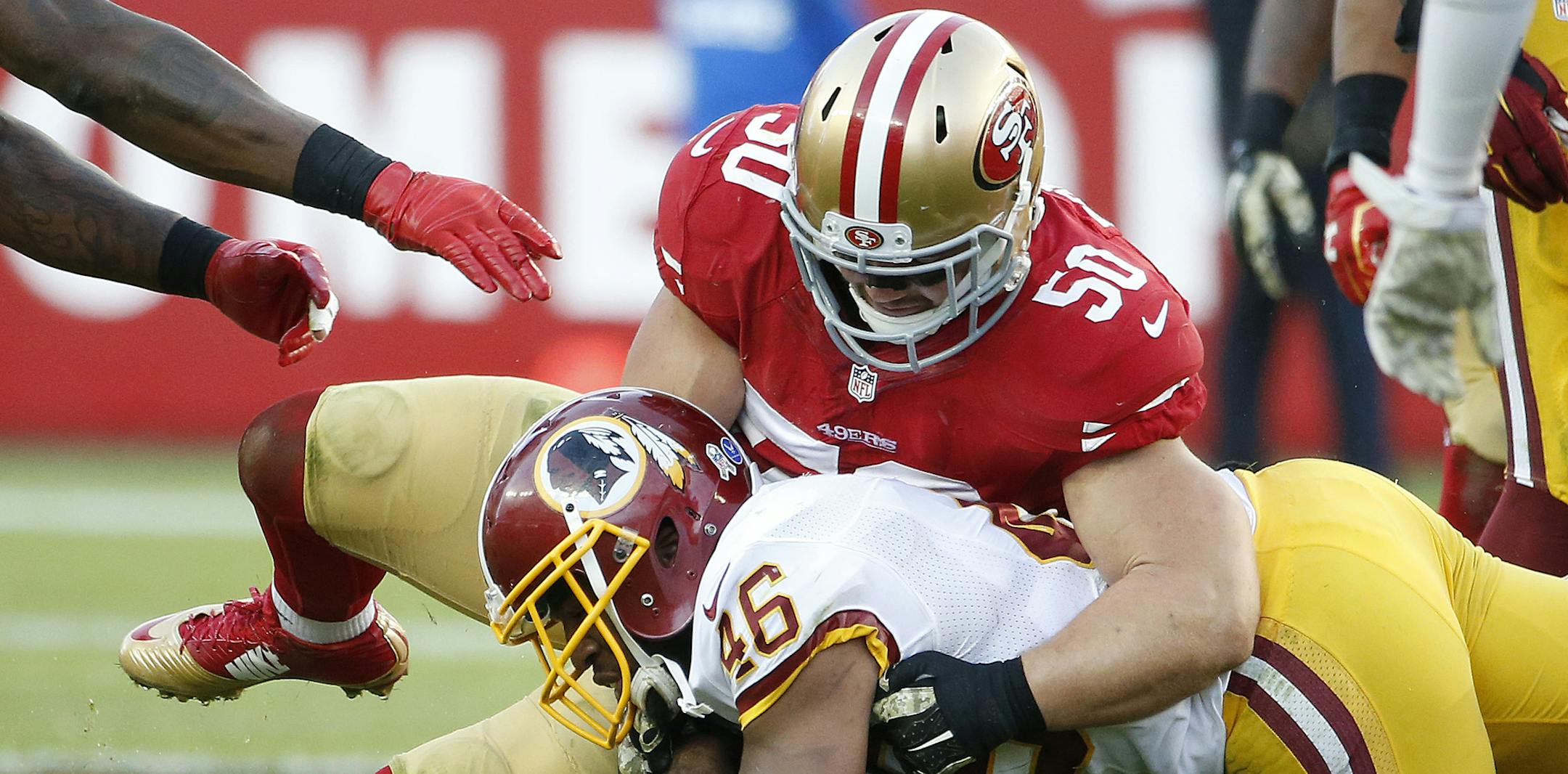
What is most certain about brain injuries in football is that many of the people who talk about it will make you want to test them for similar ailments.
After 49ers linebacker Chris Borland announced his retirement at the age of 24 because of concerns about the dangers of football, Arkansas coach Bret Bielema tried to link Borland's decision to Bielema's complaints about no-huddle offenses; and "Dr.'' Joseph Maroon, who is paid by the NFL, said that football has never been safer.
"Dr.'' Maroon, who apparently interned for Dr. Nick on "The Simpsons," even said that youth football is safer than riding a bike or skateboard. This is true in some circumstances. For example, it is safer to play in the NFL than it is to ride a bike or skateboard directly toward a large group of men in the Middle East holding up a sign reading "ISIS.''
Because nationwide overreaction accompanies any NFL story of note, Borland has been characterized as everything from a quitter to a hero. He is neither.
Borland made a mature decision. He rejected the lure of money and fame in favor of health. He is no more a quitter than someone who leaves a coal mine for a cubicle.
His decision doesn't meet the dictionary definition of "brave," either. Bravery is what will be displayed by athletes who know what Borland knows about brain trauma and decide to play anyway.
Football is popular because it is the most spectacular of blood sports. Because NFL players eagerly place themselves in harm's way on every play.
Borland may be the first of a wave of players who opt out of a brutal sport for intelligent reasons. They will be replaced by those without better options in life, and those who measure football risk the way others might measure the risks of smoking, drinking or consuming sugar.


