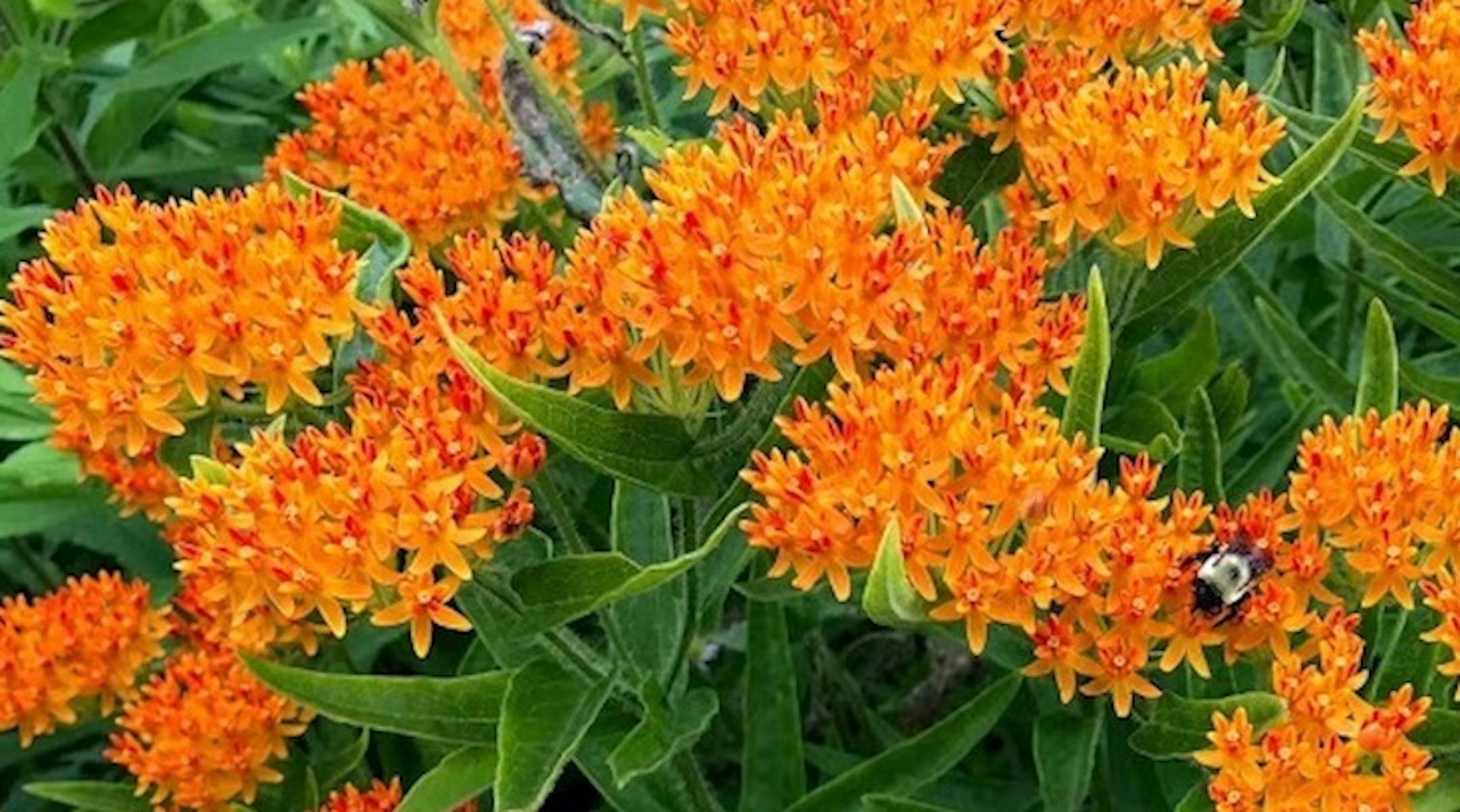
As gorgeous as it might be, there's a reason why Asclepias tuberosa, or butterfly weed, is called a "weed." After all, until very recently it was considered little more than that: a weed.
Now, thanks in part to the other part of its common name — butterfly — it's an enormously popular plant in Minnesota gardens and nationwide, having been named Plant of the Year in 2017 by the Perennial Plant Association.
Butterfly weed is just one of more than a handful of once-shunned, now-treasured staples of landscapes throughout the Upper Midwest. Many still are saddled with "weed" in their common names, said Alan Branhagen, director of operations at the Minnesota Landscape Arboretum and author of "Native Plants of the Midwest: A Comprehensive Guide to the Best 500 Species for the Garden."
"One that just cracked me up, I recently saw in a planter in Uptown," Branhagen said. "It's an annual in the North, and they call it Yankeeweed [proper name: Eupatorium compositifolium]. It comes into really distressed areas, so after the Civil War it was everywhere in the South, and they started calling it that. It's popular for its really ferny foliage."
While striking foliage and blooms helped many of these plants make the transition from ditches to gardens, other factors sometimes came into play. Butterfly weed skyrocketed in appeal after the U.S. Fish and Wildlife Service petitioned to protect the monarch butterfly under the Endangered Species Act in 2014. Something known as a butterfly weed — and with good reason, as it's a magnet for our fine fluttering friends — was suddenly a star.
This orange-blooming beauty is part of the milkweed family. "It's a field weed," Branhagen said. "And once everything became GMO, swamp milkweed became very popular for its sap, as well as being beautiful. It had to do with the collapse of the monarch population. Once the warning really went out, [plants such as this] really have turned things around."
Another butterfly enticer, the towering Joe-Pye weed (Eutrochium fistulosum), also has become more prevalent.
"When I was younger, you never saw a Joe-Pye weed in a perennial border," said Branhagen, who has almost 800 types of perennials in his home garden. "When its cultivar Gateway came out, that was the breakthrough, with its really robust flowers."