

Note: This is the first of three parts about Minnesota communities and their enthusiasm for wild edibles.
The woods were dry in the small park near Wyoming, Minn., but Neng Xiong spotted one promising bit of green: pale spears of young Solomon's seal, almost invisible against the rust-brown duff.
The club-headed shoots are a delicacy in the Hmong community, prized for their flavor, like asparagus with a tangy, slightly bitter aftertaste. They turn up at community meals and can be boiled in soups, stir-fried with meat, or even turned into a spring tea.
Xiong likes the flavor of the early spring edible enough that he's transplanted a couple dozen shoots from his brother-in-law's backyard in St. Paul to his land in Wyoming.
It's one of more than a dozen wild foods he gathers when out hunting or fishing, from watercress and fiddlehead ferns to wild asparagus, oyster mushrooms and prickly ash berries.
Like Southerners, who have gathered ramps and other wild greens for generations, many in the Hmong community have a deeply rooted tradition of edible and medicinal plant knowledge. And spring, when new shoots are bursting out all over the woods, is one of the busiest times to find wild edibles.
"I first started eating stuff my parents were tasting, stuff that had a bitterness to it," said Xiong, an engineering assistant whose parents grew up in Laos. "As I got older, I acquired a taste for it."
Beginning on hunting trips with an older brother as a teen, he also developed an interest in foraging — enough to start a Facebook group, Hmong Foragers, five years ago. The group has slowly grown to almost 200 members scattered across the country.
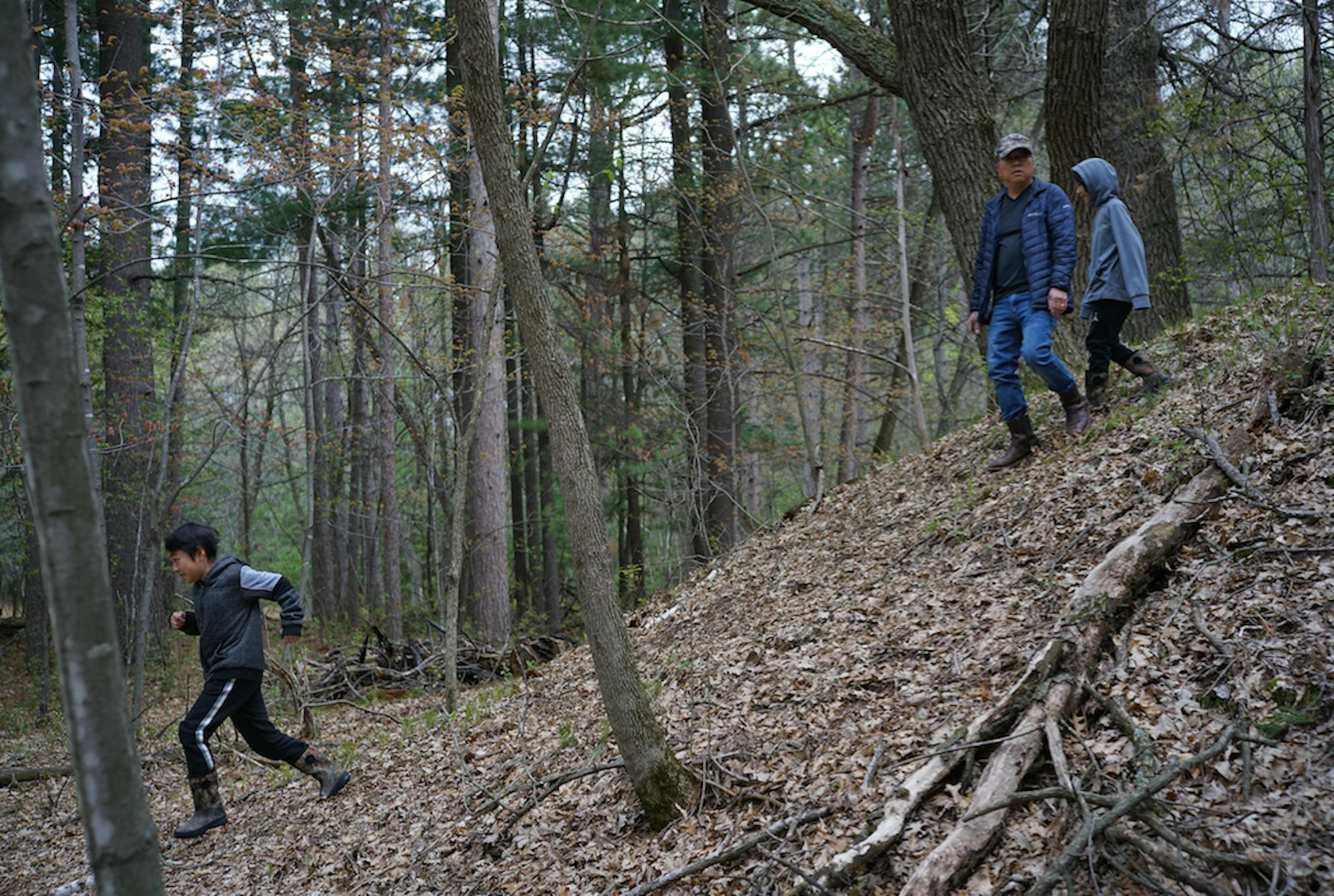
![Neng Xiong found some Solomon's seal which is a delicious edible with medicinal qualities.]We are headed out to forage with Neng Xiong, the organizer of a Facebook Hmong foraging group.RICHARD TSONG-TAATARII ¥ richard.tsong-taatarii@startribune.com](https://arc.stimg.co/startribunemedia/RLLMXKDCVIJH5U3ZHIAVNIBSWU.jpg?&w=1080)


