

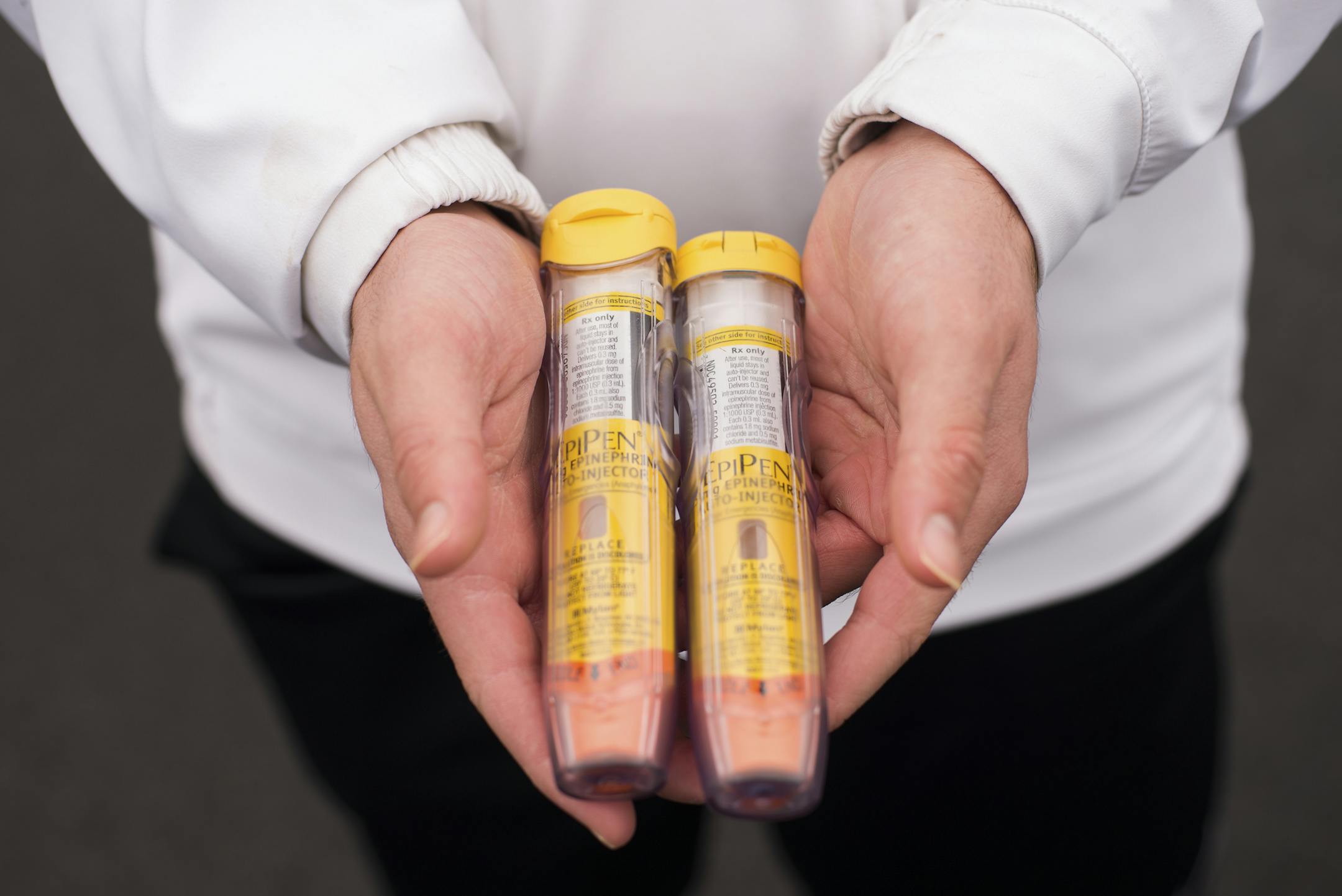
The concern over soaring prescription drug prices continues to dominate headlines, attracting scrutiny from Capitol Hill and President Donald Trump, who said during a January news conference that the industry was "getting away with murder."
But some doctors — frustrated by what they see as unreasonable price tags and political stagnation — are coming up with do-it-yourself solutions. Their efforts to bring down costs for their patients highlight the arbitrary and often needlessly exorbitant prices of drugs in the U.S., they say.
One striking example is the response of Dr. Cathleen London, a family doctor in Milbridge, Maine, to news that the pharmaceutical company Mylan had driven up the prices of its signature EpiPen, a branded auto-injecting device containing a preset dose of epinephrine, a lifesaving drug, to be used by people at risk of experiencing anaphylactic shock triggered by an allergy. "I thought: This is disgusting. There's got to be another auto-injector," she said. "I started googling."
She ended up devising a workaround for her patients who needed one.
"I basically build an auto-injector. I can do it for pediatric and adult dosing," she said. "I found the right syringe. I put in the dose that I wanted. Whether it's expired or used, people come back and refill it."
The price of EpiPens has surged in recent years — an increase connected to the device, not the active ingredient, epinephrine, which costs pennies. A two-pack now costs more than $600, up from just over $100 in 2009. In response to public outcry and lawmaker scrutiny, Mylan last December released its own generic version of the device at about half the cost, but that's still out of reach for many.
Meanwhile, some insurers have dropped coverage of the pricey name-brand auto-injector pack or made sure customers have access to cost-effective alternatives. Drugstore chain CVS reduced the price of a generic competitor. But all still cost at least $109.
Fixes like Dr. London's can alleviate the pricing issue, but replicating this approach on a large scale could pose problems, since someone with medical expertise must do the refilling to avoid contaminating the device, meet quality standards for the device itself, and make the user aware of any safety issues that using the injector might pose.


