

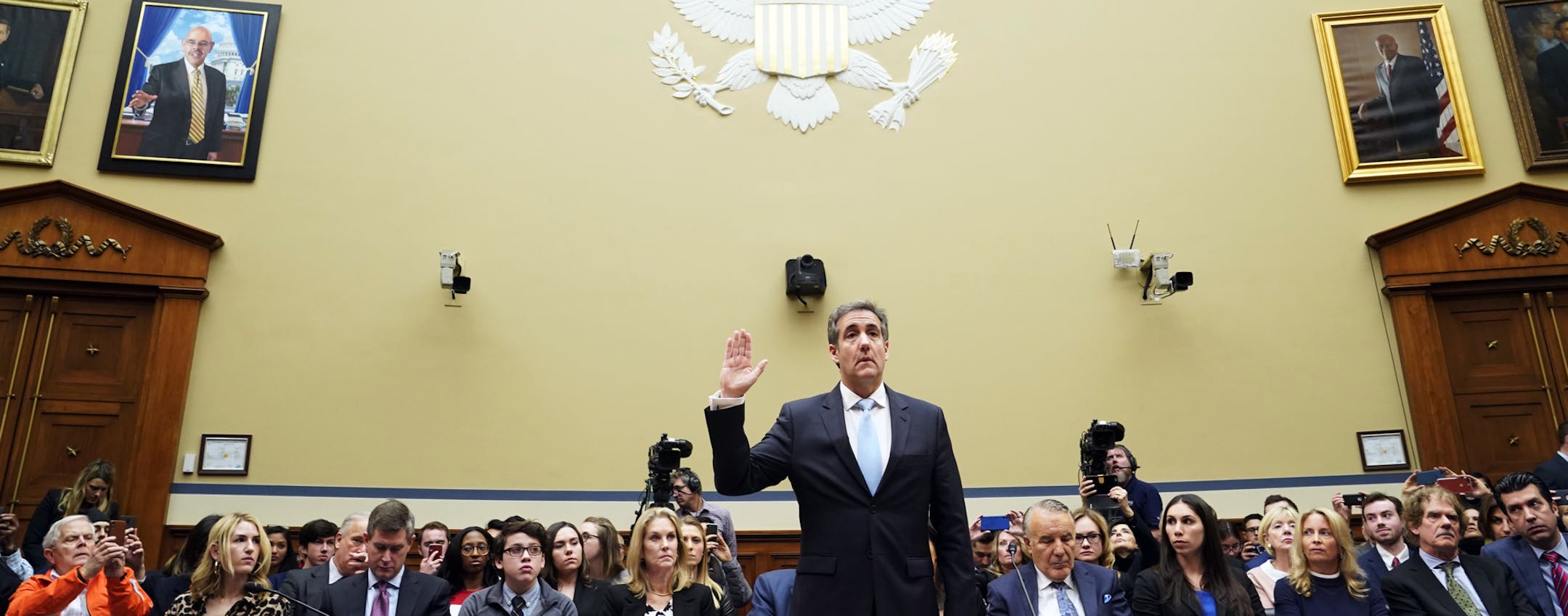
Impeachment investigation without actual impeachment: That's the strategy House Democrats have unveiled for taking on President Donald Trump for the 20 months until the 2020 presidential elections.
The Michael Cohen hearings last week were, apparently, just the first salvo. On Monday, the House Judiciary Committee requested documents from 81 agencies, organizations and individuals connected to the president. The committee, under Chairman Jerrold Nadler, D-N.Y., is preparing to leave no stone in Trump's life unturned.
This investigative barrage solves a political problem for the Democrats, namely the danger that impeaching Trump would not lead to his being removed by the Senate and might instead help him win re-election, by energizing his supporters.
Constitutionally, this aggressive exercise of oversight may answer a question that has troubled many observers, myself included: What happens to the rule of law if there is evidence that the president is guilty of serious crimes, but there's insufficient political will to impeach him? The answer may be that such a president can be made to twist slowly in the wind, provided the opposition party controls one chamber of Congress.
Yet there is one meaningful risk associated with the Democratic approach. It might set a precedent for future aggressive investigations by opposition parties — even when a future president hasn't been accused of felonies in open court.
To understand the nature of the constitutional problem we are facing, you have to keep two very different things in mind at once.
The first is the failure of the Constution's framers to consider that national political parties could severely undermine the impeachment remedy they built into the Constitution.
The second is Trump's statement that he could "shoot somebody on Fifth Avenue" without losing the support of his voters.


