

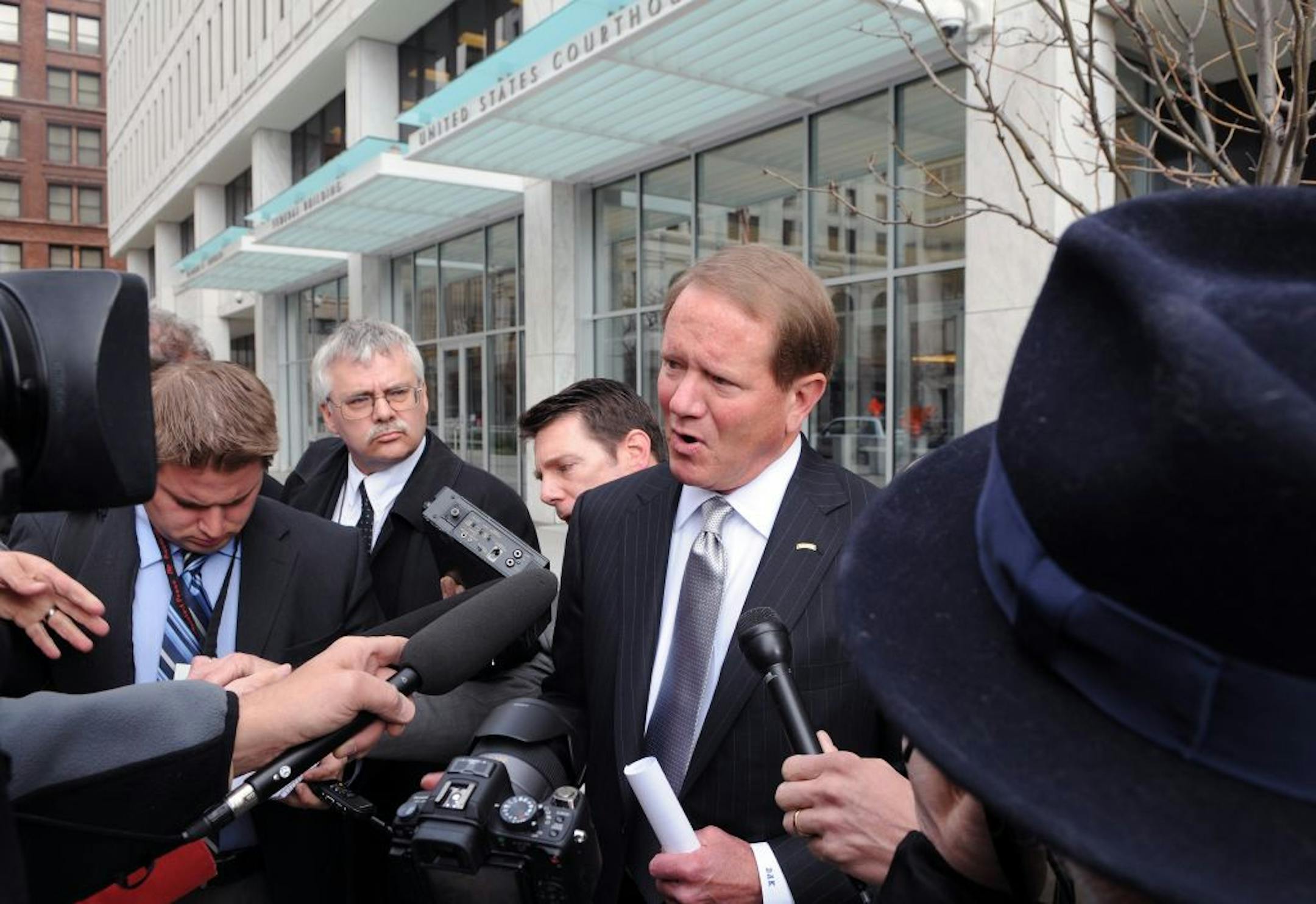
As U.S. Bankruptcy Judge Gregory Kishel strode into court last week for yet another hearing on the Tom Petters case, he almost sighed. "It's been a long haul for everybody," he said.
Kishel's remarks were greeted with light laughter from the courtroom crowded with dark-suited lawyers. Few, if any, would disagree.
It's been more than three years since the bankruptcy filing for the corporate entities of Petters and one year since more than 200 controversial clawback cases were filed in an attempt to recoup so-called "phantom profits" from investors who made money doing business with the former Wayzata businessman.
Petters, meanwhile, is serving a 50-year prison term for conducting the now infamous $3.65 billion Ponzi scheme that operated out of his offices for more than a decade. Seven others also are serving, or have served, prison time for their roles in the fraud.
But fallout from the criminal case still lingers in the bankruptcy matter, most notably in the hotly contested clawback actions. The paper trail of documents in the bankruptcy case is staggering. Just the court docket of motions, replies, orders and assorted other filings runs more than 130 pages.
Legal and professional bills are mounting. Last month Kishel approved $9.28 million in fees for the bankruptcy side of the case for five months of work. Total legal fees now sit at $13 million.
Here's how bankruptcy trustee Doug Kelley puts those numbers into perspective.
"We are the Wal-Mart of legal fees," said Kelley, noting that published reports put fees for the trustee cleaning up the $65 billion Madoff Ponzi scheme at $225 million.


