

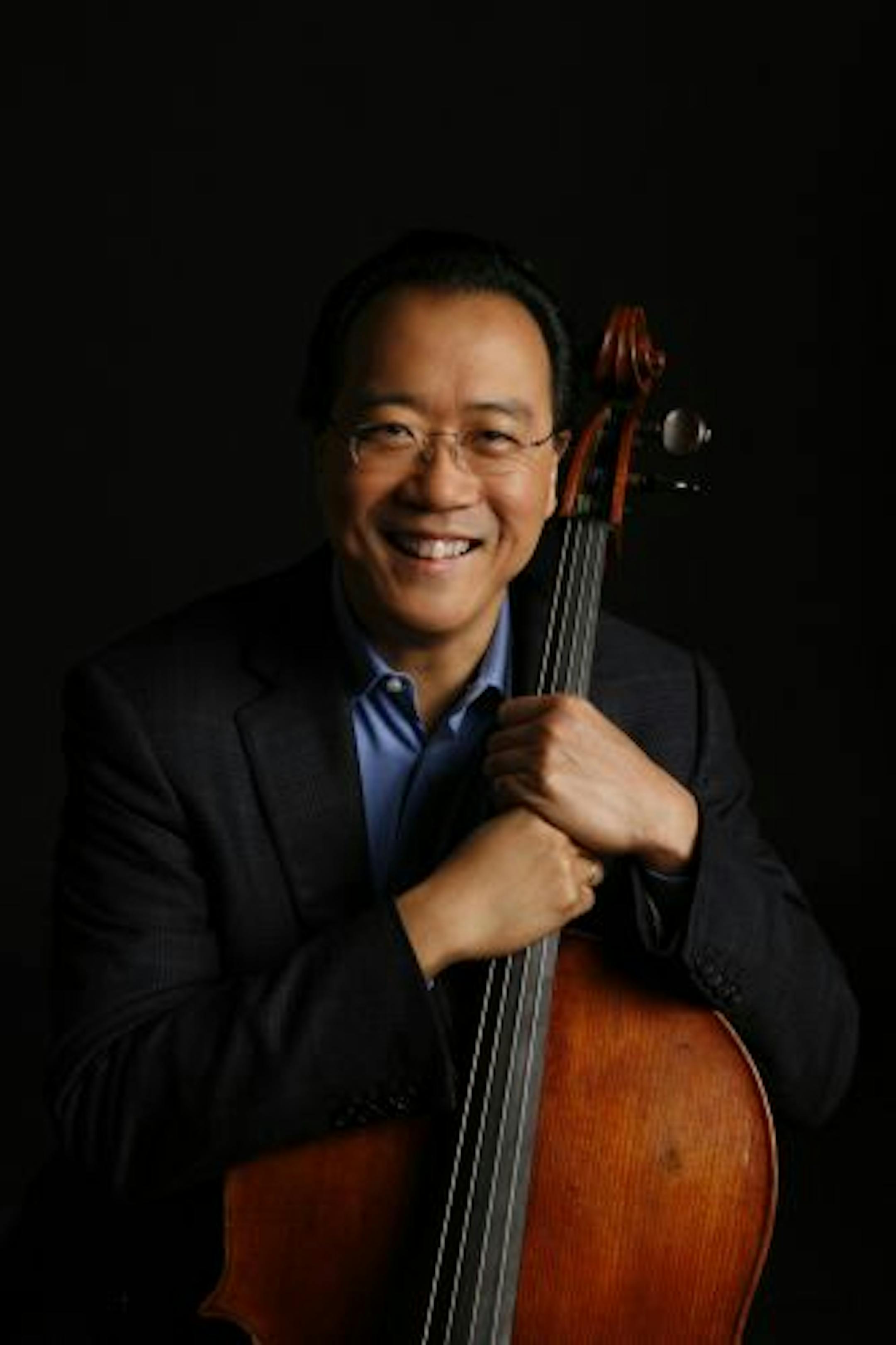
Yo-Yo Ma was happy to talk about his upcoming appearance with the Silk Road Ensemble -- even if the phone call interrupted his brief vacation in Antigua.
Ma was fresh off his appearance at the inaugural of Barack Obama, where his performance with Itzhak Perlman, Anthony McGill and Gabriela Montero was recorded ahead of time because of fears that bitter cold might harm the instruments. Ma and his mates weathered criticism for "string synching" the nationally televised performance, but in press reports he refused to apologize, saying "a broken string was not an option."
Of course, we have no such worries here in Minnesota, where Ma will play Monday and Tuesday at Orchestra Hall in Minneapolis.
"I feel that I grew up in the Twin Cities because I got some of my first chances there, with the Shubert Club, and at Sommerfest, to try things out," Ma said. "Just wonderful memories and deep respect for the community."
With the demands on his schedule and his deepening commitment to his family, Ma still resolves to make time for the Silk Road Ensemble. He founded the eclectic group in 1998 with the mission of exploring music and traditions from the famous trade routes across Asia. In Minneapolis, they will play work influenced by Balinese gamelan and ancient Sanskrit texts, as well as an opera first performed in Azerbaijan in 1908, based on a classic Arabian love story.
"The music is a collection of different things," said Nicholas Cords, a violist who grew up in White Bear Lake and plays with the ensemble, whose members come from around the globe to record and tour. "We commission a lot of composers, or members of the group will bring in traditional works and we re-imagine it."
Such was the case with "Layla and Majnum," often compared to "Romeo and Juliet" and considered a national epic in Azerbaijan. Alim Qasimov, a famous singer from the Central Asian country, brought the work to Ma and said he would like to sing it with the ensemble. What followed were months of workshops in which the group listened to Qasimov sing the opera.
Violinists Colin Jacobsen and Jonathan Gandelsman wrote arrangements, consulted with a musicologist from Azerbaijan and produced several versions, all striving for authenticity. The score that resulted blends Western and Asian traditions with mugham -- an intricate Azerbaijani musical mode that demands specificity and exacting professionalism from singers and musicians.


