

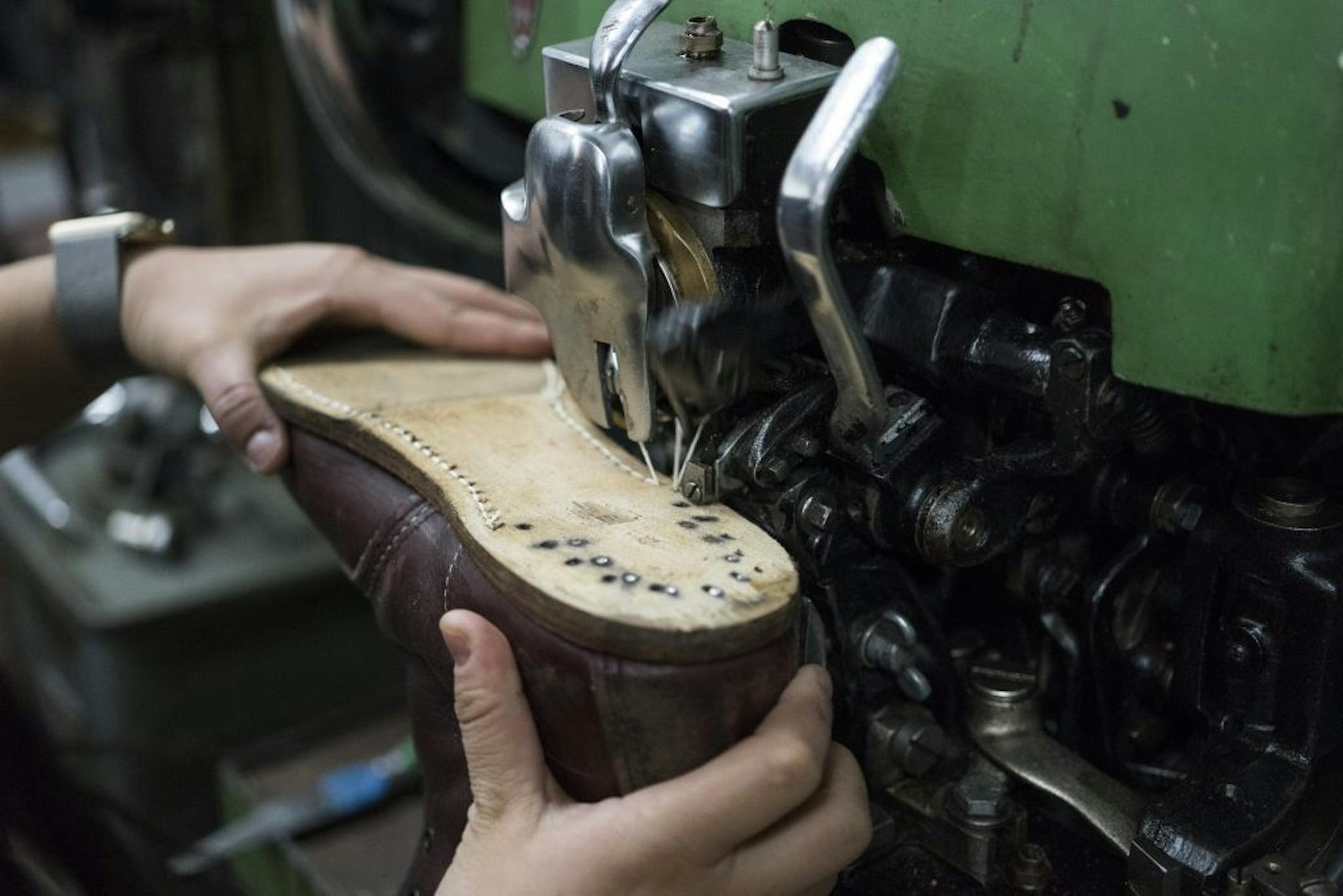
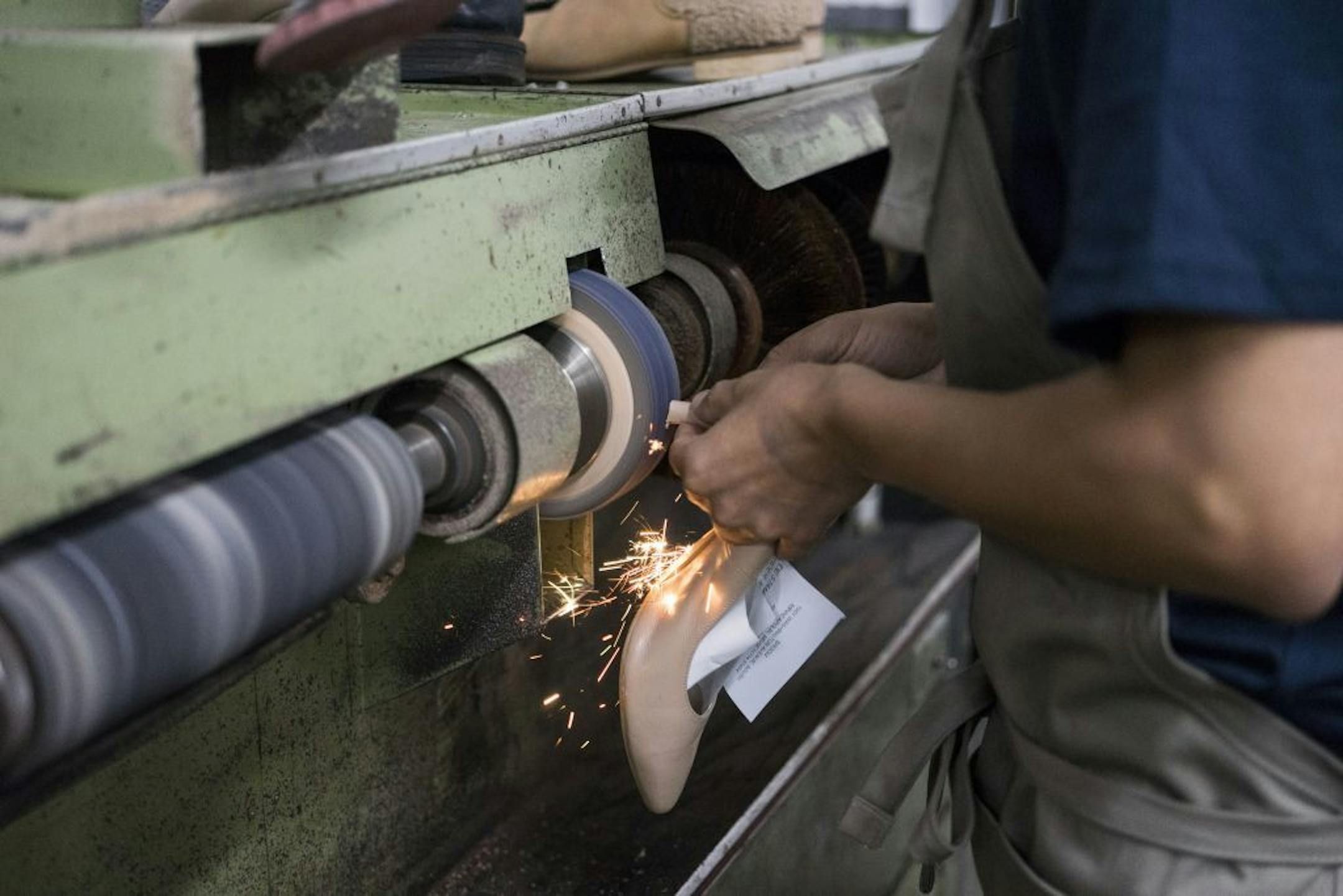
On shoe-boxing and delivery day at Shooli, a Twin Cities startup that aims to revive the art of shoe care and repair, a cobbler is replacing a worn heel. A marketing and design intern from the University of Minnesota is using sponges and solvents to test the best way to make scuffs on sneakers disappear.
"This is a dying craft and that makes me sad," said Meghan Flynn, Shooli's chief operating officer and apprentice cobbler. "We live in a throwaway society."
Shooli works out of a tiny warehouse in the heart of the Arts District in northeast Minneapolis. The brick-and-mortar operation relies on technology to serve its customers, who can schedule a shoe shine or repair through its app or website including home and office pickup and delivery within two days to a week, depending on the service. A shoe shine costs $10; boot repair and reconditioning starts at $20.
The idea was the brainchild of Hemisphere Cos., a Twin Cities-based investment firm with a broad range of holdings in the Twin Cities and beyond. Flynn was an operations manager for Hemisphere who craved the chance to launch her own startup.
Flynn simultaneously took on the role of chief operating officer and apprentice cobbler, a pair of unlikely titles for a millennial with a pre-med undergraduate degree. She's undeterred, despite some pretty sobering odds.
The Shoe Service Institute of America (SSIA) said that in the 1930s there were about 100,000 shoe-repair shops, but only about 15,000 by 1997. Today, the Maryland-based group said only about 5,000 cobbler shops remain.
That's not because people are wearing fewer shoes, walking less or being kinder to their shoes. The demise of such shops has been led by a raft of changes among consumers and manufacturers. Inexpensive, mass-produced throwaway shoes have proliferated. The shoemakers and cobblers who trained the next generation have retired or died. And new technology has enabled shoe companies to assemble shoes with glues and adhesives that make repairing them difficult or impractical.
The SSIA maintains that shoe repair can help save the world, calling shoe repair one of the oldest forms of recycling. Each year, the industry keeps some 62 million pairs of shoes out of landfills and on consumers' feet.
![Shooli partner Meghan Flynn glues the bottom of a Chanel shoe at the repair shop in Minneapolis using barge glue.]
TONY SAUNDERS ° anthony.saunders@startribune.com on Friday, April 12, 2019. Shooli is a startup door-to-door shoe shine and repair service in Minneapolis, Minn.](https://arc.stimg.co/startribunemedia/TSHVK57TC3L3DJAYXSXOAK5YRM.jpg?&w=1080)
![Cobbling supplies sit on a table with shoes ready for repair.]
TONY SAUNDERS ° anthony.saunders@startribune.com on Friday, April 12, 2019 at Shooli, a startup door-to-door shoe shine and repair service in Minneapolis, Minn.](https://arc.stimg.co/startribunemedia/YRO44JA7YFOXLTKUXX7GL4KH7Q.jpg?&w=1080)


