
Shareholders are flexing muscles over high executive pay packages

Shareholder votes are having a profound effect.

May 25, 2013 at 10:07PM
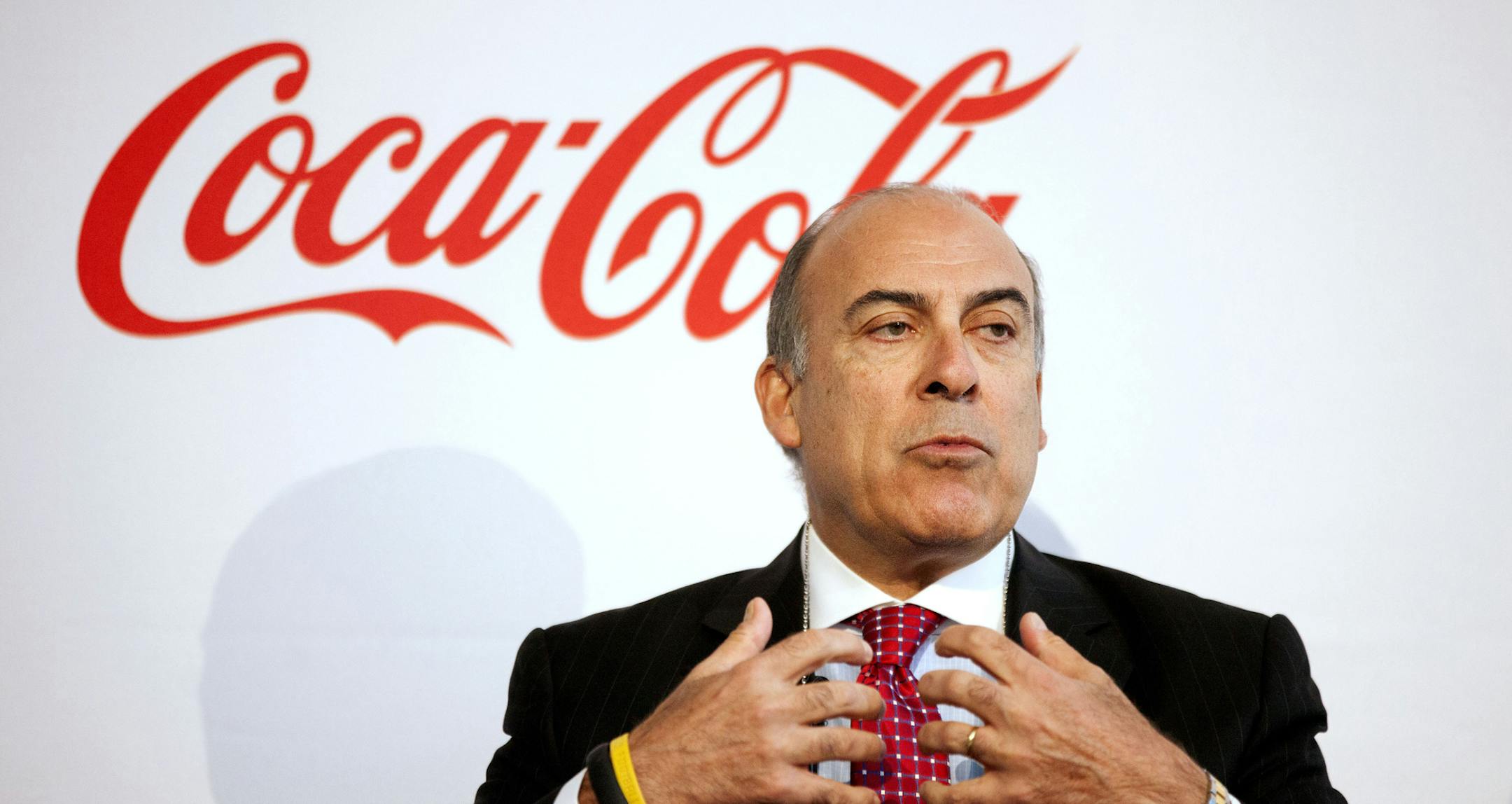
Coca-Cola CEO Muhtar Kent, center, speaks at an event where the the Coca-Cola Foundation pledged $3.8 million to support statewide initiatives aimed at boosting fitness and health, Wednesday, May 8, 2013, in Atlanta. The funds will be directed toward programs including Georgia SHAPE and Walk Georgia. (AP Photo/David Goldman) ORG XMIT: MIN2013052416492467
A consultant advised shareholders to vote “no” this year on Coca-Cola CEO Muhtar Kent’s $30.5 million pay package. The company responded with a plan to cap bonus awards if stock returns are low. (The Minnesota Star Tribune)

More investors are getting serious about deflating corporate chiefs' ballooning pay.

Lawmakers handed them a sharp implement two years ago — a law that requires publicly traded companies to hold so-called "say on pay" votes at annual shareholder meetings.

The votes are nonbinding, but experts say they're having a profound effect in corporate boardrooms. They're stirring greater shareholder ­activism and goading companies to retool pay packages. Some firms that lost votes have cut corporate chiefs' pay or even jettisoned executives.

"It is a day-and-night" difference, said Patrick McGurn, special counsel for Institutional Shareholder Services, a consulting firm that advises pension funds and other big investors on say-on-pay votes and other issues at shareholder meetings.

There are signs, experts say, that many firms' boards of directors are working harder to make sure top executives' compensation is closely tied to company profits and stock returns — known as "pay for performance."

"As you put more pay for performance in the system, it will result in more variability" because pay is tied to how each company does that year, said Joe Mallin, managing director in Atlanta for executive compensation consultant Pearl Meyer & Partners. "That's what everyone wants."

Until the past few years, however, that's generally not what happened. CEO pay had been soaring for decades at most firms. But after the near-meltdown on Wall Street in 2008 and several corporate scandals, Congress enacted the Dodd-Frank financial reform act, which requires companies to allow shareholders to approve or disapprove top executives' pay packages at least every three years. Most companies hold annual votes.

The votes are ­nonbinding, but companies must report the vote results and later explain what they did about it.

Only 34 firms failed to get shareholder approval in 2011 and 60 failed last year.

At companies that fail or get a low approval rating below about 75 percent, boards of directors often retool executives' pay plans and some cut future pay, experts said.

Shareholders are "sending a clear message of disapproval to larger compensation packages," said Seattle University researcher Marinilka Kimbro and Gonzaga University's Danielle Xu in a study released last month.

After analyzing say-on-pay voting results at more than 2,000 companies in 2011 and 2012, the researchers concluded that shareholders reacted negatively if CEOs had "abnormal" or "excessive" pay compared with the firm's financial performance and stock returns. The firms' boards of directors reacted to failed votes or weak shareholder approval by adding tougher performance targets and cutting CEOs' raises the following year, they found.

Part of what's feeding this running skirmish between companies and their shareholders is the growing role of proxy review consultants like Institutional Shareholder Services and Glass Lewis. The firms analyze public companies' pay plans and advise pension plans and other institutional investors ahead of firms' annual shareholder meetings.

This year, ISS advised shareholders to vote "no" on Coca-Cola CEO Muhtar Kent's $30.5 million pay package for 2012 "due to a pay-for-performance disconnect driven by high overall pay levels during a period of mediocre performance relative to market, sector and peers."

Kent had gotten a 5 percent raise, similar to Coca-Cola's profit growth last year, but his pay was more than double that of the typical CEO in the company's peer group. Meanwhile, Coke's stock return was less than half the S&P 500's 16 percent gain last year.

Last month, Coca-Cola responded ahead of its annual meeting by announcing that if its stock return is below-average this year, it will cap executives' bonus awards.

At last month's meeting, Coca-Cola shareholders approved the pay plan, but at a much lower margin — 77 percent of votes compared to last year's 90-plus percent approval.

about the writer

about the writer

Russell Grantham, Atlanta Journal-Constitution

More from Business

See More
card image
Fairview Health Services

The school is changing an elective course while still working with the Eden Prairie-based health care giant after students raised concerns.

This transmission electron microscope image shows SARS-CoV-2, the virus that causes COVID-19, isolated from a patient in the U.S., emerging from the surface of cells cultured in the lab. (NIAID/TNS) ORG XMIT: 1659810
card image