

As a U.S. senator and then as vice president, Walter Mondale played a crucial part in setting up the court that's supposed to keep a leash on American spy agencies.
Now Mondale says the Foreign Intelligence Surveillance Court has lost its way and allowed the nation to slip back into out-of-control surveillance. The answer, he says, is to restore the court's original role as an independent arbiter of how far intelligence agencies such as the National Security Agency can go.
That's the message of a recent Minnesota Law Review article by Mondale and co-authors Robert Stein, a University of Minnesota law professor, and Caitlinrose Fisher, a law clerk for the U.S. Court of Appeals for the Ninth Circuit.
You can be forgiven if you've never heard of the Foreign Intelligence Surveillance Court. It's America's most secretive court, and it convenes behind closed, guarded doors in a federal courthouse in Washington.
It's staffed by rotating federal judges, who review applications from American spy agencies seeking to snoop on the e-mails and phone calls of individuals abroad. Last year, the court considered 1,499 applications to conduct surveillance or physical searches, according to the U.S. Department of Justice. None was rejected.
That's far from what the court was supposed to do, according to Mondale. To understand what went wrong, he said, it's important to remember why it was created in the first place.
In several episodes from the 1960s and early 1970s, law enforcement and intelligence agencies used warrantless wiretapping and other surveillance as a tool of domestic political repression. The FBI hounded civil rights leaders, war protesters, environmental and women's rights activists. The NSA read millions of private telegrams, and the CIA ran an illegal mail-opening program for 20 years.
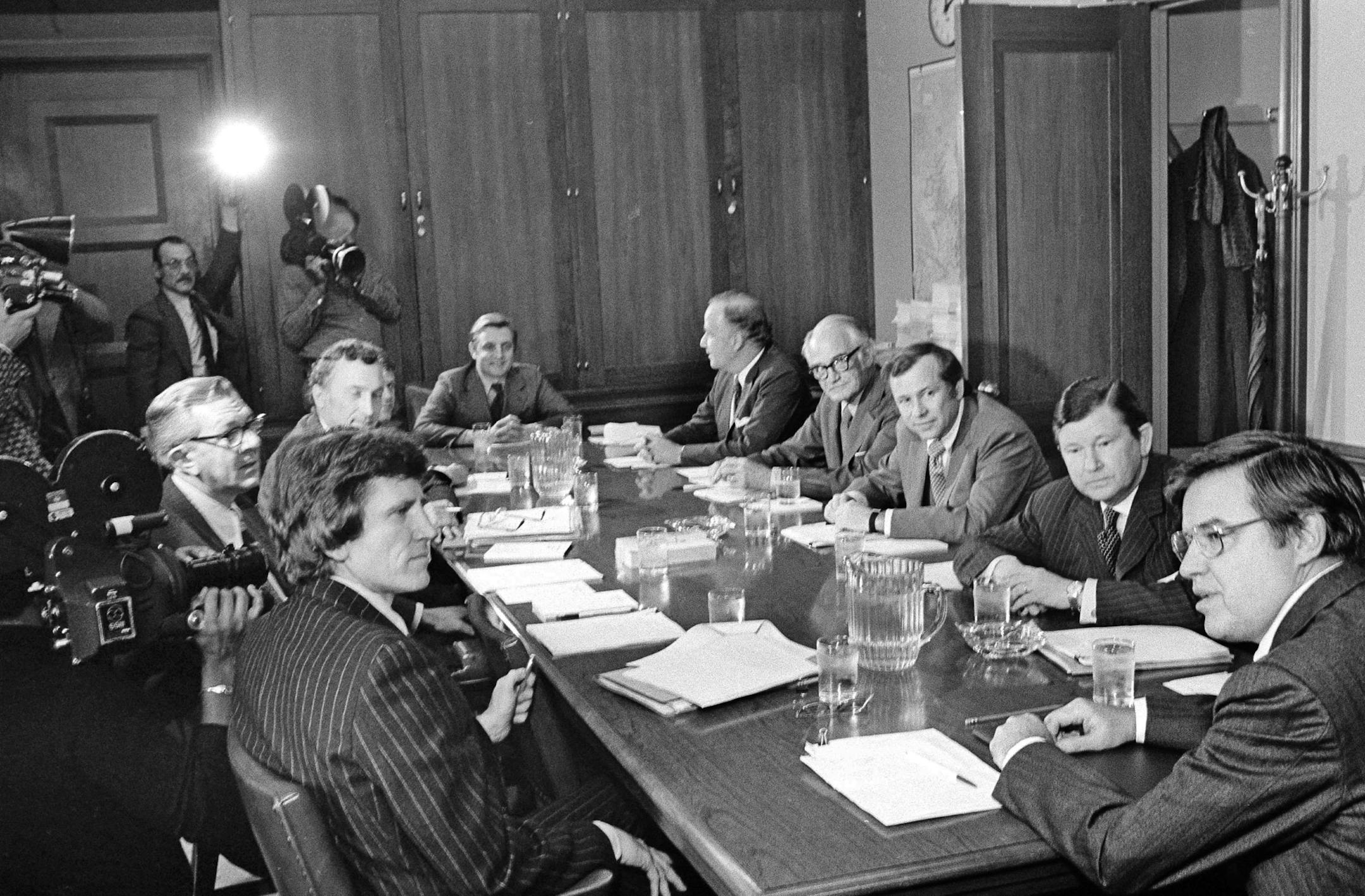
In response, the U.S. Senate convened the Church Committee, named after its chairman, Sen. Frank Church of Idaho, to investigate. Mondale was a key member of that committee; it was his domestic subcommittee that discovered the FBI had harassed Martin Luther King Jr.


