

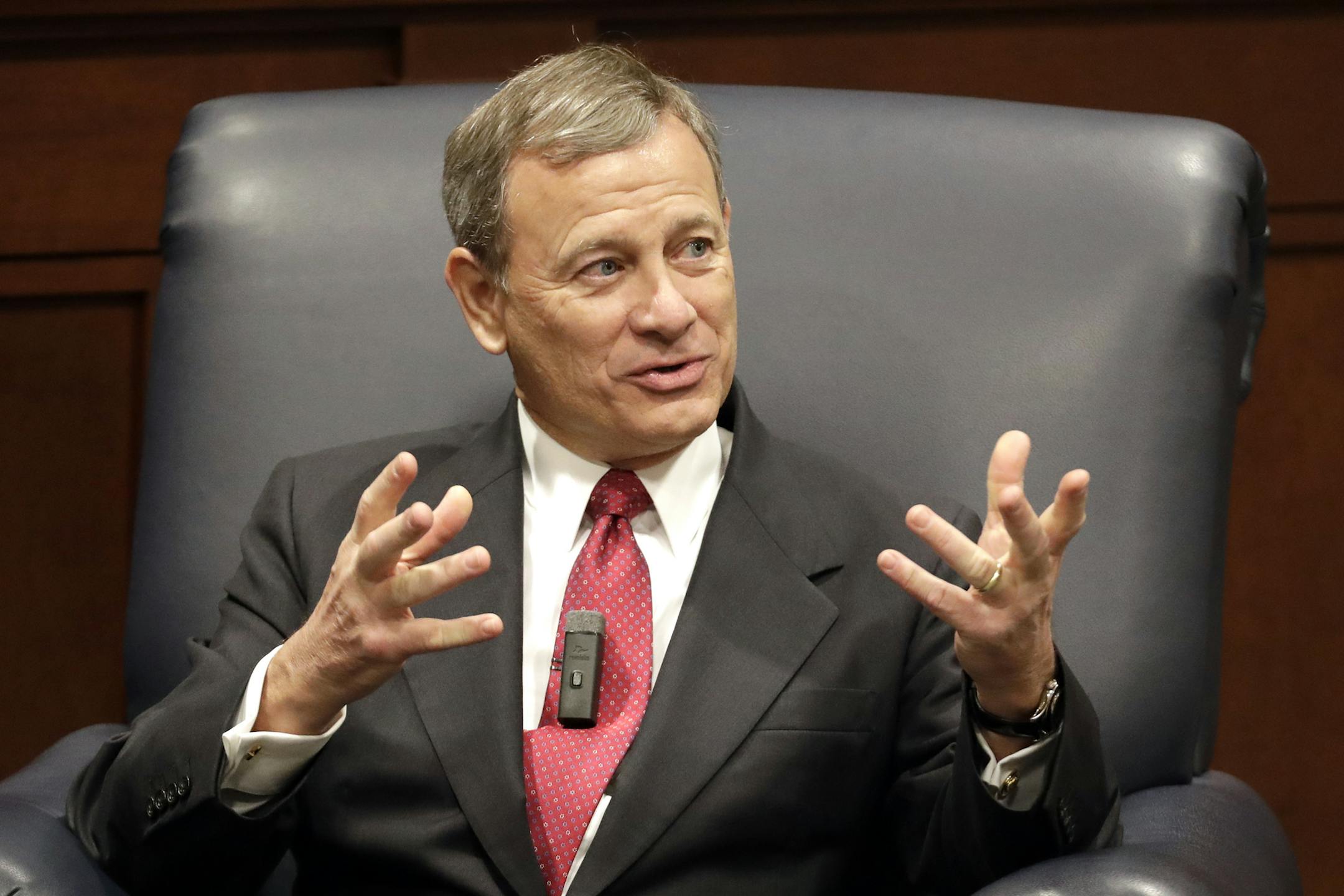
WASHINGTON – As a presidential impeachment trial loomed in 1999, John Roberts thought about William Rehnquist, the U.S. chief justice who was set to preside.
"If anybody can do it, I'm sure the current chief will," Roberts said of Rehnquist, who had written a book about impeachment. Roberts, now chief justice himself, was then a lawyer in private practice and spoke in an interview.
Two decades later, the same words could apply to Roberts, who has tried to carve out a nonpartisan role as the leader of the Supreme Court. Now he will oversee President Donald Trump's Senate impeachment trial in a far more partisan Washington and may be asked to rule on divisive issues governing witnesses and evidence.
Roberts, 64, will take up those duties as a singular figure in American public life. Even as he has steered the court to the right over the past 15 years, the GOP-appointed Roberts has staunchly defended the judiciary's independence and shown an occasional willingness to push back against Trump.
He will now face the challenge of trying to bring that judicial independence — and a modicum of decorum — into the political maelstrom of a Senate impeachment trial.
"He's obviously someone who does not embrace partisan politics and does not want to see the court become part of partisan politics," said Richard Lazarus, a Harvard Law School professor who was Roberts' law school roommate. "But he's going to find himself in the middle of it, by constitutional design."
He will have a potential model in Rehnquist, his predecessor as chief justice whom Roberts also served as a law clerk. Rehnquist was already an expert on impeachment when he was summoned to preside over President Bill Clinton's case, having written a book about the trials of President Andrew Johnson in 1868 and Supreme Court Justice Samuel Chase in 1805.
Rehnquist was the beneficiary of a bipartisan Senate deal on the specific rules that governed Clinton's trial, an arrangement that ensured the chief justice had only a ceremonial role. His most significant ruling was to say that senators couldn't be referred to as "jurors."


