

There's something special — and counterintuitive — about the Arctic Ocean.
Unlike in the Atlantic or Pacific, where the water becomes colder as it gets deeper, the Arctic water becomes warmer as it gets deeper. The reason is that warm, salty Atlantic-originating water that flows into the Arctic from the south is more dense, and so it nestles beneath a colder, fresher surface layer that is often capped by floating sea ice. This state of "stratification" makes the Arctic Ocean unique, and means that waters don't simply grow colder as you travel farther northward — they also become inverted.
But in a paper in Science, a team of Arctic scientists say this fundamental trait is now changing across a major part of the Arctic, in conjunction with a changing climate.
"I first went to the Arctic in about 1969, and I've never seen anything like this," said Eddy Carmack, a researcher with Fisheries and Oceans Canada and one of the study's authors. "Back then we just assumed the Arctic is as it is and it will be that way forevermore. So what we're seeing in the last decade or so is quite remarkable."
In a large area that they term the Eastern Eurasian basin — north of the Laptev and East Siberian seas, which in turn are north of Siberia — the researchers find that warm Atlantic water is increasingly pushing to the surface and melting floating sea ice. This mixing, they say, has not only contributed to thinner ice and more areas of open water that used to be ice covered, but is changing the state of Arctic waters in a process the study terms "Atlantification" — and these characteristics could soon spread across more of the Arctic Ocean, changing it fundamentally.
The study was led by Igor Polyakov of the University of Alaska, Fairbanks, in collaboration with a team of 15 researchers from U.S., Canada, Russia, Poland, Germany and Norway.
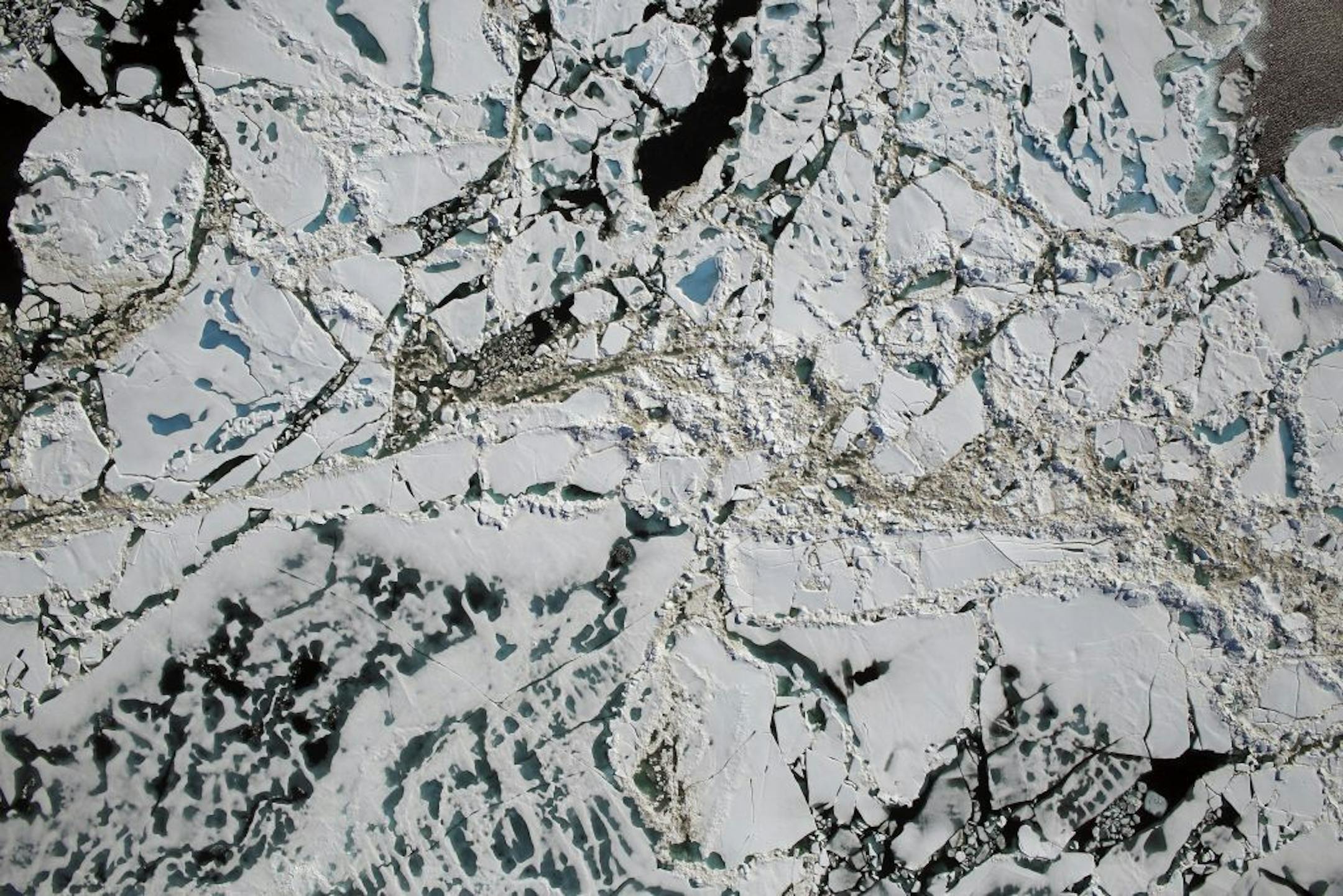
To understand the work, it's important to first note the extensive and rapid shrinkage of Arctic sea ice of late in an area to the north of Siberia. The area, known as the eastern Eurasian basin, is seeing thinner ice and more months of open water. Arctic sea ice is a linchpin of the Earth's climate system.
Normally, one would presume that a warmer atmosphere, caused by global warming, is the reason for shrinking Arctic sea ice. But the new study finds that the ocean is turning out to be just as big a factor in the Eastern Eurasian basin. The Atlantic waters are finding a way to push through to the top of the water column, especially in the winter.


