

Researchers have re-created a split-second impact of a meteor with primordial Earth, and shown how the 3.5-megaton collision might have reorganized common molecules into some of the early building blocks that led to all life.
The researchers zapped clay and a chemical soup with the laser to simulate the energy of a speeding asteroid smashing into the planet. They ended up creating what can be considered crucial pieces of the building blocks of life.
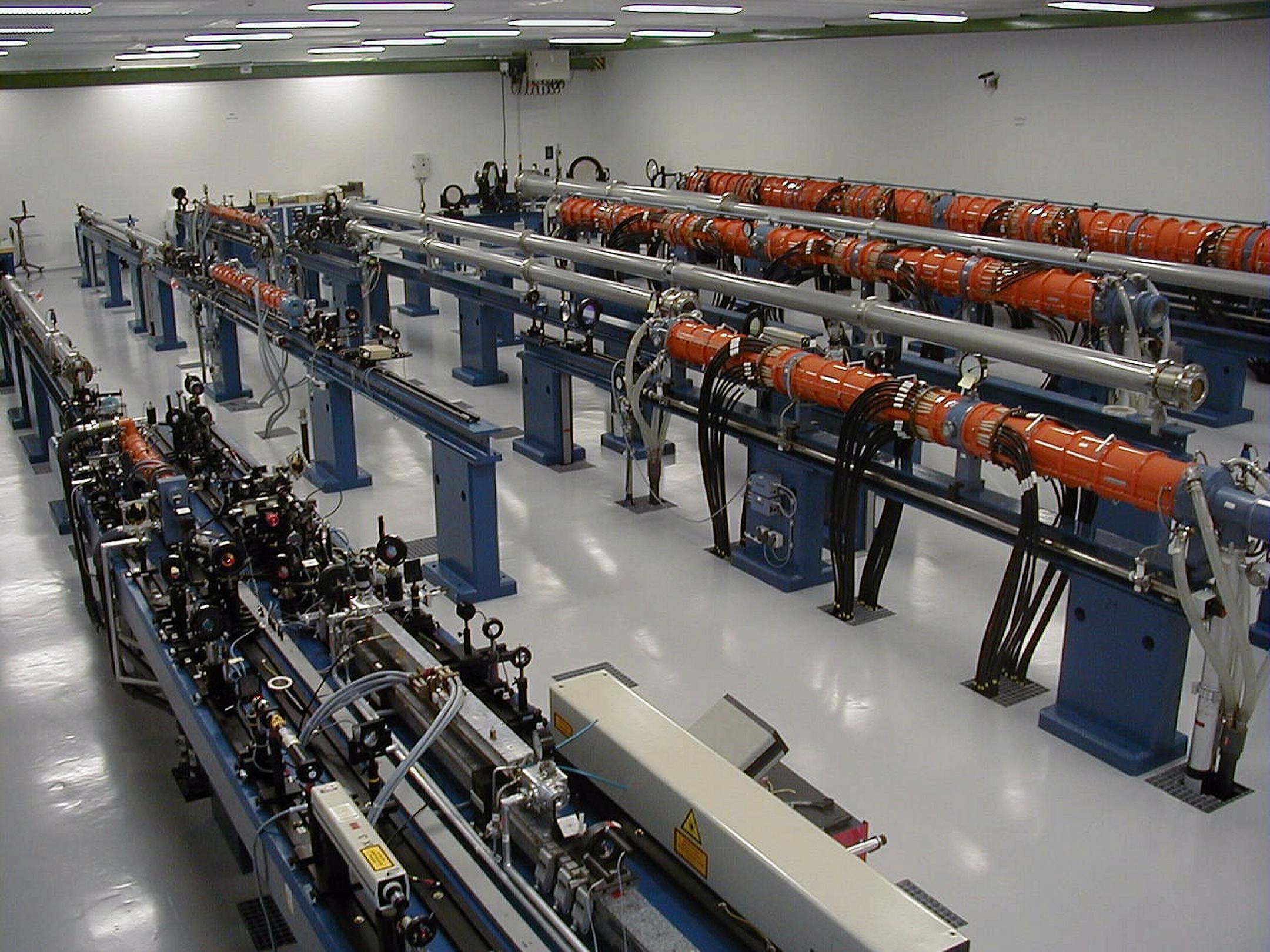
The feigned cataclysm took place in a lab in Prague using a 492-foot laser system to create a high-density plasma, with temperatures soaring to about 7,640 degrees Fahrenheit, and see its effects on a pool of formamide.
That chemical has been identified in the tail of comets and around young stars, and some researchers believe it could have been present on the early Earth nearly 4 billion years ago.
In the experiment, the formamide broke down and recombined, forming precursors to the four basic building blocks of RNA and DNA, the cornerstones of life, according to the study published online in the journal Proceedings of the National Academy of Sciences.
"These findings suggest that the emergence of terrestrial life is not the result of an accident but a direct consequence of the conditions on the primordial Earth and its surroundings," the researchers concluded.
The laser-zapping produced all four chemical bases needed to make RNA, a simpler relative of DNA, the blueprint of life. From these bases, there are many still-mysterious steps that must happen for life to emerge. But this is a potential starting point in that process.
"If you want to solve a problem of DNA and RNA, first you have to explain where the bases are coming from," said chemist Svatopluk Civis of the Czech Academy of Sciences, lead investigator of the study. "What we wanted to simulate was the impact of an extraterrestrial body into the early stage of the atmosphere."


